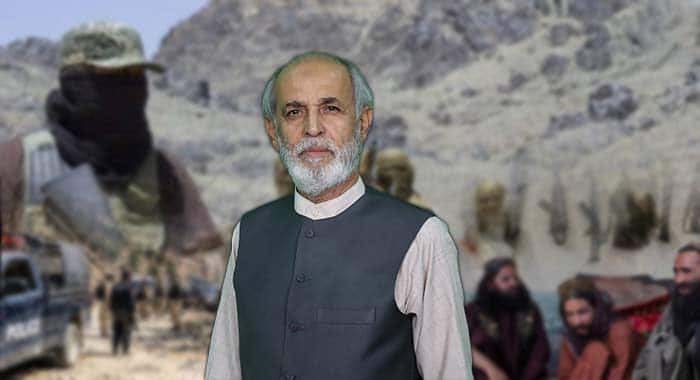
(Shamim Shahid)
In the rugged, windswept expanses of Balochistan and the volatile tribal tracts of Khyber Pakhtunkhwa, Pakistan is fighting a war that seems to have no end. The numbers are stark, the narratives are conflicting, and the underlying questions are deeply troubling. As security forces ramp up operations across Balochistan, claiming to have neutralized approximately 109 terrorists, the ground reality tells a far more complex and alarming story. The insurgency is not only surviving—it is evolving, acquiring sophisticated drones, advanced communication systems, and an expensive military media infrastructure that rivals state capabilities. The critical question that demands an answer is: who is funding and arming these groups, and why is Pakistan’s political establishment failing to address the root causes of this decades-old conflict?
Let us begin with the numbers. The security forces have announced that 109 terrorists have been killed in the ongoing operation in Balochistan. On the surface, this appears to be a significant achievement. But as the situation on the ground tells a different story. While the authorities claim success, incidents of terrorism are simultaneously increasing. The governor of Khyber Pakhtunkhwa, Faisal Karim Kundi, made a statement highlighting the grim reality: after the incident in Kharwadi Pahal, similar attacks have erupted in Khuzdar, Turbat, and Gwadar. These are not isolated events they are part of a coordinated pattern of violence that is spreading like wildfire.
Maulana Fazlur Rehman’s recent statement that “there is nothing called a government there” is a damning indictment of the state’s presence in these regions. When a senior political figure declares that the government is virtually absent, it signals a crisis of governance that no number of military operations can resolve. The situation is so dire that even the governor of Khyber Pakhtunkhwa has acknowledged the deteriorating security environment.
One of the most troubling developments in recent months is the apparent convergence between the Tehreek-e-Taliban Pakistan (TTP) and the Baloch Liberation Army (BLA). Historically, these groups operated in different spheres the TTP in the tribal areas of Khyber Pakhtunkhwa and the BLA in Balochistan. But the lines are blurring: while the TTP has traditionally claimed responsibility for its attacks, recent incidents in Balochistan including the targeted killing of a Pakistan People’s Party leader in Gwadar have gone unclaimed. This silence is deeply suspicious.
The BLA, by its own ideological positioning, does not target political party leaders. The attack on a PPP leader in Gwadar, therefore, bears the hallmark of the TTP. Yet the TTP has not claimed responsibility. This ambiguity suggests either a deliberate strategy of deniability or a new operational coordination between these groups. The presence of TTP in Balochistan is no longer a matter of speculation it is an established fact. And when multiple terrorist organizations operate in the same theater, the threat multiplies exponentially.
Perhaps the most alarming aspect of the current crisis is the technological sophistication of the insurgent groups. The BLA, in particular, has acquired modern drones, advanced communication systems, and a military-grade media infrastructure that would be the envy of many state actors. How is a non-state actor, operating in one of Pakistan’s most underdeveloped provinces, able to procure such expensive and advanced equipment?
The answer lies in a combination of factors. First, the aftermath of the Afghan war has flooded the region with sophisticated weapons. As Shamim Shahid noted. The black market for arms in the region is thriving, and with sufficient financial resources, any group can acquire state-of-the-art weaponry.
But the more critical question is: where does the money come from? The government has repeatedly pointed to “foreign hands” and “Fitna Al Hindustani” (a term used to implicate India) as the source of funding and technical support. While official statements have never explicitly named Israel, reports suggest that multiple countries including India and Israel may be involved in providing financial and technical assistance to these insurgent groups. The government’s reluctance to name specific countries publicly may be driven by diplomatic considerations, but the evidence of foreign interference is mounting.
The BLA’s ability to operate drones, maintain sophisticated communication networks, and run a media operation that produces high-quality propaganda content requires significant financial investment and technical expertise. This is not the work of a few disgruntled locals operating from caves. This is a well-funded, professionally managed insurgency with international connections. The weapons available from the Afghan war including advanced bombs, training manuals, and combat skills are readily accessible to anyone with money. And the BLA clearly has money.
Pakistan has conducted military operations in Balochistan for decades, and yet the insurgency has only grown stronger. The reason is simple: military force cannot address political grievances. The people of Balochistan have legitimate concerns about resource exploitation, political marginalization, and lack of economic opportunity. When Maulana Fazlur Rehman says there is no government in Balochistan, he is echoing a sentiment shared by many Baloch citizens who feel abandoned by the state. The government’s response has been overwhelmingly militaristic, but as Shahid argues, “the problem will never be solved by operations.” The insurgency is not a law-and-order problem it is a political crisis that requires a political solution.
The recent Apex Committee meeting, attended by the Field Marshal and the Prime Minister, resulted in the launch of a large-scale operation. But the political leadership appears disconnected from the ground reality. As Shahid noted, “the political people are not following the government’s instructions or policies.” This disconnect between the military and political wings of the state is crippling any hope of a comprehensive strategy.
While Balochistan dominates headlines, the situation in Pakhtunkhwa is equally dire. Intelligence-based operations are being conducted across eight districts, but the results are far from satisfactory. The news of “big operations” being launched has been circulating for days, but the ground reality is one of persistent violence and inadequate response.
Consider the recent incidents: terrorists attacked the house of a National Party leader, with firing continuing for 3-4 hours. In Buner, a police inspector was shot dead by militants on the border between Swat and Buner. The police were informed, yet no effective operation was launched. The police of Buner, Swat, and Malakand failed to respond adequately. This is not an isolated failure it is a systemic breakdown of law enforcement.
The situation in Peshawar, Hassankhel, Bara, Tira, Moman, North Waziristan, and South Waziristan is equally dire. These areas have become safe havens for terrorists who operate with impunity. The government’s claim that 15% of the population was killed in the last year in certain districts is a staggering statistic that demands urgent attention. Yet, the response remains fragmented and inadequate.
The question of foreign involvement is the elephant in the room. The government has consistently used the term “Fitna Al Hindustani” to implicate India in fomenting terrorism in Pakistan. Israel’s name has never been officially mentioned, but reports suggest that multiple countries are involved in providing financial and technical support to the BLA and TTP. No insurgent group can acquire such capabilities without external backing. The government’s own statements about “foreign hands” confirm that this is not a homegrown insurgency.
The question is: why is the government not naming names? The answer may lie in diplomatic considerations. Accusing a country like India or Israel of supporting terrorism carries significant geopolitical consequences. But the silence is enabling the insurgency to grow stronger. If the government has evidence, it must present it to the international community and demand action. Otherwise, the flow of weapons and money will continue unabated.
The establishment of a CIC (Ceasefire and Interaction Committee) and the involvement of administrative staff are essential components of any lasting solution. The historical precedent exists. Committees established by Chaudhry Shujaat Hussain and Mushahid Hussain in the past produced recommendations that remain relevant today. The problem is not a lack of solutions it is a lack of political will to implement them. T