
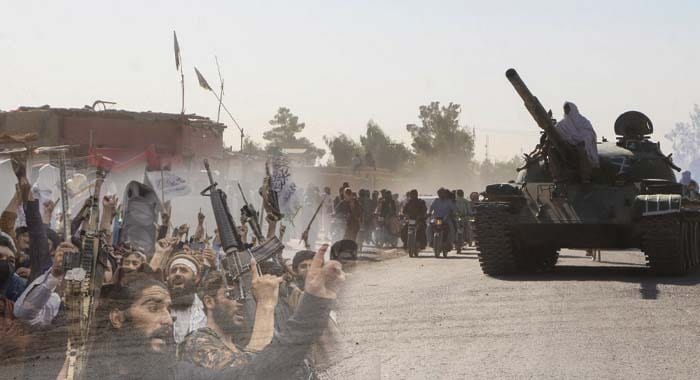
Nearly five years after the Taliban returned to power, Afghanistan remains one of the most strategically important yet politically isolated countries in the world. While the large-scale armed conflict that characterized the final years of the previous government has largely subsided, the country’s challenges have evolved rather than disappeared. Today, Afghanistan stands at the intersection of security, humanitarian, economic, and geopolitical concerns whose consequences extend far beyond its borders.
The international community’s principal concern is no longer simply who governs Afghanistan. Increasingly, attention has shifted toward how Afghanistan is governed and whether developments inside the country contribute to or undermine regional stability.
Afghanistan occupies one of the world’s most sensitive geopolitical locations. It borders Pakistan, Iran, China, and three Central Asian republics, placing it at the crossroads of South Asia, Central Asia, and the broader Middle East. Any deterioration in Afghanistan’s internal security inevitably affects regional trade, migration, border management, and counterterrorism cooperation.
Among the most persistent concerns is the continued presence of militant organizations operating from Afghan territory. Pakistan has repeatedly maintained that anti-Pakistan terrorist groups continue to enjoy operational space across the border, while several international assessments have also expressed concern about the activities of transnational extremist organizations within Afghanistan. These concerns have complicated Afghanistan’s efforts to normalize relations with many countries and have reinforced calls for stronger counterterrorism commitments.
For Pakistan, these developments carry immediate security implications. Cross-border infiltration, attacks attributed to militant groups operating from Afghan territory, and the movement of extremist networks remain central features of Islamabad’s security calculus. Pakistan has repeatedly emphasized that a peaceful Afghanistan is in its national interest, but it has also argued that regional peace requires Afghan territory not to be used against neighboring states.
Beyond terrorism, Afghanistan continues to face an exceptionally difficult economic environment. International sanctions, reduced foreign assistance, frozen financial assets, and limited diplomatic recognition have constrained economic recovery. Although local markets continue to function and some revenue collection has improved, unemployment, poverty, and humanitarian needs remain widespread.
Economic instability has security consequences of its own. Weak employment opportunities, limited educational access, and declining public services create conditions that can be exploited by criminal organizations, extremist recruiters, and illicit trafficking networks. These challenges extend beyond Afghanistan’s borders, affecting neighboring countries through irregular migration, narcotics trafficking, and cross-border criminal activity.
The humanitarian dimension remains equally significant. Millions of Afghans continue to depend on international humanitarian assistance for food, healthcare, and essential services. International organizations have repeatedly warned that reductions in humanitarian funding could further increase social vulnerability, particularly among women, children, and displaced populations.
The restrictions imposed on women’s education, employment, and public participation have also continued to shape Afghanistan’s international standing. Many governments have linked broader diplomatic engagement with progress on human rights and inclusive governance. As long as these issues remain unresolved, Afghanistan is likely to face continued political isolation, limiting opportunities for investment, reconstruction, and long-term economic development.
Regional powers have adopted differing approaches toward Kabul. Some prioritize security cooperation and border stability, others emphasize economic connectivity, while many seek to prevent Afghanistan from once again becoming a platform for transnational terrorism. Despite these differing priorities, a broad consensus exists on one point: instability in Afghanistan benefits no one.
Pakistan occupies a particularly important position in this equation. Sharing a long and historically active border with Afghanistan, Pakistan has borne significant humanitarian, economic, and security consequences arising from decades of Afghan instability. Millions of Afghan refugees have crossed into Pakistan over the past four decades, while successive waves of conflict have generated substantial economic and security costs. Islamabad therefore continues to advocate an Afghanistan that is peaceful, economically viable, and capable of maintaining constructive relations with all its neighbors.
At the same time, Pakistan has made it increasingly clear that peaceful coexistence cannot be separated from effective action against terrorist organizations. Recent policy decisions, including strengthened border management, intensified intelligence-based operations, and stricter immigration enforcement, reflect Islamabad’s determination to address what it views as direct security threats emanating from across the border.
Looking ahead, Afghanistan’s future will depend not only on domestic governance but also on its ability to build confidence with the international community. Greater regional connectivity, trade corridors, energy projects, and investment opportunities remain possible, but these prospects require sustained security, predictable governance, and responsible regional engagement.
The international community likewise faces a delicate balancing act. Continued humanitarian assistance remains essential for the Afghan people, yet many governments also seek tangible progress on counterterrorism commitments, human rights, education, and inclusive governance before significantly expanding diplomatic engagement.
Afghanistan’s future is therefore closely tied to the choices made by its current rulers. Stability, economic recovery, and regional integration remain achievable objectives, but only if security concerns, governance challenges, and international expectations are addressed in a credible and sustained manner.
For Pakistan and the wider region, the lesson of recent decades remains unmistakable. A stable Afghanistan can become a bridge connecting South Asia, Central Asia, and the Middle East through trade, energy, and economic cooperation. An unstable Afghanistan, however, risks once again becoming a source of insecurity whose consequences extend well beyond its own borders. The direction the country takes will shape not only its own future but also the security and prosperity of the wider region for years to come.



