
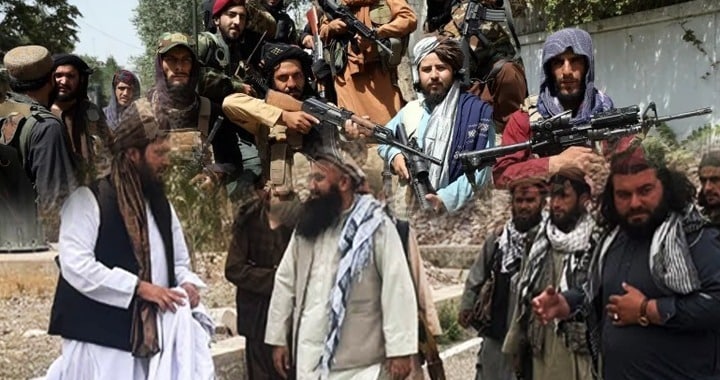

When the Taliban returned to power in August 2021, many observers assumed that military victory would naturally translate into political unity. Nearly five years later, developments inside Afghanistan suggest a far more complicated reality. While the Taliban continue to project an image of cohesion, numerous political, ideological, administrative, economic, and tribal differences have increasingly become visible beneath the surface.
Like many revolutionary movements that transform into governing authorities, the Taliban now face a challenge fundamentally different from insurgency. Winning a war requires military discipline; governing a country demands political compromise, economic management, administrative competence, and public legitimacy. It is in this transition that the movement’s internal differences have become more pronounced.
Perhaps the most significant divide exists between the leadership centered in Kandahar and those responsible for day-to-day governance in Kabul. Kandahar remains the movement’s ideological center of gravity, where many of the Taliban’s most conservative policies originate. Kabul, meanwhile, houses ministries responsible for managing the economy, foreign relations, humanitarian affairs, education, healthcare, and engagement with international organizations.
This distinction has produced differing priorities. Leaders engaged in governance often confront practical realities, including economic collapse, diplomatic isolation, unemployment, humanitarian needs, and the challenge of administering a country of more than forty million people. Those closer to the movement’s ideological leadership are generally viewed as placing greater emphasis on preserving the Taliban’s religious identity and internal cohesion.
The issue of girls’ education has become perhaps the clearest manifestation of these competing approaches. Since the suspension of secondary and higher education for girls, reports from diplomats, analysts, and Afghan sources have repeatedly suggested that not every senior Taliban official supports the continuation of these restrictions. Some officials have publicly or privately indicated that reopening educational institutions could improve Afghanistan’s international standing and contribute to long-term national development.
Yet the existing policy has largely remained unchanged, illustrating where ultimate decision-making authority continues to reside.
International recognition has become another point where differing perspectives appear to exist. Afghanistan’s prolonged diplomatic isolation has limited investment, frozen financial assets, reduced development assistance, and complicated economic recovery. Officials responsible for external affairs are widely believed to recognize that meaningful engagement with the international community will remain difficult without greater policy flexibility, particularly regarding women’s rights, education, and inclusive governance.
Economic pressures have further complicated internal dynamics. Afghanistan continues to face high unemployment, limited industrial activity, declining purchasing power, and significant humanitarian challenges. Although the Taliban have succeeded in reducing certain forms of corruption and improving customs revenue collection according to several international assessments, these achievements have not fully compensated for declining foreign assistance and reduced international financial engagement.
Managing scarce economic resources inevitably creates competition among different administrative structures and regional authorities.
Natural resources represent another emerging area of internal tension. Afghanistan possesses significant reserves of minerals, rare earth elements, gemstones, and other valuable resources. Their exploitation offers considerable economic potential but also raises questions regarding control, revenue distribution, licensing, and local governance.
Recent tensions reported in Badakhshan illustrate how resource management can intersect with local grievances, tribal dynamics, and administrative authority. While such disputes are not unique to Afghanistan, they demonstrate the challenges faced by a government attempting to centralize authority while simultaneously accommodating regional interests.
The Taliban also remain a coalition rather than a completely uniform organization. The movement incorporates commanders from different provinces, tribal backgrounds, military experiences, and institutional affiliations. During the insurgency, these differences were often overshadowed by the common objective of regaining power. Governance, however, exposes competing interests that are more difficult to reconcile.
Another important challenge concerns generational change. Younger Taliban commanders have grown up in a vastly different technological and geopolitical environment than many of the movement’s senior founders. They confront questions relating to digital governance, banking, investment, communications, higher education, and international engagement that previous generations never faced. These evolving realities may gradually influence internal debates regarding Afghanistan’s future direction.
Security considerations further complicate the picture. The Taliban continue to confront threats from rival extremist organizations, local armed groups, criminal networks, and transnational terrorist elements. Balancing counterterrorism responsibilities with governance priorities places additional pressure on already complex decision-making structures.
Despite these visible differences, it would be premature to conclude that the Taliban are on the verge of fragmentation. The movement continues to display a significant degree of organizational discipline, centralized command, and internal loyalty. Public disagreements remain relatively limited, and major factions generally avoid openly challenging the leadership hierarchy.
Nevertheless, the pressures confronting the Taliban are likely to intensify rather than diminish. Economic hardship, international isolation, governance challenges, social expectations, and debates over Afghanistan’s future direction will continue to test the movement’s cohesion.
The central question is no longer whether internal differences exist, but how the Taliban choose to manage them. Their long-term stability may depend less on battlefield success and more on their ability to reconcile ideological commitments with the practical demands of governing a modern state. The choices made in Kandahar and Kabul over the coming years will shape not only the future of the Taliban, but also the future of Afghanistan itself.



