
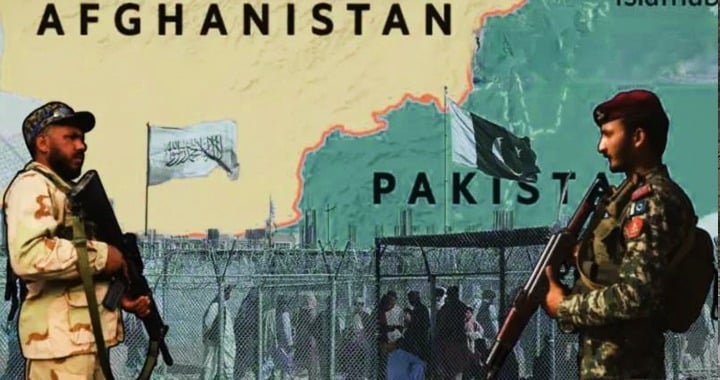

For nearly four years after the Taliban returned to power in Kabul, Islamabad pursued a policy built on cautious engagement, diplomatic dialogue, and the hope that a stable Afghanistan would translate into a more secure western border. Geography, history, religion, trade, and shared cultural ties all suggested that constructive relations served the interests of both countries. Yet recent developments indicate that Islamabad’s expectations have steadily given way to a more security-driven approach.
Pakistan’s primary concern has never been Afghanistan’s choice of government. Rather, it has consistently maintained that Afghan territory must not be used by any individual or organization to threaten the security of neighboring states. This principle is not unique to Pakistan; it reflects a widely accepted norm of international relations and responsible state conduct.
Islamabad argues that despite repeated diplomatic engagements, anti-Pakistan terrorist organizations continue to find operational space across the border. Groups affiliated with Fitna al-Khwarij have repeatedly been blamed for cross-border infiltration, attacks on security forces, assaults on civilians, and sabotage of critical infrastructure. Pakistani officials have increasingly asserted that these organizations benefit from sanctuaries, logistical support, and freedom of movement inside Afghanistan, allegations that Kabul continues to reject.
This divergence has created perhaps the deepest trust deficit in bilateral relations since the Taliban’s return to power.
Pakistan’s recent policy decisions illustrate a noticeable shift. Security has become the overriding consideration guiding Islamabad’s approach toward Afghanistan. Intelligence-based operations have intensified, border management has become stricter, and surveillance along the frontier has expanded. Counterterrorism cooperation now occupies a central place in every diplomatic engagement between the two neighbors.
The repatriation of illegally residing Afghan nationals represents another significant component of this evolving policy. Islamabad maintains that every sovereign state possesses the legal authority to regulate the presence of foreign nationals within its territory. Pakistani authorities insist that the repatriation programme is directed at undocumented foreign nationals rather than registered refugees and is being implemented under domestic immigration laws.
Critics have questioned aspects of the policy, while Pakistan argues that no country can indefinitely accommodate millions of undocumented foreign nationals without considering national security, economic capacity, and administrative constraints. Officials also point to years of advance notice and phased implementation before enforcement measures were expanded.
Another important development has been the growing convergence between Pakistan’s civilian and military leadership regarding Afghanistan. Recent national security deliberations indicate an increasingly unified assessment that terrorism remains the principal obstacle preventing the normalization of bilateral relations. This consensus appears to have reduced the space for policy ambiguity and replaced it with a clearer strategic direction.
Border management has similarly undergone substantial transformation. Enhanced fencing, improved surveillance systems, intelligence coordination, and stricter regulation of cross-border movement reflect Pakistan’s determination to reduce infiltration and illegal movement. While no border security system can provide complete protection, Islamabad believes these measures have significantly improved its defensive posture.
At the diplomatic level, Pakistan continues to emphasize that it seeks a peaceful, stable, and economically connected Afghanistan. Trade, regional connectivity, energy corridors, and transit routes remain mutually beneficial objectives that could transform the economic landscape of South and Central Asia. However, Pakistani policymakers increasingly argue that such opportunities cannot flourish in an environment where terrorism continues to undermine confidence.
The broader regional environment also influences Pakistan’s calculations. Afghanistan occupies a strategic crossroads linking South Asia, Central Asia, China, and the Middle East. Continued instability affects not only Pakistan but also regional connectivity projects, foreign investment, refugee management, and international counterterrorism efforts. Islamabad therefore frames its security concerns as part of a wider regional challenge rather than merely a bilateral dispute.
Recent official statements suggest Pakistan is also adopting a more results-oriented approach. Rather than relying primarily on assurances, Islamabad increasingly emphasizes measurable action against anti-Pakistan terrorist networks. From Pakistan’s perspective, genuine progress will be judged not by public statements but by a sustained decline in cross-border terrorism and visible action against organizations accused of targeting Pakistan.
Despite heightened tensions, Pakistan has not abandoned diplomacy. Official statements continue to affirm support for a peaceful, sovereign, and stable Afghanistan. At the same time, Islamabad has drawn a clearer distinction between diplomatic engagement and national security. The message emerging from recent policy decisions is that dialogue remains possible, but it cannot substitute for concrete action against terrorist groups.
The future of Pakistan-Afghanistan relations will therefore depend less on rhetoric and more on mutual confidence. If both countries succeed in preventing their territories from being used against each other, opportunities for trade, connectivity, and regional cooperation could expand considerably. Conversely, if security concerns persist, bilateral relations are likely to remain defined by caution rather than partnership.
Pakistan’s evolving policy reflects this strategic reality. Engagement remains the preferred path, but it is increasingly accompanied by stronger border controls, more assertive counterterrorism measures, and an insistence that national security will remain the foremost priority. Whether this harder approach ultimately produces greater regional stability will depend not only on Islamabad’s policies but also on developments across the border and the willingness of both sides to rebuild a relationship that has become increasingly shaped by security rather than trust.



