
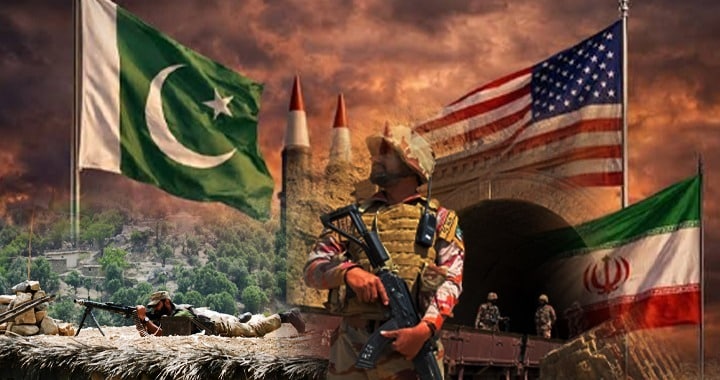
Pakistan today finds itself confronting one of the most complex strategic environments in South Asia. On one hand, the country continues to wage an intensive campaign against terrorism within its own borders. On the other, it increasingly occupies an important diplomatic position in a region experiencing multiple geopolitical crises.
Managing both simultaneously has become one of Islamabad’s defining strategic challenges.
Domestically, the resurgence of terrorist violence has required security institutions to adapt rapidly. Recent intelligence-based operations across Khyber Pakhtunkhwa and Balochistan illustrate a noticeable evolution in Pakistan’s counterterrorism doctrine. Rather than relying solely on reactive military deployments, authorities have increasingly emphasized intelligence integration, joint operations, rapid-response capabilities and precision targeting.
Operations such as Shabaan reflect this transition.
The campaign demonstrates that Pakistan’s security forces increasingly seek to dismantle entire terrorist ecosystems by targeting leadership, facilitators, logistics, financing and communication networks instead of focusing exclusively on armed encounters. This represents a more sustainable approach to long-term counterterrorism.
Equally important has been the strengthening of cooperation among the Army, Frontier Corps, Police, Counter Terrorism Departments and intelligence agencies. Effective national security today depends upon institutional coordination rather than isolated organizational efforts.
Pakistan’s challenge, however, extends well beyond terrorism.
The country occupies a strategic geographic position connecting South Asia, Central Asia, China, the Middle East and the Arabian Sea. Consequently, regional instability inevitably affects Pakistan’s own security and economic interests.
Recent developments across the wider region, including heightened tensions involving Iran, have once again highlighted Pakistan’s importance as a responsible regional actor capable of maintaining dialogue with multiple stakeholders. Islamabad has consistently advocated de-escalation, respect for sovereignty and diplomatic engagement while avoiding unnecessary regional polarization.
This balanced approach enhances Pakistan’s credibility as a constructive regional partner.
Similarly, Pakistan continues advocating greater regional connectivity through trade corridors, energy cooperation and infrastructure development. Projects linking South Asia with Central Asia and the Middle East can only succeed under conditions of stability. For this reason, Pakistan increasingly views counterterrorism and economic diplomacy as complementary rather than separate policy objectives.
No investor commits to regions dominated by insecurity.
No trade corridor functions efficiently without stable borders.
No connectivity initiative succeeds while extremist violence persists.
Security has therefore become an essential prerequisite for economic transformation.
Pakistan’s broader diplomatic engagement also reflects recognition that military success alone cannot guarantee regional stability. Dialogue with international partners, cooperation against transnational terrorism and participation in humanitarian initiatives have become equally important elements of national strategy.
This does not diminish the importance of robust security operations. Rather, it complements them.
At the same time, Pakistan continues to maintain that its legitimate security concerns, particularly regarding cross-border terrorism, deserve greater international recognition. Officials have repeatedly argued that sustainable regional peace requires meaningful cooperation from neighboring countries to ensure that no territory is used against another state.
Domestically, the state’s long-term success will depend upon balancing security with governance.
Economic opportunity, judicial reform, education, technological development and public trust remain indispensable pillars of national resilience. Counterterrorism operations create security, but governance preserves it.
Pakistan’s strategic trajectory suggests an increasingly integrated national security model in which military capability, intelligence, diplomacy, economic policy and institutional reform reinforce one another.
This evolution reflects an important lesson learned over two decades of conflict: terrorism cannot be defeated solely through force, nor can development flourish without security.
The country’s emerging role therefore extends beyond defending its borders. Pakistan increasingly seeks to position itself as a stabilizing force capable of contributing to regional peace while remaining uncompromising in protecting its sovereignty and internal security.
The coming years will undoubtedly present further challenges. Yet if Pakistan succeeds in sustaining institutional coordination, strengthening regional diplomacy and maintaining pressure on terrorist networks while continuing socio-economic reforms, it will be better positioned not only to secure its own future but also to contribute meaningfully to the stability of a region where peace remains both fragile and indispensable.



