
Balochistan has long occupied a unique place in Pakistan’s national security calculus. As the country’s largest province by area, sharing borders with both Iran and Afghanistan and hosting Gwadar Port, it sits at the intersection of regional trade, strategic connectivity and national security. Consequently, instability in Balochistan carries implications far beyond provincial boundaries.
The recent wave of terrorist attacks, including the assault on the Mangi Dam Police Station, attacks on commercial traffic, the killing of innocent laborers in Washuk, and repeated attempts to target public infrastructure, demonstrated that terrorist groups are increasingly attempting to strike not merely security institutions but the very foundations of economic development.
Pakistan’s response has been equally significant.
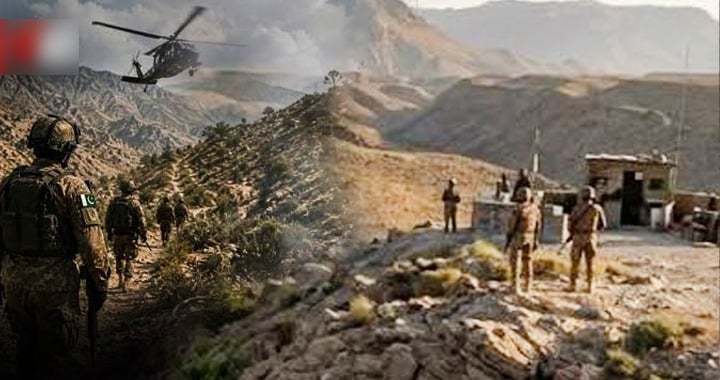
Operation Shabaan represents more than a conventional counterterrorism operation. It reflects an evolving doctrine that combines intelligence, precision air power, coordinated ground assaults and inter-agency cooperation into a sustained campaign rather than isolated military actions.
The steady increase in the number of terrorists neutralized during the operation indicates not simply battlefield success but sustained operational pressure. Intelligence-led actions have targeted hideouts, facilitators, communication networks and logistics rather than waiting for attacks to occur. Such an approach reduces operational freedom for terrorist groups while increasing the costs of maintaining their networks.
Equally important is the changing character of terrorism itself.
The deliberate murder of laborers from Punjab near the Iranian border illustrated a disturbing pattern. These victims were neither combatants nor government officials. They were ordinary Pakistanis seeking employment hundreds of kilometers from home. Such attacks demonstrate that terrorism increasingly seeks to divide communities through fear rather than pursue any legitimate political objective.
Similarly, attacks on cargo vehicles, gas infrastructure, police stations and public utilities reveal a broader strategy aimed at weakening public confidence, discouraging investment and delaying development.
This is precisely why Balochistan’s security cannot be viewed solely through a military lens.
The province possesses extraordinary economic potential. Gwadar Port, mineral wealth, energy resources and regional connectivity projects offer opportunities capable of transforming not only Balochistan but Pakistan’s wider economy. Every attack on highways, communication networks, energy facilities or public infrastructure therefore carries strategic implications beyond its immediate damage.
Security and development have become inseparable.
The state’s ability to protect infrastructure directly influences investor confidence, employment generation and long-term economic growth. Conversely, every successful terrorist attack seeks to create uncertainty that discourages development projects and isolates local communities.
Another important aspect emerging from recent operations is the growing emphasis on intelligence superiority.
Modern counterterrorism increasingly depends less upon numerical force and more upon timely intelligence, aerial surveillance, precision engagement and rapid response. The integration of helicopter support, drone surveillance and coordinated intelligence-based operations demonstrates that Pakistan’s security forces continue adapting to evolving threats.
Balochistan’s security challenge also possesses an external dimension.
Pakistani officials have consistently argued that certain terrorist organizations benefit from support, financing or safe havens beyond Pakistan’s borders. Whether through logistical assistance, propaganda or cross-border movement, the state views these external linkages as a critical component of the province’s security environment. Consequently, border management, intelligence cooperation and diplomatic engagement remain indispensable alongside domestic security operations.
Ultimately, however, lasting peace cannot emerge through military success alone.
The aspirations of the people of Balochistan for education, healthcare, employment, infrastructure and political participation deserve equal attention. Counterterrorism operations create the security space necessary for development, but development must follow if that security is to become permanent.
Operation Shabaan therefore represents more than an operation against terrorism. It symbolizes Pakistan’s determination to ensure that violence does not dictate the future of one of its most strategically significant provinces. Sustained security, responsive governance and inclusive development together offer the most credible path toward a peaceful and prosperous Balochistan.



