
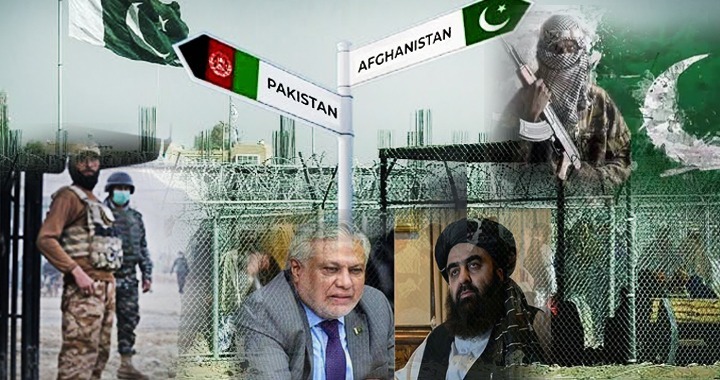
Few bilateral relationships in South Asia carry as much strategic significance as that between Pakistan and Afghanistan. Bound together by geography, history, culture, religion, trade, and one of the world’s longest porous borders, the two neighboring countries have shared both opportunities and challenges for decades. Yet despite their close historical links, cross-border terrorism has continued to cast a long shadow over bilateral relations, emerging as the single most difficult obstacle to building lasting trust and regional stability.
Since the political transition in Afghanistan in August 2021, Islamabad has repeatedly expressed the hope that peaceful relations between the two countries could open a new chapter of regional cooperation. Pakistan consistently maintained that a stable Afghanistan serves the interests of the entire region and has repeatedly advocated constructive engagement with Kabul to address humanitarian, economic, and security challenges. However, security concerns have increasingly dominated bilateral discussions as terrorist violence inside Pakistan has persisted.
Pakistani authorities have consistently maintained that the banned Tehreek-e-Taliban Pakistan (TTP) and several other terrorist organizations continue to operate from sanctuaries inside Afghanistan. According to Pakistan’s official position, these groups use Afghan territory to recruit, train, plan, and facilitate attacks targeting Pakistani security forces, law enforcement personnel, and civilians. Islamabad has repeatedly urged the Afghan authorities to fulfill their international commitments by ensuring that Afghan soil is not used to threaten neighboring countries.
The Afghan Taliban, for their part, have repeatedly rejected allegations that Afghan territory is being used to launch attacks against Pakistan. Taliban officials have maintained that they do not permit any group to use Afghanistan against another country and have often called upon both sides to resolve security concerns through dialogue and cooperation. Despite these assurances, security-related developments over recent months have continued to test bilateral confidence and have ensured that counterterrorism remains the central issue defining relations between the two countries.
Recent remarks by former Afghan National Army Deputy Chief Lt. Gen. Syed Sami Sadat have added another dimension to the debate. In a widely circulated video statement, the retired general alleged that armed groups responsible for attacks inside Pakistan receive support from the Afghan Taliban and financial assistance originating from India, with those resources ultimately benefiting organizations such as the Tehreek-e-Taliban Pakistan (TTP) and the Balochistan Liberation Army (BLA). Given his previous senior military position, the remarks attracted considerable attention among regional security observers, although the allegations have been rejected by those accused and remain contested.
At the same time, reports from Afghanistan suggest that the issue of foreign militant groups has become increasingly difficult for the Taliban authorities themselves to ignore. Reports indicate that members of the TTP based in Kunar province have reportedly been instructed to close their bases and relocate to other provinces, including Ghazni and Badakhshan. While the details and implementation of the reported directive remain unclear, the development has attracted regional attention because it appears to acknowledge the continuing presence of foreign militant elements inside Afghanistan, an issue that has remained central to Pakistan’s security concerns.
Recent events along the Pakistan-Afghanistan border have further demonstrated the fragility of bilateral relations. Security sources reported that Afghan Taliban forces opened fire on Pakistani border positions in the Kurram sector, prompting a calibrated retaliatory response by Pakistan’s security forces. Separate reports also indicated that Afghan Taliban personnel attempted to establish new border positions despite repeated warnings before withdrawing following Pakistan’s response. Regardless of differing accounts from both sides, such incidents illustrate how quickly localized border disputes can escalate into broader diplomatic tensions, reinforcing the importance of effective communication and mutually respected border management mechanisms.
Regardless of competing narratives, one reality is difficult to ignore. Terrorist violence has repeatedly complicated diplomatic efforts, disrupted confidence-building initiatives, and heightened tensions along the Pakistan-Afghanistan border. Every major terrorist attack inside Pakistan inevitably influences bilateral engagement, making security cooperation a prerequisite for meaningful progress in every other field.
Border management has therefore assumed unprecedented importance. Pakistan has invested heavily in strengthening border infrastructure through fencing, surveillance systems, biometric verification, and regulated crossing points. These measures are intended to curb illegal movement, reduce cross-border infiltration, combat smuggling, and enhance overall border security while facilitating legitimate travel and trade. Pakistani officials have consistently argued that effective border management benefits both countries by improving stability and reducing opportunities for transnational terrorist networks.
Meanwhile, Afghanistan itself has entered an increasingly complex security environment. Although the Taliban continue to exercise nationwide control, recent months have witnessed growing reports of armed resistance activities in several provinces. Badakhshan has emerged as one of the principal areas of concern, where reported clashes involving local armed factions, disputes over control of mineral resources, and the emergence of new resistance groups have highlighted internal security challenges confronting the Taliban authorities. Alongside the continued activities of groups such as the National Resistance Front and the Afghanistan Freedom Front, these developments suggest that Afghanistan’s security landscape is becoming increasingly multifaceted.
The persistence of these internal challenges carries implications beyond Afghanistan’s borders. As the Taliban devote greater attention to managing domestic security concerns, neighboring countries continue to expect credible assurances that Afghan territory will not be used by transnational terrorist organizations. Consequently, internal stability and regional security have become increasingly interconnected.
Beyond security considerations, Pakistan continues to advocate economic cooperation with Afghanistan. Trade, transit connectivity, energy projects, and regional transport corridors possess the potential to transform the broader region if supported by a stable security environment. A peaceful Afghanistan offers opportunities not only for bilateral commerce but also for enhanced connectivity linking South Asia with Central Asia. Such ambitions, however, remain difficult to realize when security incidents continue to dominate the bilateral agenda.
The humanitarian dimension cannot be overlooked either. Pakistan has hosted millions of Afghan refugees over several decades and has repeatedly provided humanitarian assistance during periods of conflict, political transition, and economic hardship. Islamabad has consistently maintained that the long-term solution to refugee challenges lies in a peaceful, stable, and economically viable Afghanistan capable of providing security and opportunity for its own citizens.
Afghanistan itself continues to face profound humanitarian and economic challenges nearly five years after the Taliban’s return to power. While large-scale nationwide conflict has declined significantly compared with previous years, millions of Afghans remain dependent upon humanitarian assistance, unemployment remains widespread, foreign investment remains limited, and economic recovery continues to face structural obstacles. The contrast between improved territorial security and continuing economic hardship demonstrates that military control alone cannot guarantee national recovery or long-term stability.
International stakeholders likewise recognize the regional implications of Pakistan-Afghanistan relations. Cross-border terrorism, illicit trafficking, irregular migration, and extremist networks extend beyond bilateral concerns, affecting wider regional stability. Consequently, many governments and international organizations continue to encourage dialogue, practical cooperation, and confidence-building measures between the two neighboring states while emphasizing the importance of preventing terrorist organizations from exploiting Afghan territory.
Pakistan’s broader diplomatic position has remained consistent. Islamabad has repeatedly stated that it seeks peaceful, mutually respectful relations with Afghanistan based upon non-interference, territorial sovereignty, and shared responsibility for combating terrorism. Pakistani officials have emphasized that durable regional peace requires concrete and verifiable action against terrorist organizations irrespective of ideological affiliation or political considerations.
For Afghanistan’s interim authorities, addressing international concerns surrounding terrorism also carries broader implications. Progress in security cooperation could contribute to improved regional confidence, facilitate greater diplomatic engagement, encourage investment, and create conditions more conducive to economic recovery and international interaction. Conversely, persistent allegations regarding the presence or activities of terrorist organizations, combined with continuing internal security challenges, risk prolonging regional mistrust and diplomatic isolation.
Ultimately, the future of Pakistan-Afghanistan relations will depend less on official statements than on developments along the shared border and on measurable progress against cross-border terrorist networks. Geography ensures that the two countries will remain neighbors. History demonstrates that their security and prosperity are deeply interconnected. Building a relationship founded upon mutual trust, economic cooperation, and regional stability therefore requires sustained dialogue alongside credible, verifiable, and consistent efforts to ensure that no terrorist organization is permitted to use either country’s territory to threaten the peace and security of the other.



