
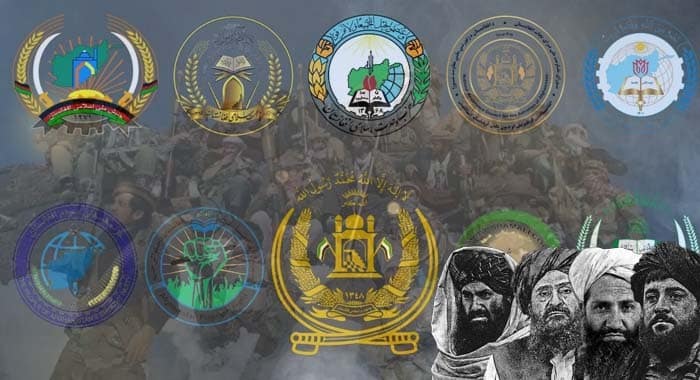
The number of armed groups opposing the Taliban has grown, and reports of operations now span parts of northern, central, southern and western Afghanistan. But the expansion of resistance organizations has exposed a central weakness: a wider presence does not necessarily produce a stronger movement.
The National Resistance Front of Afghanistan (NRF) and the Afghanistan Freedom Front (AFF) are among the established names in the opposition landscape. They have been joined by newer formations, including groups presenting themselves as national liberation movements or representing former security personnel and local networks.
This proliferation complicates the Taliban’s security calculations, but it also raises questions about the opposition’s capacity to coordinate its activities and convert isolated operations into a sustained political challenge.
The problem is not a shortage of resistance announcements. It is the gap between announcing opposition and building an organization capable of changing the balance of power.
Different Groups, Different Priorities
Armed opposition organizations do not necessarily share the same leadership, recruitment networks, regional base or political strategy. Some have emphasized guerrilla operations against Taliban security personnel. Others have focused on political messaging, the mobilization of former government personnel or the creation of a broader national opposition identity.
These differences can provide flexibility. Local formations may understand their areas better than a distant central leadership, while smaller groups may be able to operate without the administrative demands of a large organization.
But decentralization also creates difficulties. Groups may compete for recruits, visibility, resources and recognition. Their leaders may disagree over political objectives, relations with external actors or the terms under which they would participate in a future government.
A shared opponent does not automatically produce a shared strategy.
Without coordination, the same political message can be repeated by several organizations without building a common programme. Separate attacks may force the Taliban to respond in different locations, but they may not generate the cumulative pressure required to produce a strategic shift.
Why Claims of Activity can Conceal Organizational Weakness
The information environment surrounding Afghanistan’s resistance makes it difficult to assess the scale of the challenge. Organizations regularly announce attacks and publish casualty figures, while verification can be constrained by limited access to affected areas.
A growing number of claims may indicate increased activity, but it can also reflect the emergence of new groups seeking recognition. The same incident may attract competing claims, and an operation’s immediate outcome does not establish whether the responsible organization can repeat it.
A serious assessment therefore needs to look beyond the volume of announcements. Can a group sustain operations over several months? Can it replace lost personnel and leadership? Can it communicate reliably across its areas of activity? Can it survive pressure without abandoning its local networks?
These questions are more revealing than the number of names appearing in statements or the cumulative casualty figures published by the parties.
Territorial Control Remains the Hardest Threshold
The Taliban retain a substantial advantage because they control the country’s central institutions and security apparatus. Resistance groups have demonstrated the ability to challenge individual personnel and installations, but they have not established a sustained alternative system of territorial administration.
That distinction separates an insurgent campaign from a credible bid to replace the authorities.
An organization can impose costs through ambushes, targeted attacks and other limited operations without possessing the capacity to hold territory, provide public services or administer a population. Maintaining an underground network is a different task from governing an area under sustained pressure.
Recent reports of resistance activity in additional provinces deserve attention, but geographical spread alone cannot establish that the opposition is approaching this threshold.
The Taliban’s ability to respond, reinforce threatened areas and exploit divisions among their opponents remains a major obstacle.
The Missing Political Center
A coordinated resistance movement would need more than operational cooperation. It would also require agreement on the political order it seeks to establish.
The opposition includes figures and organizations with different backgrounds and ambitions. Some present their objectives in terms of democratic government, constitutional rule and civil rights. Turning these principles into a common political programme would require decisions about leadership, representation, the distribution of authority and the treatment of competing interests.
It would also require reassurance that a change of government would not simply restore former elites or reproduce the rivalries that contributed to Afghanistan’s previous cycles of instability.
Without such a programme, resistance groups risk being united by what they oppose rather than by what they intend to build.
That weakness matters because public dissatisfaction with the Taliban does not automatically translate into support for a particular alternative. A movement seeking national relevance must demonstrate that it can offer a credible future, not merely a common enemy.
Fragmentation is Both a Weakness and a Warning
The multiplication of resistance groups is not proof that the Taliban are losing control. Nor does the opposition’s fragmentation mean that the authorities face no security risks.
A decentralized landscape can sustain localized violence, exploit disagreements within the administration and force the Taliban to distribute resources across several areas. Even when no single group poses a national threat, the cumulative burden may remain significant.
The decisive question is whether these organizations can overcome their divisions without losing the local networks that sustain them.
For the Taliban, the danger lies in assuming that the absence of a unified adversary makes every local challenge insignificant. For the opposition, the danger lies in mistaking the growth of its organizational landscape for progress towards a common political objective.
Afghanistan’s resistance has demonstrated persistence. Whether it can demonstrate strategic coherence is a different question, and one that will determine how much its growing visibility ultimately matters.



