
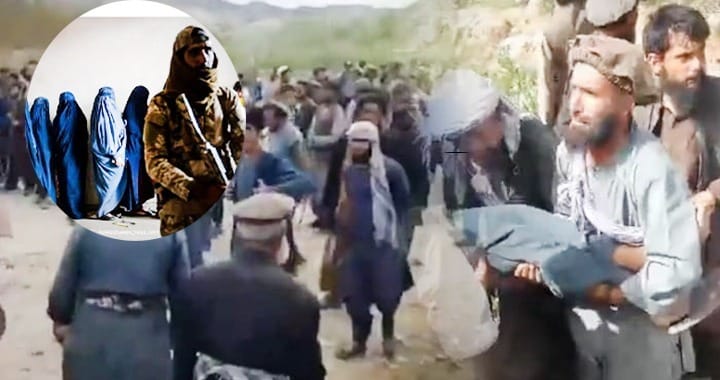
The Taliban have established their authority across Afghanistan, but the consolidation of power has not ended the country’s political conflict. Armed resistance groups continue to announce operations, new opposition formations have emerged, and disputes over political representation remain unresolved. The question confronting the authorities is whether coercive control can deliver lasting stability without a political system that accommodates dissent.
The issue has become more pressing as the Taliban face a changing opposition landscape. The National Resistance Front of Afghanistan (NRF), the Afghanistan Freedom Front (AFF) and several smaller formations have continued to claim attacks against Taliban security personnel and installations. Their capabilities remain uneven, and their claims require independent verification. Yet their persistence demonstrates that the disappearance of the former government did not eliminate organized opposition to Taliban rule.
The Taliban’s challenge is therefore not merely military. It is also political.
Control is not the Same as Consent
Since returning to power in August 2021, the Taliban have consolidated their hold over state institutions and security structures. Their opponents have struggled to establish a comparable presence, while no armed resistance organization has demonstrated the capacity to govern significant territory on a sustained basis.
This imbalance gives the authorities a substantial advantage. They can deploy security personnel, conduct arrests and operations, and restrict the activities of organizations seeking to challenge their rule.
However, the ability to enforce decisions does not necessarily translate into public acceptance. A political system may remain secure in the immediate sense while continuing to face dissatisfaction among sections of the population.
Restrictions on women’s rights, the absence of elected national representation and limits on political participation have become central points of contention. These issues matter even to people who reject armed conflict. Political dissatisfaction does not automatically make someone a supporter of the NRF or another resistance organization, but it can weaken the prospects for broader acceptance of the existing system.
The distinction is important because military pressure addresses the capacity of opponents to act, not necessarily the reasons they oppose the authorities.
Closing Political Space can Strengthen the Argument for Armed Resistance
When political organizations cannot operate openly, dissent has fewer peaceful channels through which to express itself. This does not mean that every excluded political group will take up arms or that armed resistance will necessarily gain public support.
Many Afghans may instead withdraw from politics, seek opportunities abroad or concentrate on economic survival. Others may continue to oppose Taliban policies without joining any organized movement.
Nevertheless, the absence of recognized avenues for political competition creates a structural problem. It allows opposition groups to argue that meaningful change cannot be achieved through peaceful participation.
The Taliban can weaken that argument only by demonstrating that political disagreement does not automatically result in exclusion or punishment. Without such evidence, military victories may settle immediate confrontations while leaving the broader dispute unresolved.
The Opposition Must Offer More than Rejection
Political exclusion does not excuse the weaknesses of armed opposition groups. The NRF and other organizations must demonstrate that they can represent Afghanistan’s diverse population rather than speak only for their own leadership, constituencies or former political networks.
A viable alternative would require a credible programme for governance, equal citizenship, women’s participation, minority rights and public accountability. It would also need to explain how a political transition could avoid renewed factional conflict.
These requirements are particularly important in a country whose recent history includes prolonged war, competing armed factions and repeated changes of government. The rejection of Taliban rule, on its own, does not answer the question of what should replace it.
Opposition groups that cannot demonstrate political cohesion risk remaining armed networks with limited capacity to influence the national future, even if their attacks continue.
A Different Measure of Stability
The Taliban may continue to contain armed opposition through security operations. But a lasting political settlement would require a broader measure of success than the absence of large-scale fighting.
That measure would include whether Afghans can participate in decisions affecting their lives, whether women can exercise their rights, whether political opponents can organize peacefully and whether disputes can be addressed without coercion.
None of these changes is guaranteed, and the resistance is not necessarily positioned to bring them about. But they remain central to the question of whether Afghanistan’s present political order can achieve durable stability.
The Taliban have demonstrated their ability to consolidate power. The unresolved question is whether they can turn that control into a political system that people have meaningful reasons to accept.
Security can prevent opponents from taking power. Political inclusion offers a different possibility: reducing the number of people who believe that taking up arms is their only remaining option.



