
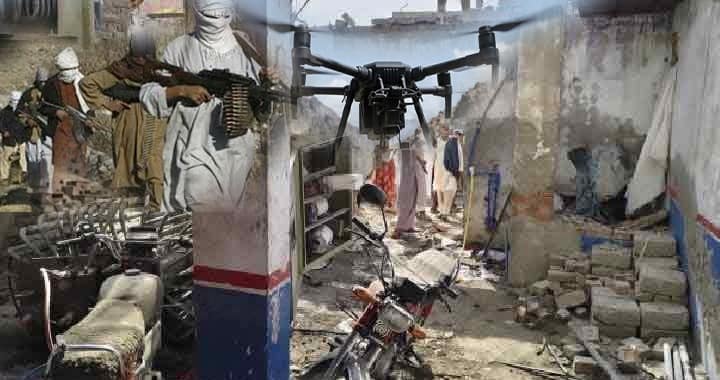
Khyber Pakhtunkhwa’s southern belt is once again witnessing a dangerous escalation in terror violence, as recent incidents across Bannu, Bajaur, Dera Ismail Khan, and adjoining districts reflect both evolving terrorist tactics and intensified counterterror responses by Pakistani security forces.
The latest wave of violence has included quadcopter attacks on civilian populations in Bannu’s Jani Khel area, assaults on police and military installations, targeted infiltration attempts, and renewed efforts by terrorist networks to spread panic through coordinated propaganda and misinformation campaigns.
What distinguishes the current phase from earlier patterns is the increasing operational diversity displayed by terrorist groups. In recent days alone, civilians, including women and children, were injured in quadcopter strikes in Bannu, while security forces simultaneously carried out intelligence-based operations targeting linked terrorist networks in the same region.
The attack on the Mina Camp in Bajaur further highlighted the scale of the threat, where heavily armed attackers attempted a coordinated assault involving explosives and sustained gunfire. Although the attack was repelled and nine terrorists were eliminated, the incident demonstrated the continued intent of terrorist groups to strike fortified installations and generate symbolic psychological impact.
Simultaneously, security forces intensified retaliatory operations. In Jani Khel’s Shad Khan Kalla area, nine terrorists linked to the Fateh Khel police attack were neutralized during a joint intelligence-based operation, while separate operations in Dera Ismail Khan’s Kulachi region led to the elimination of additional Khawarij elements.
Analysts believe the repeated targeting of southern KP districts reflects their continued strategic relevance for terrorist groups attempting to maintain operational visibility despite sustained losses in intelligence-based operations.
Security experts also warn that the growing use of quadcopters and improvised aerial tactics marks an important shift in militant methodology. These low-cost systems allow terrorists to target civilian populations and sensitive locations from a distance while avoiding direct confrontation.
At the same time, the information battlefield has become increasingly active. Authorities recently rejected false social media claims regarding alleged breaches of security headquarters in Bajaur, describing the reports as part of a deliberate attempt to create panic and undermine public confidence.
Officials maintain that the state’s counterterror posture remains aggressive and intelligence-driven under ongoing national security frameworks, including operations linked to Azm-e-Istehkam and the National Action Plan.
Despite the intensifying violence, security forces continue to demonstrate rapid response capability and operational adaptability. However, the persistence of attacks across multiple districts also underscores the long-term and evolving nature of the threat facing KP’s frontline regions.



