
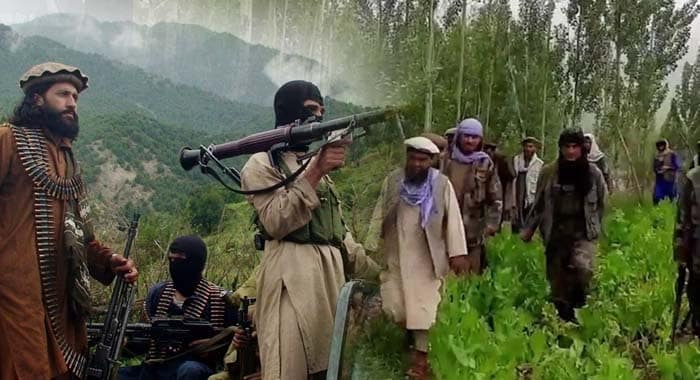
Reports of a fresh Afghan Taliban crackdown on the Tehreek-e-Taliban Pakistan (TTP) have generated considerable attention, with claims that commanders and supporters of the terrorist organization have been arrested, their residences searched and some members ordered to leave Afghanistan.
But for Pakistan, the central question is not whether reports of arrests have emerged.
It is whether the Afghan Taliban are actually prepared to dismantle the TTP’s operational infrastructure on Afghan soil.
So far, there is no publicly verifiable evidence that would justify treating the reported measures as a fundamental change in Taliban policy.
The distinction is important because similar claims and temporary measures have surfaced before, while the TTP has continued to maintain an operational presence and launch attacks against Pakistan.
From reported arrests to demonstrable action
Recent reports have claimed that around 20 TTP commanders and supporters have been detained across Kabul, Khost, Paktika, Kunar, Ghazni, Maidan Wardak, Kandahar and Uruzgan.
Other reports have described searches of TTP-linked residences and pressure on members of the organization to leave certain areas.
Some TTP-linked figures have reportedly been detained, although accounts concerning the identity and whereabouts of several individuals remain contradictory.
More importantly, neither the Afghan Taliban nor Pakistani authorities have publicly confirmed the reported scale of the operation.
That leaves the alleged crackdown in an evidentiary grey zone.
For Pakistan, a handful of arrests, even if eventually confirmed, would not by themselves constitute a counterterrorism breakthrough. The real measure would be whether TTP commanders lose their freedom of movement, whether training and logistical networks are dismantled, whether fundraising and recruitment channels are disrupted and, above all, whether the organization’s ability to plan and execute attacks against Pakistan is curtailed.
Why Islamabad has reasons to remain skeptical
Pakistan’s skepticism is rooted in experience.
Since the Afghan Taliban returned to power in August 2021, Islamabad has repeatedly called for concrete action against the TTP. Yet the terrorist organization has continued to operate from Afghan territory, according to repeated Pakistani allegations and international assessments.
The relationship between the Afghan Taliban and the TTP also did not emerge after 2021.
The two movements share ideological, organizational and historical links, while TTP fighters have fought alongside the Afghan Taliban during their long campaign against the former Afghan government and international forces. Analysis of the post-2021 environment has documented the TTP’s close relationship with the Afghan Taliban and its subsequent expansion after the Taliban takeover.
That history makes the notion of the Taliban suddenly turning decisively against the TTP difficult to accept without evidence.
The reported Mir Ali understanding is another part of that history. Accounts of the arrangement describe cooperation between the Afghan Taliban and TTP-linked foreign fighters, reinforcing the argument that the relationship between the two sides has been deeper than a simple relationship between a government and an external terrorist organization.
This does not mean every Taliban commander supports every TTP action, nor does it establish that the present Taliban leadership cannot change policy.
It means that a genuine policy reversal would require considerably more than reported arrests.
Relocation is not dismantling
The reported relocation of TTP members is particularly important in this regard.
Moving terrorists from one Afghan province to another does not eliminate the threat to Pakistan. It merely changes its geography.
If TTP members are shifted away from border areas but retain their command structures, weapons, communications, financing and freedom to operate elsewhere in Afghanistan, Pakistan’s fundamental security problem remains intact.
Indeed, relocation without disarmament could create a more difficult counterterrorism environment by dispersing the organization rather than dismantling it.
That is why Pakistan’s longstanding demand has centered on preventing Afghan territory from being used for terrorism against Pakistan, not simply moving terrorists away from one particular border zone.
The Taliban’s wider security predicament
The timing of the alleged TTP crackdown is also worth examining.
The Afghan Taliban are facing pressure on several fronts.
In Badakhshan, the Afghanistan Freedom Front has continued claiming attacks against Taliban positions. The group recently claimed a pre-emptive attack against Taliban positions in Zebak, while subsequent fighting has continued in the area.
The AFF has also claimed responsibility for a rocket attack on the Taliban governor’s office and a nearby security post in Faizabad, claiming four Taliban personnel were killed and five wounded. Those casualty figures remain claims by the group and have not been independently verified.
These developments are relevant because they expose the difference between projecting control and demonstrating control.
The Taliban have spent five years presenting Afghanistan as a country brought under control after decades of war. Yet continuing armed opposition in parts of the country demonstrates that security remains contested in at least some areas.
Against that backdrop, a reported crackdown against the TTP could also be viewed as a response to mounting diplomatic and security pressure rather than proof of a strategic decision to sever relations with the organization.
The Brothers Factor Cannot Simply be Ignored
There is another reality that Pakistan cannot afford to overlook.
The TTP has historically viewed the Afghan Taliban as ideological brothers rather than an entirely foreign organization.
That relationship was strengthened during the war against the former Afghan government and international forces. The TTP’s fighters and networks were part of the wider militant ecosystem supporting the Taliban’s return to power.
Expecting the Taliban to launch a sustained campaign against people with whom they share ideological affinities, wartime history and longstanding personal relationships therefore requires evidence of a political decision strong enough to overcome those ties.
So far, that evidence has not appeared publicly.
The question is not whether individual Taliban authorities can arrest TTP members. They clearly possess the coercive capability to detain people.
The question is whether they want to dismantle the TTP as an organization and are prepared to absorb the consequences of doing so.
That is a much bigger question.
Pakistan Needs Results, not Relocation Narratives
For Islamabad, the appropriate response is therefore neither to dismiss every report of Taliban action nor to accept the reported crackdown at face value.
The practical test is straightforward.
Are TTP leaders being permanently deprived of operational freedom?
Are their camps and logistical networks being dismantled?
Are their financial channels being closed?
Are their weapons and communications infrastructure being seized?
Are Afghan facilitators being arrested?
Are cross-border attacks declining?
And is there evidence that the TTP can no longer use Afghan territory as a rear base?
Until those questions can be answered affirmatively, the reported arrests should remain exactly what they are: reported arrests, not proof of a strategic transformation.
The real test lies ahead
The Taliban may eventually decide that continued association with the TTP carries greater costs than benefits.
If that happens, Pakistan will have little difficulty recognizing it.
A genuine policy shift would be visible through sustained action, not difficult-to-verify reports.
For now, the reported crackdown remains unconfirmed by the Afghan Taliban and Pakistani authorities, while contradictory accounts surround some of the alleged arrests.
That leaves the central issue unresolved.
Are the Taliban actually dismantling the TTP, or are they temporarily managing the pressure surrounding it?
Pakistan has every reason to wait for the answer to emerge through actions rather than assurances.
And until those actions become sustained, verifiable and measurable, Islamabad would be justified in treating the reported crackdown with caution.



