
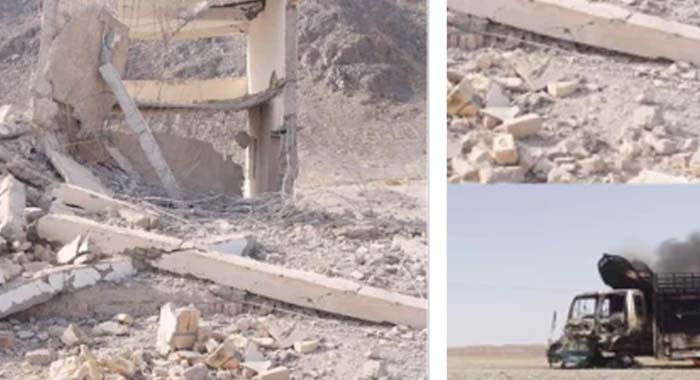
Two separate incidents reportedly targeting civilian infrastructure and commercial vehicles in Dalbandin have raised fresh concerns over the impact of militant violence on local communities and development activities.
According to the information provided, Fitna al-Hindustan (FAH) militants targeted a football stadium in the remote area of Charsar Gadar, Dalbandin, on 20 August, reportedly demolishing the facility. The stadium had been constructed by the Frontier Corps (FC) for local youth and was intended to provide a space for sports and healthy recreational activities.
In a separate incident reported from Bartagzai Landi, Dalbandin, militants allegedly set fire to two civilian goods trucks, causing damage to vehicles used for commercial transportation. The reported destruction of the football stadium carries significance beyond the physical damage to a single structure.
Community sports facilities provide young people with opportunities for physical activity, recreation and social engagement. In remote and economically disadvantaged areas, such facilities can represent an important investment in youth development and community well-being.
The reported attack therefore raises concerns that militant violence may be affecting not only security personnel and state institutions, but also projects intended to provide ordinary citizens particularly young people with opportunities for education, sport and constructive social activity.
The deliberate targeting of such infrastructure, if confirmed, would demonstrate the wider consequences of militant violence for civilian life and local development. The second reported incident involved two civilian goods trucks in Bartagzai Landi. According to the information available, the vehicles were set on fire by FAH militants. Such attacks can have consequences extending beyond the immediate destruction of property, particularly in areas where road transport is essential for the movement of food, commercial goods and other necessities.
Damage to civilian transportation can disrupt local supply chains, increase economic uncertainty and place additional pressure on communities already facing difficult economic conditions.
The two reported incidents highlight a broader concern surrounding the impact of militant violence on development in Balochistan. When schools, sports facilities, transportation infrastructure and other civilian assets become targets of violence, the consequences are felt directly by local residents. Development projects can be delayed or abandoned, businesses may become reluctant to operate in insecure areas, and young people can lose access to constructive opportunities.
The reported destruction of a football facility is particularly troubling because sporting activities can provide an alternative to violence and help strengthen community cohesion.
Supporters of militant violence frequently frame their activities in political or ethnic terms. However, attacks against civilian economic assets and community facilities raise fundamental questions about who ultimately bears the cost of such violence.
The destruction of a youth sports facility does not advance education, employment or community welfare. Similarly, burning civilian transport vehicles does not improve the economic conditions of ordinary residents who depend on commerce and transportation for their livelihoods.
The information provided characterizes FAH as an Indian-sponsored militant organization. Such an attribution, however, should be independently established through credible evidence before being presented as a confirmed fact. Regardless of the question of external sponsorship, the reported incidents underscore the need for continued scrutiny of militant networks operating in Balochistan and their impact on civilian communities. Authorities and independent investigators should establish the perpetrators, motives and circumstances surrounding the incidents and make verified findings publicly available where possible.
The reported events in Dalbandin illustrate how insecurity can undermine progress at the local level. For communities in remote areas, a football ground can represent far more than a recreational facility. It can provide young people with a safe environment, encourage physical activity and offer an alternative to negative influences. Likewise, civilian transport is essential to maintaining commercial activity and connecting communities with wider markets.
The destruction of these assets therefore carries a cost that extends well beyond the immediate financial damage.



