
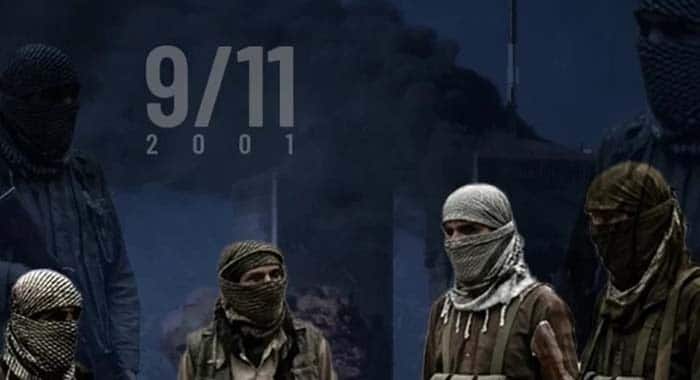
Twenty-five years after the attacks of September 11, 2001, the world continues to live with the consequences of a day that fundamentally transformed international security. The attacks did not merely claim thousands of lives in New York, Washington and Pennsylvania. They triggered a global campaign against terrorism, reshaped American foreign policy, brought Afghanistan to the centre of international politics and ultimately produced a twenty-year military intervention whose conclusion remains one of the most consequential episodes of the post-Cold War era.
Yet the history of September 11 begins before the morning when four commercial aircraft were hijacked. In the months preceding the attacks, Afghanistan was already attracting international concern because of the Taliban’s rule, the presence of al-Qaeda and the country’s growing importance as a base for transnational militant networks. Among those attempting to draw international attention to the danger was Ahmad Shah Massoud, the Afghan resistance commander who had fought both Soviet forces and the Taliban.
Massoud travelled to Strasbourg in April 2001 and addressed the European Parliament about the deteriorating situation in Afghanistan. His message focused on the Taliban, the humanitarian crisis and the danger posed by international terrorism. European leaders were therefore receiving warnings about the convergence of Afghanistan’s political instability, extremist networks and international terrorism months before the attacks on the United States.
Massoud’s assassination on September 9, 2001, added an extraordinary dimension to the events that followed. He was killed in a suicide attack by individuals who had presented themselves as journalists. The assassination occurred only two days before the attacks in the United States and removed one of the Taliban’s most formidable opponents at precisely the moment when Afghanistan was approaching a dramatic turning point.
The significance of Massoud’s warnings became clearer only after September 11. European officials later acknowledged that his concerns deserved greater attention. His story therefore represents one of the enduring questions of the pre-9/11 period: how many warning signs can exist before a threat becomes sufficiently visible for governments to act decisively?
The morning of September 11 changed the international system almost instantaneously. Nineteen al-Qaeda operatives hijacked four passenger aircraft and turned them into weapons against targets in the United States. American Airlines Flight 11 struck the World Trade Center’s North Tower at 8:46 a.m., followed by United Airlines Flight 175 striking the South Tower at 9:03 a.m.
The attacks then expanded beyond New York. At 9:37 a.m., American Airlines Flight 77 struck the Pentagon near Washington, D.C. A fourth aircraft, United Airlines Flight 93, crashed in Pennsylvania at 10:03 a.m. after passengers attempted to take control of the plane. Investigators later determined that the aircraft was intended to reach a target in Washington.
The attacks killed 2,977 people, excluding the 19 hijackers, and included victims from numerous countries. Families across the world were affected, while governments suddenly confronted a form of terrorism capable of conducting a coordinated attack on an unprecedented scale.
The attacks also exposed the consequences of allowing a transnational terrorist organization to develop substantial operational capacity within a country where the central government was either unable or unwilling to prevent its activities. Afghanistan, already under Taliban control, immediately became the focal point of the international response.
Osama bin Laden and al-Qaeda had established a significant presence in Afghanistan during the Taliban era. The Taliban provided bin Laden and his organization with sanctuary, allowing al-Qaeda to maintain training facilities and organizational infrastructure.
After September 11, Washington demanded that the Taliban hand over bin Laden and dismantle al-Qaeda’s presence in Afghanistan. The demands became the central issue in the rapidly escalating confrontation between the United States and the Taliban government. When the dispute failed to produce an outcome acceptable to Washington, the United States and its allies launched military operations in Afghanistan in October 2001. The Taliban government collapsed within weeks, and its leadership was driven from Kabul. The initial military campaign was therefore relatively short. What followed was not.
The international mission in Afghanistan gradually expanded beyond the immediate objective of dismantling al-Qaeda. A new Afghan political order was established, institutions were rebuilt and substantial international resources were committed to developing the country’s security forces, economy and public institutions. The United States and its allies increasingly became involved in a broader counterinsurgency campaign against the Taliban. Afghan security forces were trained and equipped to assume responsibility for the country’s security, while international forces conducted operations against insurgent groups.
The mission consequently became much larger than the operation that had begun in October 2001. Afghanistan became a long-term project involving military operations, diplomacy, development assistance and state-building. There were areas in which significant progress was achieved. Millions of Afghan children gained access to education, public institutions expanded and infrastructure was developed with international assistance. At the same time, Afghanistan continued to suffer from insurgency, political disputes, corruption, displacement and civilian casualties. The central challenge became increasingly difficult: defeating individual terrorist and insurgent groups was one objective, but creating a stable political order capable of preventing their return was another.
The fall of the Taliban did not bring the search for Osama bin Laden to an end. The al-Qaeda leader remained at large for nearly a decade after the September 11 attacks. American intelligence agencies pursued information about his whereabouts across Afghanistan and the surrounding region. Eventually, intelligence concerning one of his couriers led investigators to a compound in Abbottabad, Pakistan.
On May 2, 2011, U.S. special operations forces conducted a raid on the compound and killed bin Laden. His death represented a major moment in the history of the post-9/11 campaign and removed the founder and principal leader of al-Qaeda. But his death did not eliminate the organization. The broader lesson was that terrorist movements can become institutionalized beyond the individuals who establish them. Leadership can be replaced, networks can fragment and ideology can survive the death of its most prominent figure.
The Afghan conflict continued long after bin Laden’s death. Taliban forces remained capable of conducting attacks and maintaining influence across parts of the country, while Afghan security forces increasingly became responsible for fighting the insurgency. The war imposed a heavy cost on Afghanistan. Civilians endured repeated violence, displacement and economic hardship. Afghan security personnel suffered substantial casualties, while American and allied troops also continued to die in the conflict.
The financial cost was enormous as well. The international community committed vast resources to military operations, reconstruction and development. Yet the Taliban demonstrated an enduring capacity to survive. This became one of the defining characteristics of the Afghan conflict: the Taliban did not need to defeat the international coalition in a conventional military confrontation. It needed to survive long enough for political circumstances to change.
After years of war, negotiations eventually became central to the strategy for ending the conflict. On February 29, 2020, the United States and the Taliban signed the Doha Agreement. The agreement established a framework for the withdrawal of U.S. and allied forces and contained commitments relating to security and intra-Afghan negotiations.
The agreement represented a fundamental shift from a military strategy focused on defeating the Taliban toward a political process aimed at ending the conflict. The withdrawal that followed would ultimately reshape Afghanistan’s political future.
In 2021, U.S. and allied forces began their final withdrawal from Afghanistan. As foreign forces departed, the Taliban advanced rapidly across the country. On August 15, 2021, Taliban forces entered Kabul, and the government of the Islamic Republic of Afghanistan collapsed. The speed of the collapse surprised governments around the world. Afghan security forces, despite years of training and international assistance, proved unable to prevent the Taliban’s rapid advance once international military support was withdrawn.
The images of desperate Afghans attempting to leave the country became among the most recognizable scenes of the end of the war. The Taliban’s return did not mean that the United States had formally surrendered Afghanistan. The outcome resulted from multiple factors, including the withdrawal agreement, weaknesses within Afghanistan’s political and security institutions, the Taliban’s military campaign and the rapid disintegration of government authority. Nevertheless, the historical irony was unmistakable: the movement removed from Kabul in 2001 was once again governing Kabul twenty years later.
The Taliban’s return also revived questions about Afghanistan’s relationship with international terrorist organizations. In July 2022, Ayman al-Zawahiri, who had succeeded bin Laden as the leader of al-Qaeda, was killed in a U.S. drone strike in Kabul. His presence in the Afghan capital became a major international security concern. The incident raised questions about how senior al-Qaeda leadership could operate from within Kabul after the Taliban had returned to power.
The episode demonstrated that the death of bin Laden had not ended al-Qaeda’s senior leadership structure. It also reinforced a concern that had existed since before September 11: whether Afghanistan could again become an environment in which international terrorist organizations maintain relationships, personnel or operational capabilities.
One of the most persistent misconceptions surrounding counterterrorism is that eliminating a group’s senior leadership necessarily eliminates the organization itself. The history of al-Qaeda demonstrates otherwise. Bin Laden was killed in 2011. Al-Zawahiri was killed in 2022. Yet the organization survived both leadership transitions.
The continued appearance of al-Qaeda-linked propaganda and the emergence of younger figures associated with the organization’s ideological legacy demonstrate the durability of extremist movements. This does not mean that al-Qaeda today possesses the same capabilities it had in 2001. It does not. The organization has been significantly disrupted, and the international counterterrorism environment has changed dramatically. But the survival of its ideology and networks illustrates why counterterrorism cannot be measured solely by the elimination of individual leaders.
The September 11 attacks killed thousands of people in a single day. The Afghan war produced a very different kind of human tragedy: years of continuous violence. Afghan civilians were repeatedly caught between Taliban attacks, militant violence, airstrikes, military operations and political instability. Millions were displaced internally or forced to leave the country.
Afghanistan’s children experienced a childhood shaped by insecurity. Families lost relatives. Communities were repeatedly disrupted. At the same time, Afghan society underwent significant changes during the twenty years of international involvement. Education expanded, particularly for girls in many parts of the country, media organizations multiplied and a generation became accustomed to institutions and freedoms that had not existed under the first Taliban government.
The legacy of the intervention therefore cannot be reduced to either complete success or complete failure. It produced genuine social and institutional changes while failing to create a political and security order capable of surviving the departure of international forces.
This is perhaps the central question of the post-9/11 era. The United States entered Afghanistan because al-Qaeda had attacked the United States and the Taliban had provided sanctuary to its leadership. The Taliban government was removed. Al-Qaeda’s senior leadership was hunted. Bin Laden was killed.
But the Taliban eventually returned to power. This sequence does not erase the achievements of the international counterterrorism campaign. Nor does it mean that the original military objectives were never achieved. It does, however, demonstrate the difference between tactical success and long-term strategic outcomes. Removing a government is one thing. Destroying a terrorist organization is another. Building a sustainable political system is something else entirely. The Afghan experience demonstrated how difficult it is to accomplish all three simultaneously.
Afghanistan in 2026 is not Afghanistan in 2001. The country has changed profoundly. The Taliban have returned to power, international forces have departed and the political system created after the fall of the first Taliban regime has disappeared.
Yet concerns about terrorism have not disappeared with them. The presence of terrorist organizations in or around Afghanistan continues to be monitored by governments and international security institutions. The relationship between the Taliban authorities and different militant organizations remains an important issue in assessments of regional security.
The central concern is therefore no longer simply whether Afghanistan can be occupied or whether the Taliban can be defeated. The more difficult question is whether Afghanistan can remain sufficiently stable and secure to prevent its territory from again becoming a platform for international terrorism.
Ahmad Shah Massoud’s place in this history is unusually poignant. He warned European leaders about Afghanistan and the danger posed by the Taliban and international terrorism. Two days before September 11, he was assassinated. His death removed one of the strongest political and military opponents of the Taliban immediately before the movement’s confrontation with the United States transformed Afghanistan forever.
Massoud did not predict every detail of September 11, and it would be historically inaccurate to portray his warnings as a precise forecast of the attacks. His importance lies elsewhere. He recognized that the Taliban’s control of Afghanistan, combined with the presence of international terrorist networks, represented a threat extending beyond Afghanistan’s borders. The world would soon discover the scale of that threat.
The quarter-century since September 11 has produced enormous changes in global counterterrorism. Intelligence agencies cooperate more extensively. International financial networks are monitored more closely. Air travel security has been transformed. Terrorist communications are subjected to unprecedented surveillance. Special operations forces have developed sophisticated capabilities for targeting terrorist leadership. Yet no military or intelligence system can guarantee that terrorism will disappear. The Afghan experience demonstrates why.
Terrorist organizations are adaptive. They exploit political instability, ideological grievances, weak institutions and ungoverned spaces. They do not necessarily require conventional military strength. They require opportunity. That is why early warning, intelligence-sharing, political engagement and institutional resilience remain as important as military power.
The deepest lesson of September 11 may therefore be found not in the destruction of the World Trade Center, the invasion of Afghanistan or even the eventual death of Osama bin Laden. It may be found in the warnings that preceded the catastrophe. Threats rarely appear fully formed. They develop gradually.
They may first emerge as political instability, extremist recruitment, militant sanctuaries, radical propaganda or isolated warnings from individuals who understand a particular conflict better than outsiders do. The challenge for governments is recognizing when those individual signals form a larger pattern. Massoud’s warning is remembered because history gave it terrible context only months later. The subsequent twenty-five years demonstrate another lesson: recognizing a threat is easier than permanently resolving it.
The United States went into Afghanistan with a clear counterterrorism objective. The mission evolved into a vast international intervention. After twenty years, foreign forces departed and the Taliban returned to Kabul. Bin Laden was killed. Al-Zawahiri was killed. The Taliban was removed and later returned. The battlefield changed, the actors changed and the methods changed. But the fundamental challenge remained.
A quarter century after September 11, the world should remember the victims first. But remembrance alone is not enough.
The attacks changed international politics because they demonstrated how a relatively small terrorist organization could exploit sanctuary, technology, global mobility and strategic surprise to produce consequences on a historic scale. The war that followed demonstrated the limits of military power when confronted with deeply rooted political, social and ideological problems.
Afghanistan demonstrated the difficulty of translating battlefield victories into durable political stability. The deaths of bin Laden and al-Zawahiri demonstrated that eliminating leaders can weaken terrorist organizations without necessarily eliminating the ideas and networks that sustain them. And Massoud’s story demonstrates the importance of listening to credible warnings before a threat becomes a catastrophe.
Twenty-five years later, the most important question is therefore not simply what happened on September 11, 2001. It is what the world does when the next warning arrives. Because history rarely announces its turning points in advance. Sometimes the warning comes months before the crisis.
Sometimes it comes from a remote battlefield. Sometimes it comes from an intelligence report that appears insignificant. And sometimes it comes from a voice that the world hears—but does not hear loudly enough.
September 11 changed the world once. The responsibility of the present generation is to ensure that the next warning is recognized before another September 11 is required to explain what it meant.



