
There is a pattern emerging from Pakistan’s recent counterterrorism operations that deserves far more attention than it receives.
Again and again, Afghan nationals are being identified among terrorists eliminated during operations in Pakistan or among those attempting to cross into the country.
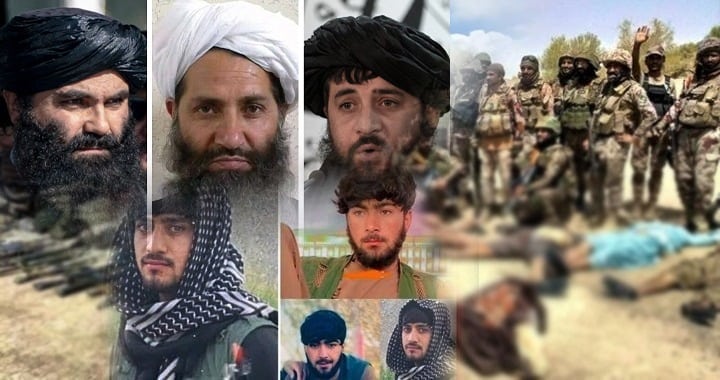
The latest identification of Dr Ubaidullah Saeed Badri, an Afghan national from Logar who was affiliated with the banned Tehreek-e-Taliban Pakistan (TTP), is another piece of that pattern.
His case came shortly after 27 terrorists were eliminated while attempting to infiltrate Pakistan through the Ghulam Khan border area. Five of those terrorists were subsequently identified as Afghan nationals.
One case can be dismissed as an individual.
Repeated cases cannot.
This Is About More Than Nationality
It is important to make one distinction.
Being Afghan does not make someone a terrorist. Millions of Afghans are peaceful people, and nationality itself has no connection with terrorism.
The security concern arises when Afghan nationals are repeatedly identified as members of terrorist organizations, suicide attackers, facilitators or infiltrators involved in attacks against Pakistan.
That turns the issue into a question of infrastructure rather than identity.
Where were these individuals recruited?
Where were they trained?
Where did they receive weapons?
Who facilitated their movement?
Where did they spend time before entering Pakistan?
And, most importantly, from where did the organization supporting them operate?
These are the questions that matter.
The Border Is No Longer Just a Line on a Map
Pakistan’s western border has historically been difficult to control because of terrain, family connections, trade routes and decades of conflict.
Terrorist organizations understand this geography.
An infiltration attempt therefore cannot be seen simply as a few individuals crossing a border. It can represent the final stage of a much longer process involving recruitment, training, logistical preparation and movement.
That is why the Ghulam Khan incident matters.
Twenty-seven terrorists attempting to enter Pakistan in one operation indicates organization and intent. The subsequent identification of Afghan nationals among them makes the question of Afghanistan’s role even more difficult to avoid.
Pakistan has repeatedly argued that terrorist groups operating from Afghan territory pose a direct threat to its security. International reporting and UN-related assessments have also repeatedly examined the presence and activities of terrorist organizations in Afghanistan.
The Taliban authorities cannot answer this challenge merely by repeating that Afghan soil will not be used against Pakistan.
The security question is whether terrorist networks are actually being denied the ability to use it.
Assurances Must Eventually Produce Results
There is a fundamental difference between an assurance and a security outcome.
An assurance says terrorists will not be allowed to operate.
A security outcome means terrorists are arrested, expelled, disarmed or otherwise prevented from attacking neighboring countries.
Pakistan needs the second.
The repeated discovery of Afghan nationals among terrorists also weakens the credibility of any argument that Pakistan’s security concerns are simply political accusations.
When a terrorist is identified, his nationality is a fact.
When a terrorist group attempts to cross the border, the attempted infiltration is a fact.
When weapons, explosives and terrorist infrastructure are recovered, those are facts as well.
The debate should therefore move beyond rhetoric.
The Problem Is Bigger Than the TTP
Another mistake would be to treat this only as a TTP issue.
The recent CTD operation in Peshawar against ISKP demonstrates that Pakistan faces multiple terrorist threats simultaneously.
ISKP, TTP, BLA and Al-Qaeda do not necessarily share the same ideology, objectives or operational structure. But the existence of multiple networks creates a complicated security environment in which training techniques, propaganda methods, weapons and logistical expertise can circulate.
This is why Afghanistan’s security environment matters beyond the TTP.
A country hosting multiple terrorist networks does not have to control every one of them directly for the networks to become a regional security problem.
The existence of training camps, facilitators, foreign fighters and terrorist leadership creates an environment in which instability can travel.
Pakistan’s Response Is Becoming More Layered
Pakistan’s counterterrorism response is also changing.
There are intelligence-based operations inside the country.
There are border-security measures.
There are operations against infiltration attempts.
There are targeted CTD actions against terrorist cells.
There is action against terrorist propaganda online.
And there is increasing diplomatic pressure on Kabul.
This layered approach is necessary because terrorism itself has become layered.
But the long-term solution cannot depend entirely on Pakistan.
If terrorist networks continue to enjoy sanctuary, training opportunities or logistical freedom across the border, Pakistan will continue to face the consequences.
That is why every new Afghan national identified among terrorists should not merely be treated as another statistic.
It should trigger the same chain of questions about recruitment, training, facilitation and movement.
The Taliban authorities have repeatedly been given the opportunity to demonstrate that their assurances mean something.
The test is not what they say.
The test is what happens to the terrorists operating from their territory.
Until that gap between assurances and outcomes is closed, Pakistan will have every reason to treat the western border as an active counterterrorism front.



