
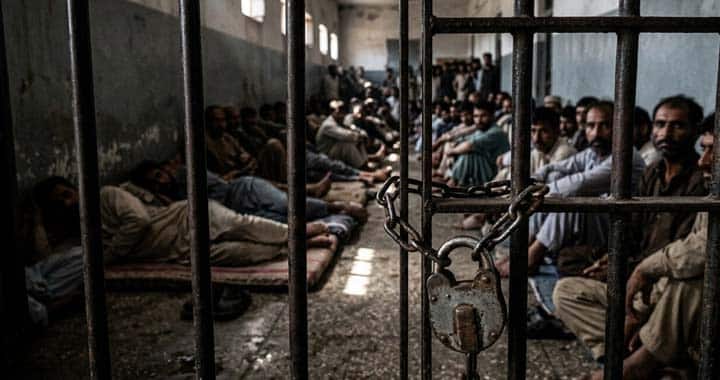
Afghanistan is facing a deepening human rights crisis behind prison walls, with more than 30,000 people reportedly incarcerated under Taliban rule, while mounting documentation of arbitrary arrests, torture, ill-treatment and enforced disappearances raises serious concerns over the treatment of detainees and the absence of accountability.
According to figures reported by the Taliban’s own prison administration, Afghanistan’s prison population stood at approximately 30,300 as of 20 July 2026, reflecting the scale of incarceration under the current regime.
Human rights organisations have documented disturbing accounts of torture and abuse inside Taliban detention facilities, including waterboarding, electric shocks, severe beatings, sexual violence and threats against detainees’ family members. These practices have reportedly been used to extract confessions, intimidate prisoners and punish individuals perceived as opponents of the regime.
Former government officials, members of the previous Afghan security forces, journalists, civil society activists and individuals perceived to oppose Taliban rule have faced arrests, detention and alleged mistreatment.
Despite the general amnesty announced by the Taliban leadership following its return to power in August 2021, violations against former government officials and security personnel have continued to be documented.
The persistence of such cases raises serious questions about the credibility of the announced amnesty and the protection available to individuals who previously served Afghanistan’s institutions.
The latest findings of the United Nations Assistance Mission in Afghanistan (UNAMA) provide further evidence of the deteriorating human rights environment. Between July and September 2026, UNAMA documented 443 arbitrary arrests and detentions and 97 incidents of ill-treatment by personnel of the Taliban’s Ministry for the Propagation of Virtue and Prevention of Vice.
The documented incidents were associated with the enforcement of Taliban restrictions concerning women’s dress, men’s beards and hairstyles, attendance at congregational prayers and prohibitions on music.
These findings highlight the expanding reach of arbitrary enforcement and the serious consequences for ordinary Afghans living under the regime’s restrictive policies.
Particular concern has also emerged over the treatment of Salafi communities, especially in eastern Afghanistan. Reports have documented arrests, disappearances and killings involving individuals suspected of links to Islamic State, alongside allegations that civilians without established connections to the organisation have also been targeted.
In 2022, a representative of the Salafi community alleged that more than 5,000 religious scholars, preachers and students had been imprisoned across at least 15 provinces during the preceding year.
These allegations raise serious concerns about religious freedom, collective punishment and the use of security accusations to target vulnerable religious communities.



