
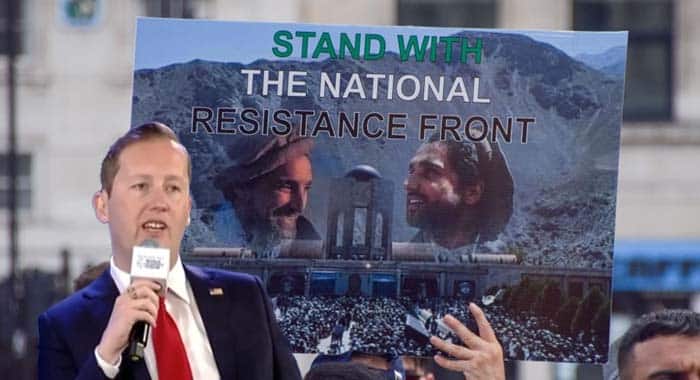
Growing internal divisions and an expanding armed resistance against the Taliban regime are raising fresh questions about the group’s ability to maintain control across Afghanistan, according to General Yasin Zia, head of the Afghanistan Freedom Front and former Afghan military chief.
In a recent statement, General Zia claimed that armed resistance against the Taliban is gaining momentum and that the situation is increasingly moving beyond the regime’s ability to control. His remarks point to what he described as mounting pressure on the Taliban from both internal divisions and resistance forces opposed to its rule.
General Zia alleged that the Taliban regime is increasingly relying on sympathetic voices and coordinated propaganda networks in an effort to protect its declining public image and project an impression of stability. According to the Afghanistan Freedom Front chief, elements supportive of the Taliban are attempting to shape public perceptions by warning Afghans about the consequences of any political transition or developments following the current regime.
Zia rejected such narratives, arguing that the Afghan people should not be intimidated by predictions of instability or uncertainty. He maintained that the existing Taliban system has already produced conditions that leave little basis for portraying a change in the political order as uniquely dangerous.
The Afghanistan Freedom Front has also raised serious allegations concerning governance, corruption and economic management under Taliban rule. General Zia questioned the credibility of a regime that, according to allegations cited by him, has allowed the reported cost of road construction and other development projects to rise dramatically under the pretext of infrastructure development.
He further questioned the effectiveness and accountability of Taliban governance in relation to alleged customs evasion and insecurity along major highways. “These developments raise fundamental questions about governance, accountability and the ability of the current authorities to provide effective administration,” the position attributed to General Zia argues.
The criticism goes beyond individual incidents and reflects a broader challenge to the Taliban’s claims of effective governance and national stability. The Afghanistan Freedom Front argues that Afghans should have access to a political system based on competence, accountability and the ability to deliver effective public services. It questions why educated and qualified Afghans should be excluded from meaningful participation in governance while allegations of corruption, smuggling and insecurity continue to be raised against the current authorities. General Zia’s remarks therefore frame the issue not simply as a military confrontation, but as a wider struggle over political legitimacy, governance, accountability and Afghanistan’s future.
The Afghanistan Freedom Front maintains that continued resistance demonstrates that opposition to Taliban rule has not disappeared. Instead, according to the group, growing dissatisfaction and armed opposition are placing additional pressure on the regime.
The claims come amid continuing debate over Afghanistan’s political future, the Taliban’s governance record and the ability of the current authorities to maintain long-term stability. While the allegations regarding corruption, project costs, customs violations and the scale of armed resistance require independent verification, the statements highlight the increasingly contested political narrative surrounding Taliban rule.
General Yasin Zia’s latest remarks portray the Taliban regime as facing a combination of armed resistance, internal divisions, questions over governance and an increasingly contested public narrative. The Afghanistan Freedom Front argues that attempts to portray the Taliban as an unchallenged and stable governing authority overlook growing opposition and unresolved concerns surrounding accountability and governance.
As Afghanistan’s political future remains uncertain, competing claims about security, resistance and the performance of the Taliban authorities continue to shape the country’s rapidly evolving political landscape.



