Brig. (R) Mahmood Shah
Few events in modern history have altered the political and security landscape of an entire region as profoundly as the attacks of September 11, 2001. What began that morning as an unprecedented assault on the United States quickly became a global conflict, drawing Afghanistan, Pakistan, Central Asia, the Middle East and eventually much of the international community into a prolonged struggle against terrorism.
Twenty-five years later, the consequences of 9/11 remain deeply visible. Afghanistan continues to face profound political and economic challenges; Pakistan continues to confront terrorism and border insecurity; Central Asian states have strengthened their security architecture; and the international community continues to debate whether the enormous military campaign launched after 9/11 achieved its strategic objectives.
The central question is no longer simply what happened on September 11. The more important question is what the world did afterward—and whether the policies adopted in response created a safer and more stable international order. The initial military response to 9/11 was understandable, even inevitable. But the failure to establish a sustainable political and governance system in Afghanistan became one of the greatest strategic shortcomings of the entire intervention. That failure continues to affect Pakistan and the wider region.
The attacks of September 11 represented a direct assault on the United States’ sense of security and strategic invulnerability. The world’s most powerful country had suffered a devastating attack on its own soil, and Washington responded with extraordinary speed. The United States turned to the international community and received broad diplomatic and political support for action against al-Qaeda and the Taliban regime that had provided sanctuary to Osama bin Laden and his organisation. Pakistan, as a neighbouring country and a key regional player, found itself under enormous pressure to cooperate with the American-led campaign.
For Pakistan, the decision was never merely theoretical. Geography made Afghanistan’s war Pakistan’s immediate security problem. Islamabad had limited room for manoeuvre. Pakistan was a member of the United Nations and had to respond to the international demand for cooperation. At the same time, it had to deal with the reality that instability in Afghanistan would inevitably spill across its western frontier.
This is where the tragedy of the post-9/11 period begins to move beyond the story of America versus terrorism. It becomes the story of an entire region absorbing the consequences of a war whose strategic objectives continually evolved. Afghanistan’s instability, of course, did not begin with 9/11. The country had already experienced decades of conflict, political upheaval and foreign intervention. The Soviet invasion dramatically transformed Afghanistan into a battlefield of the Cold War. The eventual Soviet withdrawal left behind enormous quantities of weapons, competing armed factions and a deeply fragmented political environment.
The rise of the Taliban was itself a product of that prolonged instability. By the time the United States entered Afghanistan in 2001, the country lacked many of the institutional foundations necessary for stable modern governance. The international intervention therefore faced a fundamental dilemma: was the objective simply to destroy al-Qaeda and remove the Taliban regime, or was it to rebuild Afghanistan as a functioning state?
Initially, the military objective was clear. The larger political mission was far less certain. This distinction is crucial. Pakistan repeatedly emphasised the need to create a functioning system in Afghanistan. But the United States, particularly during the Obama administration, was reluctant to embrace the idea of traditional “nation-building.” The irony is that military intervention without a sustainable political settlement could not permanently resolve Afghanistan’s instability. The United States could defeat militants in particular battles. It could remove governments. It could deploy advanced aircraft, intelligence systems and special forces. But none of those capabilities could substitute for legitimate institutions, economic opportunity, political participation and a durable system of governance.
The most important lesson of America’s Afghan experience may therefore be that military superiority does not automatically produce political stability. The United States possessed overwhelming military power. Yet Afghanistan could not simply be redesigned from Washington. Afghanistan has a complex history, tribal and ethnic dynamics, local power structures and political traditions that cannot be transformed overnight. Any sustainable settlement required Afghan ownership and institutions capable of surviving the departure of foreign forces.
This is precisely where the intervention’s critics believe Washington fell short. The initial military reaction to 9/11 was understandable. A state subjected to such an attack was going to respond. The deeper strategic failure was what followed. The United States and its allies spent enormous resources on the military campaign, but the political system remained vulnerable. When foreign troops eventually withdrew, the fragility of the Afghan state became painfully evident.
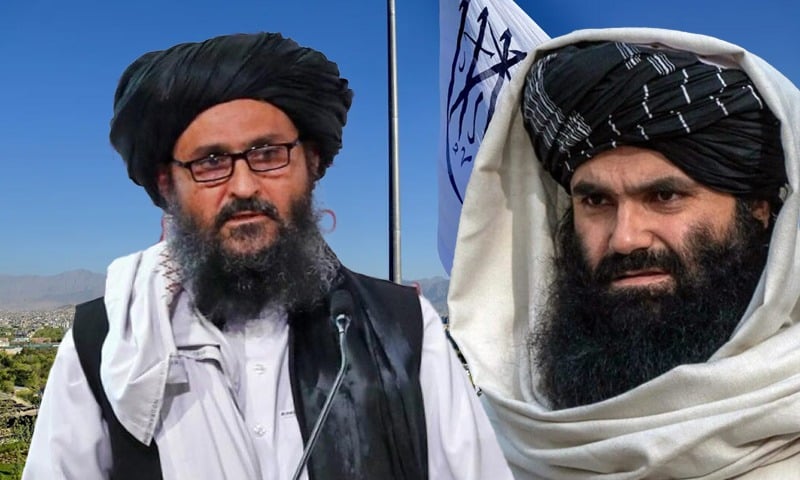
The Taliban returned to power in 2021. For Pakistan, this was not the end of the Afghan problem. It was another chapter. Twenty-five years after 9/11, another difficult question concerns al-Qaeda. Has the organisation truly been defeated, or has it simply changed its methods, structures and geographical footprint?
The answer is complicated. Al-Qaeda is no longer the organisation it was in 2001. Its leadership structure, operational capabilities and global prominence have changed significantly. But the ideological ecosystem associated with violent extremism has not disappeared. The extremist vision that sought to use Afghanistan as a strategic centre from which militants could influence Pakistan, Central Asia and ultimately challenge Western powers remains deeply problematic. The fundamental flaw in such thinking is that modern power is not created simply by producing fighters.
Countries become powerful through productive economies, industrial capacity, education, technology, political stability and institutions. China’s rise, for example, illustrates how economic and industrial development can transform a state’s global influence. A country cannot achieve sustainable national strength by endlessly producing militants.
Factories create employment. Education creates human capital. Trade creates wealth. Stable institutions allow societies to plan for the future. Extremism does precisely the opposite: it destroys economic opportunity, undermines education, drives away investment and turns ordinary communities into battlegrounds. That is one of the great tragedies of Afghanistan and the wider region. Pakistan’s post-9/11 experience deserves special attention because it was neither a distant observer nor simply an American ally. Pakistan became a frontline state.
The consequences extended from national security to the economy, governance and politics. Terrorist violence affected ordinary citizens, security forces, businesses and infrastructure. Entire communities in Pakistan’s western regions faced insecurity. The continuing challenges in Khyber Pakhtunkhwa and the former tribal areas demonstrate how militant networks have exploited weaknesses along the Afghanistan-Pakistan border.
This is where the argument for stronger border management becomes especially important. Pakistan’s eastern border with India has historically received enormous attention and resources. The western border, by contrast, was comparatively difficult to manage because of geography, history and longstanding cross-border social ties. The post-9/11 era demonstrated the cost of that imbalance. Militant groups can exploit gaps in border controls. They can move people, weapons, money and propaganda across difficult terrain. Once inside Pakistan, they can exploit local grievances and political divisions.
Pakistan cannot eliminate terrorism completely, but it can reduce the space in which terrorist organisations operate. That requires stronger border management, better intelligence, effective policing, economic development and political stability. A border fence alone cannot solve terrorism. But an uncontrolled border can make counterterrorism significantly harder. The impact of 9/11 was not confined to Afghanistan and Pakistan.
Central Asian states including Uzbekistan, Tajikistan, Turkmenistan, Kyrgyzstan and Kazakhstan also had to reconsider their security environments. The Afghan conflict demonstrated that instability could spread beyond national boundaries. Extremist organisations could exploit weak governance, porous borders and economic deprivation. Central Asian governments consequently strengthened their defence and security arrangements. The logic was simple: if Afghanistan remained unstable, the surrounding states had to protect themselves from the spillover.
Iran similarly strengthened its security posture. In this sense, 9/11 accelerated the securitisation of an entire region. Borders became more important. Intelligence cooperation became more important. Counterterrorism became a central element of national policy. But there is a danger in treating every regional challenge exclusively as a security problem.
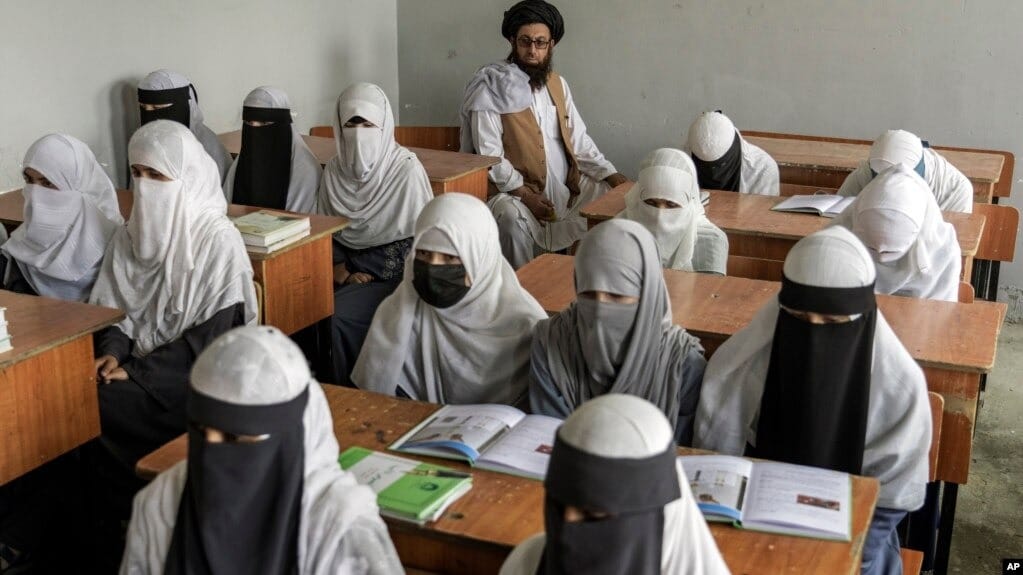
Security is essential, but security without development is incomplete. A young person without employment, education or political opportunity can become vulnerable to extremist recruitment. Therefore, the most effective long-term counterterrorism strategy must combine security measures with economic development and social investment. The return of the Taliban to power fundamentally changed the regional equation. The Taliban’s return raises a larger question: what kind of political system can ultimately provide stability and legitimacy in Afghanistan? Military control is not the same thing as political legitimacy. A government needs more than the ability to maintain coercive power. It needs functioning institutions, economic resources, public services and a relationship with its population.
If Afghanistan remains economically isolated and politically unstable, the consequences will not remain within Afghanistan. Pakistan will feel them. Iran will feel them. The Central Asian states will feel them. And, ultimately, the wider international community may feel them. This is why Afghanistan cannot simply be forgotten. One of the most consequential and controversial issues surrounding the Afghan war concerns the weapons left behind. Afghanistan has experienced repeated cycles of foreign intervention. The Soviet Union left weapons after its withdrawal. The United States and its allies also left behind significant quantities of military equipment during their departure.
Modern weapons can have consequences long after the conflict that introduced them has ended. Weapons themselves do not create terrorism. But sophisticated weapons in the hands of militant organisations can increase their operational capabilities. Rifles, vehicles and night-vision equipment are examples of capabilities that can make militant groups more dangerous. This is an important strategic lesson.
Whenever a major military power intervenes in a fragile state, it must consider not only how to enter and fight, but also how to leave. The exit strategy is part of the war strategy. If military equipment is abandoned or falls into the hands of hostile groups, the consequences can persist for years. The regional dimension of the conflict also cannot be ignored.
There have been repeated allegations concerning India’s exploitation of militant networks and instability in the region. Such claims should be approached carefully because regional security politics are filled with competing narratives and accusations.
Nevertheless, the underlying strategic point deserves attention: instability in Afghanistan creates opportunities for rival states and non-state actors to pursue their own objectives. Afghanistan has historically been a theatre in which larger geopolitical competitions intersect. That makes the country’s stability important not only for Afghans but for the entire region. Pakistan cannot afford to view Afghan instability purely through a domestic security lens. It must understand the wider strategic competition involving Central Asia, Iran, India, Russia, China and the United States.
The most important question now is not who was right in 2001. The question is what Pakistan should do in 2026.The first priority must be border security. The second must be intelligence and counterterrorism capacity. The third must be economic development in vulnerable regions. The fourth must be education and employment. And the fifth must be political stability.
No country can permanently defeat extremism through military operations alone. Pakistan has developed significant indigenous defence capabilities, and its security institutions have repeatedly demonstrated their capacity to confront militant violence. But military strength must be supported by strong civilian institutions, economic opportunity and social cohesion.
Otherwise, each generation risks inheriting the same security problem in a different form. Twenty-five years after 9/11, perhaps the most important lesson is that military victories are temporary if political problems remain unresolved. America responded to 9/11 with overwhelming force. That response was understandable.
But Afghanistan demonstrated the limitations of force without a sustainable political settlement. Pakistan, meanwhile, became one of the principal countries to suffer the consequences of the resulting instability. Central Asian states strengthened their security systems. Iran reinforced its defences.
Afghanistan endured another generation of conflict. And al-Qaeda’s ideology, although significantly weakened from its 2001 position, became part of a broader and constantly evolving extremist landscape. The tragedy is that the region has paid an enormous price. Lives have been lost. Soldiers have been martyred. Civilians have been injured and displaced. Economies have suffered. Development has been delayed. Political institutions have been repeatedly disrupted.
Yet the lesson should not be despair. The lesson should be strategic realism.
Pakistan cannot change Afghanistan’s history. It cannot control every militant group. It cannot eliminate every security threat. But it can control its own borders, strengthen its institutions, invest in its people and build an economy that leaves extremism with fewer recruits.
Afghanistan also cannot remain permanently trapped between foreign intervention and internal conflict. And the international community must recognise that abandoning a fragile country after a military withdrawal does not necessarily end the strategic consequences of intervention.
The legacy of 9/11 is therefore much larger than the destruction witnessed on one September morning. It is the story of how one attack transformed American foreign policy, reshaped Afghanistan, altered Pakistan’s security environment, changed Central Asian defence calculations and left a lasting imprint on global politics.
The ultimate lesson is perhaps the simplest: destroying a threat is not the same as creating stability. A military can defeat an organisation. A state can remove a government. A coalition can win a battlefield. But lasting peace requires something much harder functional institutions, economic opportunity, political legitimacy, secure borders and a population that believes it has a future worth protecting. Until those foundations exist, the shadow of 9/11 will continue to stretch far beyond New York, Washington and Afghanistan and across the political and security landscape of South and Central Asia.