Afghanistan–Pakistan relations have entered a deeply consequential phase in which the struggle for security is increasingly intertwined with the battle for political legitimacy, regional influence, and control over international perceptions. The challenges facing Pakistan extend beyond cross-border militancy and conventional security threats. They also involve competing narratives, allegations of state-sponsored terrorism, questions about the presence of armed groups in Afghanistan, and the growing use of media and digital platforms to shape public opinion.
At the heart of this complex situation lies a fundamental question: can Afghanistan’s Taliban authorities credibly deny the presence of anti-Pakistan militant groups on Afghan soil while evidence and public claims continue to raise questions about their activities and relationships? Equally important is the question of whether Pakistan can effectively address these security concerns without allowing its domestic challenges to become instruments of international political pressure.
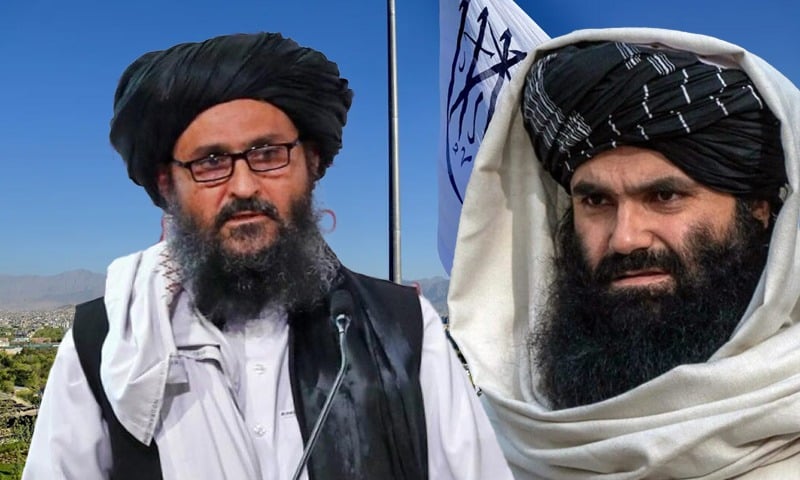
The issue has acquired renewed significance following the circulation of a video reportedly showing Sirajuddin Haqqani in the company of a member of the Tehreek-e-Taliban Pakistan (TTP). The footage has generated questions about the presence of TTP fighters in Afghanistan, the relationships among different Taliban factions, and the political calculations that may influence the release and circulation of such material.
However, the implications of this episode extend beyond the individuals shown in the video. It highlights the complicated power dynamics within Afghanistan’s ruling establishment and underscores the importance of examining militant networks, political rivalries, and information warfare through a careful and evidence-based lens.
Pakistan’s central security concern remains the activities of the TTP and its ability to threaten Pakistani territory from across the Afghan border. Islamabad has repeatedly raised concerns about militant sanctuaries, cross-border attacks, and the inability to prevent armed groups from operating against Pakistan.
The question is particularly sensitive because the Taliban authorities in Kabul have faced pressure to demonstrate that Afghan territory will not be used to threaten neighboring countries. A credible commitment to that principle requires more than official statements. It requires effective action against organizations whose activities undermine regional security.
The viral video has brought this issue into sharper focus. According to the account presented in the supplied material, the footage reportedly showed Sirajuddin Haqqani meeting a TTP fighter who identified himself as being from the village associated with Qari Hussain and Hakimullah Mehsud, figures linked to the TTP’s history.
If the footage is authentic and its context is accurately represented, it raises legitimate questions about the presence of TTP members in Afghanistan and their contacts with influential figures within the Taliban establishment. Nevertheless, a video alone cannot establish the full nature of a relationship, prove institutional authorization, or demonstrate the existence of a coordinated state policy. Those conclusions require independent verification and additional evidence.
The broader concern, however, remains significant. Pakistan cannot disregard credible indications that militants responsible for attacks against its citizens may be operating beyond its borders. Nor can the Taliban authorities expect regional confidence to rest entirely on assurances when the circumstances surrounding militant activity remain disputed.
The responsibility of Afghanistan’s de facto authorities is therefore clear: they must demonstrate, through verifiable action, that Afghan territory will not serve as a base for attacks against Pakistan or any other neighboring state.
The significance of the video also lies in the complicated relationships within Afghanistan’s Taliban leadership. The supplied account suggests that Sirajuddin Haqqani and the leadership associated with Kandahar may have competing political interests. Within such a political environment, footage involving a militant figure can acquire significance beyond its immediate content. It may become a tool in internal rivalries, an instrument of political pressure, or a means of assigning responsibility for relationships that are controversial both domestically and internationally.
One interpretation advanced in the account is that the video could simultaneously expose the presence of a TTP fighter in Afghanistan and direct attention toward Sirajuddin Haqqani, potentially distinguishing his network from the broader Taliban leadership.
This interpretation deserves scrutiny, but it should not be treated as an established fact without evidence identifying who recorded the video, who circulated it, and why it was released. The identity and motives of those responsible for its distribution remain crucial questions.
Nevertheless, the episode illustrates an important political reality: Afghanistan’s ruling establishment should not automatically be treated as a completely unified organization whose members share identical interests and strategic priorities. Different figures may have different relationships, constituencies, ambitions, and approaches to neighboring countries. For Pakistan, understanding these internal dynamics is essential. A policy based on assumptions about a single, coherent Taliban decision-making structure risks overlooking the distinctions between individual networks, competing factions, and the institutions responsible for security decisions.
At the same time, internal rivalries should not become an excuse for inaction. Whatever the relationships among Afghanistan’s political and militant actors, the essential question is whether attacks against Pakistan are being prevented and whether those responsible are being held accountable.
The security challenge described in the supplied material also includes allegations that political and media campaigns are being developed to damage Pakistan’s international reputation. According to this account, the Taliban authorities may seek to portray Pakistan as a supporter of Islamic State Khorasan Province (ISKP), while accusations concerning militant activity in Balochistan and the former Federally Administered Tribal Areas could be amplified through international media and digital platforms.
These are serious allegations and should be distinguished from independently established facts. Claims about coordinated propaganda campaigns, external financing, or the involvement of particular intelligence agencies require documentary evidence, credible corroboration, and transparent investigation. Yet the broader principle is indisputable: in contemporary conflicts, the struggle for international legitimacy increasingly takes place alongside the struggle for territorial security.
Governments, political movements, and armed organizations all recognize that international perceptions can influence diplomatic relationships, economic cooperation, security partnerships, and public support. A country can face considerable pressure when allegations about its conduct circulate internationally, even when those allegations remain contested.
Pakistan must therefore understand the importance of presenting credible evidence, communicating its security concerns consistently, and responding to accusations with verifiable information rather than relying exclusively on political denunciations. The objective should not simply be to defeat an opposing narrative. It should be to establish a stronger factual record that allows international observers to distinguish between substantiated findings, competing interpretations, and unverified allegations.
This distinction is especially important when accusations concern terrorist organizations. Claims about the presence of ISKP, Al-Qaeda, the TTP, or other armed groups must be assessed individually. Their activities, leadership structures, sources of support, and relationships with political authorities cannot responsibly be reduced to a single, unverified explanation. The same evidentiary standards must apply to accusations directed at Pakistan.
Concerns about ISKP add another layer of complexity to the Afghanistan–Pakistan relationship. The supplied account refers to remarks attributed to Russian Foreign Minister Sergei Lavrov concerning the alleged growth of ISKP recruitment and activity in Afghanistan. It also invokes concerns attributed to United Nations reporting about the regional threat posed by extremist organizations.
Such claims require examination against the relevant original statements and reports. Nevertheless, the underlying security question deserves serious attention: if transnational extremist networks are expanding their recruitment, operational reach, or regional connections, the consequences could extend well beyond Afghanistan.
Central Asian states, Pakistan, and other countries in the region have a shared interest in preventing extremist organizations from exploiting weak border controls, political instability, and competition among regional powers.
The presence of multiple armed organizations also complicates the security picture. The TTP, ISKP, Al-Qaeda, and separatist militant organizations have different histories, objectives, and operational structures. Any assertion that they form a single coordinated bloc must be supported by specific evidence rather than assumed from their simultaneous presence in regional security discussions.
Likewise, claims that foreign intelligence services are financing or manipulating particular organizations should not be presented as established conclusions without reliable proof. A sound regional security strategy must begin with accurate threat assessments. Misidentifying the relationships among armed groups can lead to ineffective policies, unnecessary escalation, and missed opportunities for cooperation.
For Pakistan, the priority should be to establish the facts surrounding cross-border militant activity, strengthen intelligence-based prevention, and encourage regional mechanisms capable of addressing threats that no single country can manage independently.
Another important dimension of the narrative concerns Balochistan and Khyber Pakhtunkhwa, particularly the former tribal districts. The supplied account suggests that local grievances involving political representation, economic development, mineral resources, and the distribution of revenue could be incorporated into broader campaigns against Pakistan. It also argues that local voices may be used to give such campaigns greater credibility.
These allegations should be assessed carefully. The existence of genuine local grievances does not, by itself, prove the existence of a coordinated foreign propaganda operation. Equally, the possibility that political actors may exploit grievances does not make those grievances illegitimate.
This distinction is fundamental. Questions concerning resource ownership, equitable development, provincial representation, institutional accountability, and the distribution of economic benefits deserve serious public debate. Communities in resource-rich areas have legitimate interests in understanding how projects are approved, how revenues are distributed, what employment opportunities are created, and how environmental and social costs are managed.
The example of mineral development mentioned in the supplied material illustrates the issue. Disputes about local shares, institutional corruption, or the distribution of benefits cannot be resolved simply by dismissing criticism as propaganda. They require transparent arrangements, credible oversight, and accessible information about the allocation of revenues.
Where public institutions demonstrate accountability, it becomes more difficult for false claims to gain traction. Where grievances remain unresolved, however, political distrust can deepen and provide opportunities for militant organizations or other interested actors to exploit local frustrations. Pakistan’s strongest response is therefore not to treat every criticism as hostile, but to distinguish legitimate political demands from incitement, fabricated claims, and demonstrable attempts to encourage violence.
In Balochistan and Khyber Pakhtunkhwa, effective governance is inseparable from national security. Public confidence, fair access to development, transparent resource management, and meaningful political participation are essential to reducing the space in which extremist organizations can operate.
The growing importance of digital media has changed how conflicts are fought and understood. Videos, interviews, social media posts, edited footage, and allegations circulated through online networks can influence perceptions rapidly. Information may reach international audiences before journalists, investigators, or authorities have established its authenticity and context.
This creates opportunities for manipulation. A genuine recording can be selectively presented to support a misleading interpretation. An unverified allegation can be repeated until it acquires the appearance of credibility. Political rivalries can be reframed as evidence of broader conspiracies, while complex security incidents can be reduced to simplistic narratives.
Artificial intelligence introduces additional challenges because synthetic audio, manipulated images, and fabricated video can make verification more difficult. However, the existence of these technologies does not establish that any particular recording is fabricated or that a specific organization is using AI to manufacture evidence. The appropriate response is a disciplined verification process.
The video involving Sirajuddin Haqqani and the reported TTP fighter should be examined in terms of its provenance, recording date, location, original source, and full context. Independent investigators should establish whether the footage has been edited and whether the identities and statements attributed to those shown can be corroborated. The same principles should apply to allegations about Pakistan’s support for terrorist organizations and claims about militant sanctuaries in Afghanistan.
Pakistan must also recognize that information warfare cannot be countered effectively through messaging alone. Credibility is built when official statements are consistent with verifiable evidence, investigations are transparent, and institutions acknowledge facts even when those facts are politically inconvenient. A sophisticated communications strategy should therefore combine timely public information, independent verification, professional journalism, and clear distinctions between established facts and assessments that remain uncertain.
Perhaps the most revealing theme in the supplied material is the suggestion that the motivations of some militant actors may be shifting from ideological objectives toward questions of political influence, financial rewards, and control over resources.
The account describes conversations with former or current Taliban fighters who allegedly expressed doubts about whether their struggle continued to serve its original ideological purpose. It suggests that some fighters increasingly view the conflict as a competition for power, money, and material interests rather than a consistent campaign for religious transformation.
These reported observations cannot be generalized to all Taliban members or militant organizations. Nonetheless, they raise an important question about the relationship between ideology and political power.
Armed movements frequently justify their activities through a set of declared principles. Over time, however, the pursuit of territory, revenue, institutional influence, and personal authority can become equally important to their leadership and members. When this happens, ideological rhetoric may coexist with pragmatic calculations. Political alliances can shift, rival factions can compete for influence, and the interests of local communities can become subordinate to the priorities of armed elites.
The consequences can be particularly damaging when religious language is used to legitimize violence while material interests shape the actual distribution of power. For Pakistan, recognizing this complexity is important. Countering militancy requires more than challenging ideological claims. It also requires understanding the economic incentives, political relationships, recruitment networks, and grievances that sustain armed organizations.
Efforts to reduce recruitment must address the conditions that make militant participation attractive, including the promise of income, social status, protection, or political influence. At the same time, those responsible for violence must face lawful accountability.
A strategy that combines security, credible governance, economic opportunity, and carefully designed disengagement and rehabilitation measures is more sustainable than one that treats every participant as motivated by precisely the same ideology.
The video reportedly involving Sirajuddin Haqqani and a TTP fighter has drawn attention to a wider set of questions about Afghanistan’s internal power dynamics, the presence of anti-Pakistan militants, and the competing narratives surrounding regional security.
Its significance should neither be exaggerated beyond what the available evidence establishes nor dismissed as politically irrelevant. The footage raises questions that deserve independent examination, particularly concerning the presence of TTP members in Afghanistan and the relationships among influential figures within the Taliban establishment.
At the same time, allegations of coordinated international propaganda, foreign financing, or deliberate efforts to implicate Pakistan in terrorist activity must be evaluated against verifiable evidence. Serious national security analysis depends on distinguishing documented facts from interpretations and unproven claims.
Pakistan faces a genuine strategic challenge in addressing militant violence while protecting its international credibility. Its response must combine effective counterterrorism, regional diplomacy, responsible communication, and domestic reforms that address legitimate grievances in Balochistan and Khyber Pakhtunkhwa.
Afghanistan’s Taliban authorities, meanwhile, face a corresponding test: whether their assurances about preventing the use of Afghan territory for attacks against neighboring countries can be demonstrated through concrete and verifiable action.
Ultimately, the contest is not simply about which side produces the more persuasive political narrative. It is about which claims withstand scrutiny, which institutions act responsibly, and which policies deliver measurable improvements in security.
For Pakistan, the strongest defense against terrorism and international misrepresentation is a combination of credible evidence, effective institutions, public trust, and a consistent commitment to the rule of law. In a region where political rivalries and militant networks continue to complicate the security landscape, these qualities are not secondary advantages. They are essential foundations of national resilience.