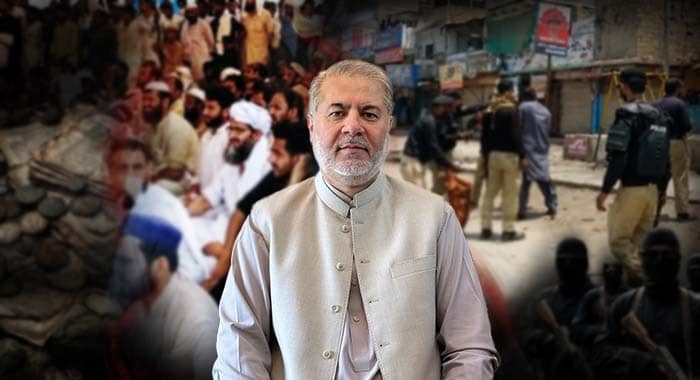
Mushtaq Yusufzai
Khyber Pakhtunkhwa has once again found itself at the intersection of militancy, public frustration, institutional weakness and difficult regional diplomacy. From Lakki Marwat to the Afghan border, the security crisis is no longer simply a question of how many militants can be eliminated or how many checkpoints can be established. It is increasingly a question of whether the state can rebuild public trust, whether local communities can become genuine partners in maintaining security, and whether Pakistan can develop a realistic political strategy toward Afghanistan and the Tehreek-e-Taliban Pakistan (TTP).
Against this difficult backdrop, the recent peace agreement involving local peace committees and the police in Lakki Marwat deserves serious attention. It may not represent a permanent solution to militancy, but it is significant precisely because it prevented a potentially dangerous confrontation between institutions and citizens at a time when the region could ill afford another crisis.
For two to three months, Lakki Marwat had been experiencing considerable tension. Militancy had already placed enormous pressure on residents, while disagreements within the police structure further complicated an already fragile security environment. Local people, worried about militant activity, had formed peace committees, and members of the police also became involved in these collective efforts.
The arrangement had an important practical consequence: the public and police were working together against militants.
That cooperation appears to have helped prevent militants from establishing a stronger presence in certain areas. More importantly, it created a degree of local ownership of security. At a time when there was concern that failure to restore order could eventually result in a military operation, the joint efforts of residents and police helped avert an even more serious escalation.
But the situation simultaneously exposed an uncomfortable institutional reality.
Police personnel reportedly refused to follow orders from their officers, took control of police lines and stations, and used government resources, including official vehicles and armoured vehicles. Their protest was connected to grievances over security and the perceived failure to respond adequately to militant activity. Yet whatever the legitimacy of those grievances, an armed institutional protest presents enormous risks in a district already struggling with militancy.
The state cannot afford a situation in which the police themselves become part of the security crisis. This is why the intervention by elected representatives and local political figures was important. General Assembly Member Sher Abdul Marwat, along with other leaders, engaged with the protesting police personnel and members of the peace committees. Eventually, negotiations produced an agreement, the police ended their protest and the parties accepted the agreed conditions.
The most important achievement, however, was not the document itself. It was the avoidance of confrontation. In Lakki Marwat, both the police and the public possessed weapons. The government also had the coercive power of the state. A confrontation could therefore have quickly transformed a political and administrative dispute into bloodshed. The fact that the situation was ultimately managed through dialogue and patience should be regarded as a positive development. It also carries a larger lesson for Khyber Pakhtunkhwa: every grievance that can be resolved around a table should not be allowed to reach the battlefield. There is an important distinction between acknowledging grievances and endorsing institutional indiscipline.
The responsibility for maintaining law and order belongs fundamentally to the state and its security institutions. Deputy commissioners, senior police officers, district police officers and other officials cannot simply transfer that responsibility to informal committees. Peace committees can supplement state capacity; they cannot permanently replace it. Yet the opposite mistake is equally dangerous. The state cannot expect citizens to remain passive while militants operate in or around their communities and then dismiss their complaints when they organize themselves for protection.
This is precisely why local voices matter. If residents, police personnel, elders and elected representatives are raising concerns, the government must sit with them and determine which grievances are genuine, which can be addressed administratively and which require broader policy intervention. Listening is not weakness. In a conflict zone, listening can be a security instrument. Unfortunately, Khyber Pakhtunkhwa’s southern districts have been facing violence and militancy for years, yet two fundamental issues often appear to receive inadequate attention: the rights and political concerns of the province, and the underlying causes and geography of militancy.
These questions cannot remain permanently outside the political conversation. Where is militancy concentrated? Why does it continue to regenerate? How do armed groups recruit? How do they move across difficult terrain? What enables them to obtain weapons and resources? Why do some communities feel abandoned? And what combination of policing, intelligence, development, border management and political engagement can actually reduce violence? These are not merely military questions. They are questions of governance.
No serious discussion of militancy in Khyber Pakhtunkhwa can ignore Afghanistan. Pakistan and Afghanistan have not had sustained, formal negotiations on the security question for a considerable period. There have been meetings and contacts, including discussions in China, and understandings have reportedly been reached regarding restraint and peaceful conduct along the border.
One of the central concerns raised by Pakistan has been the presence of militant groups near the border.
The concern is straightforward. If members of the TTP, the Gul Bahadur faction, Lashkar-e-Islam and other armed groups remain close to Pakistani territory, they can potentially cross into Pakistan, conduct attacks and retreat across the border. The difficult terrain and the nature of guerrilla warfare make such movements particularly challenging to prevent.
Pakistan’s demand, therefore, has not necessarily been limited to asking Afghanistan to launch armed operations against every group. Another important demand has been to move militants away from border areas so that they cannot easily use proximity to Pakistan as a tactical advantage.
There are indications, according to the discussion on which this article is based, that the Afghan Taliban have been putting pressure on some Pakistani militant factions and relocating some personnel farther from the Pakistani frontier, including to areas such as Ghazni and Laghman. Such reports require careful verification, and claims about particular individuals or factions should not be treated as established fact without independent confirmation. But if a genuine policy shift is taking place, it could have major implications for Pakistan’s security.
Even a partial reduction in the ability of militants to operate close to the border could reduce the frequency and ease of cross-border attacks. And that is precisely why Pakistan needs to watch developments inside Afghanistan very closely.
If Afghan authorities are indeed placing greater restrictions on the TTP and related groups, Islamabad should recognize the opportunity but also understand its limitations. Relocating militants is not the same thing as ending militancy. The TTP has developed networks, ideology, social relationships and organizational structures over many years. Its members have families, political grievances, personal histories and connections on both sides of the border. Simply moving them from one Afghan province to another cannot eliminate the underlying problem.
At the same time, the consequences of prolonged warfare inside Pakistan are becoming increasingly visible. Hospitals need resources. Schools need resources. Roads need resources. Communities need economic opportunities. Families need security. The state has finite financial resources, and every rupee spent indefinitely on weapons and security hardware is a rupee that cannot simultaneously be spent on public services. This does not mean that Pakistan can simply stop investing in security. It means the definition of security must become broader. A country is not secure merely because it has more weapons. It is secure when children can attend school, patients can reach hospitals, roads remain open, businesses can operate, farmers can work their land and citizens believe that the state will protect them.
This is perhaps the most controversial question. Pakistan has already experienced years of violence involving militant groups. Thousands of families have suffered the loss of fathers, brothers, sons and daughters. Homes have been destroyed. Schools have been attacked. Entire communities have lived through displacement and fear. For that reason, any proposal for negotiations must acknowledge the emotional reality of Pakistani society. It cannot be based on the assumption that people will simply forget the past.
There is, however, a difference between forgiveness and policy. A state can decide that after decades of conflict, a negotiated pathway toward disarmament and reintegration may be preferable to an endless guerrilla war. But such a process would require extraordinary safeguards. A credible guarantor would be necessary.
There would have to be a clear framework for surrender, disarmament, accountability, legal settlement and reintegration. Any amnesty or pardon could not simply be announced informally. If necessary, Parliament would have to establish a legal mechanism that clearly defines who qualifies, what offences can be addressed, what cannot be forgiven, and what obligations former militants must accept.
Most importantly, there must be an absolute condition: peaceful reintegration cannot become a disguised route back to armed activity. Those who genuinely want to live peacefully should have a path to do so. Those who insist on continuing armed violence must face the state’s response. The distinction is critical. The objective of negotiations should not be to reward violence. It should be to create a mechanism through which violence can eventually end.
One of the most important observations emerging from this discussion is the need to understand how prolonged conflict transformed a generation.
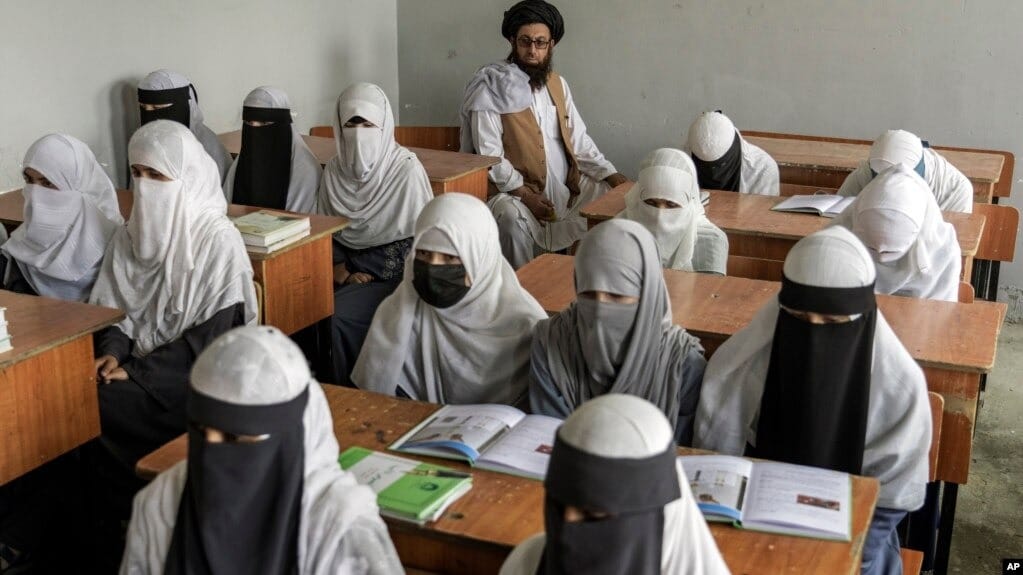
Young people in the former tribal areas and other conflict-affected parts of Khyber Pakhtunkhwa experienced school closures, insecurity and social disruption. Some were eventually drawn into armed organizations. Some died. Some remain in Afghanistan. Others have lived for years with the consequences of choices made in circumstances that were dramatically different from those facing today’s youth.
This history matters because today’s security policy will shape tomorrow’s conflict. If a young person has no functioning school, no employment opportunity, no sense of belonging and no confidence in the state, an armed organization can offer identity, income or purpose—even if that organization ultimately brings devastation. Counterterrorism therefore cannot be separated from education, employment and development. The most powerful long-term weapon against militancy may sometimes be a functioning school. Or a hospital. Or a road. Or a job.
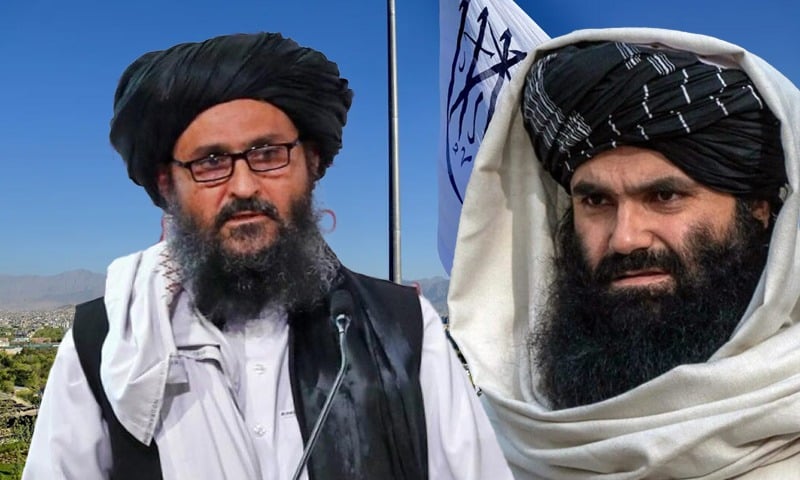
The regional picture becomes even more complicated when India enters the discussion. Reports have circulated claiming that Taliban intelligence chief Abdul Haq Wasiq recently visited India and held meetings there with political figures. Such claims should be independently verified before being presented as confirmed diplomatic fact. Nevertheless, the possibility of expanding Taliban-India contacts deserves attention because Afghanistan’s relationships with India have historically been significant.
For years, India was among the strongest opponents of the Taliban during the period before their return to power. Indian popular culture and political narratives frequently portrayed the Taliban in intensely negative terms. Yet international politics rarely operates according to permanent friendships or permanent enemies. The history of Afghanistan demonstrates this repeatedly.
Afghan actors have often attempted to maintain relationships with countries that may otherwise be considered rivals, provided those relationships serve Afghan interests. The historical example of Russia is instructive. During the late 2000s, contacts developed between the Taliban and Russia despite the long history of Soviet involvement in Afghanistan. The logic was strategic: the Taliban could seek assistance from a country that had once been an adversary because they regarded the United States and NATO as their immediate enemies. The lesson is not that Afghanistan is inherently untrustworthy. The lesson is that Afghan foreign policy is often driven by interests, survival and strategic necessity.
Pakistan must understand that reality. When the Taliban were fighting to regain power, Pakistan occupied a very different position in their strategic calculations. Pakistan provided refuge to Afghan refugees and, historically, Afghan Taliban networks benefited from access to Pakistani territory and communities. Families lived here. Religious institutions and social networks developed here. Pakistan was geographically close, culturally connected and, in many respects, indispensable to Afghan actors during years of war. But the Taliban are now rulers of Afghanistan.
That changes the equation. A government with territory, resources, mines, diplomatic ambitions and international economic interests naturally seeks relationships with multiple countries. India wants access and influence. Russia wants strategic engagement. China has economic and security interests. Gulf countries have their own calculations. Central Asian states want stability. Afghanistan therefore has more diplomatic options than it did when the Taliban were an insurgent movement.
Pakistan cannot assume that historical ties automatically guarantee political loyalty. This is perhaps one of the most important strategic lessons of the current moment.
Despite changing alliances, geography remains powerful. Afghanistan and Pakistan share a border, deep cultural connections and long-standing social and economic relationships. Millions of Afghans have had direct or indirect connections with Pakistan. Pakistani hospitals, markets and cities have historically served Afghan communities.
The contrast in medical access is particularly revealing.
Afghan patients have frequently travelled to Pakistan for treatment because Pakistani cities are relatively accessible and because cultural, linguistic and religious connections make the country familiar to them. For many ordinary Afghans, travelling to Pakistan for medical treatment can be considerably easier than seeking treatment farther away.
This human connection should not be dismissed merely because relations between governments are tense. Governments may disagree. Borders may become contentious. Diplomatic relations may deteriorate.
But ordinary people often continue to cross those invisible political boundaries through family, language, commerce, healthcare and culture. That is an asset. Pakistan should protect it rather than allow political disputes to destroy it. Pakistan now faces a difficult strategic choice. One path is to treat militancy exclusively as a military problem, continue responding to attacks as they occur and hope that pressure on militant groups across the border will eventually solve the problem.
The other path is more complicated but potentially more sustainable: maintain effective counterterrorism operations while simultaneously pursuing local dialogue, institutional reform, economic development, border diplomacy and a carefully structured political strategy toward Afghanistan. The Lakki Marwat experience offers a small but meaningful lesson.
Dialogue prevented confrontation. Local people were heard.
Police grievances were addressed. A potentially dangerous standoff ended without bloodshed.
That should not be romanticized as a complete security solution. It is not.
But it demonstrates something that Pakistan repeatedly forgets during periods of crisis: the state is strongest when its institutions, citizens and political leadership work together rather than against one another.
Khyber Pakhtunkhwa needs that unity now more than ever.
The province does not need another cycle in which violence destroys infrastructure, insecurity damages the economy, public frustration grows, institutions become weaker and militants exploit the resulting vacuum.
It needs a strategy that treats security as both a military and a human challenge.
The government must protect citizens.
The police must remain disciplined and effective.
Peace committees must operate within a lawful framework.
Political representatives must take responsibility for their constituencies.
Afghanistan must be engaged seriously and consistently.
And if negotiations with elements of the militant landscape are ever considered, they must be conducted from a position of state authority, with clear conditions, legal safeguards and a credible mechanism for enforcement.
The story of Lakki Marwat should therefore be understood as more than a local agreement.
It is a warning and an opportunity.
The warning is that when institutions stop communicating with their own people, even an already dangerous security environment can deteriorate rapidly.
The opportunity is that dialogue can still work even in places where weapons are readily available and mistrust runs deep.
Pakistan’s broader challenge is to translate that lesson into policy.
If Afghan authorities genuinely reduce the ability of militant groups to operate near Pakistan’s border, Islamabad should use that opening for serious diplomatic engagement. If elements within the TTP are willing to abandon violence, a carefully designed pathway toward peace may deserve consideration. If India and the Afghan Taliban are developing new contacts, Pakistan should not respond with panic but with strategic realism. And if Afghanistan is seeking investment and international partnerships, Pakistan should recognize that it cannot demand permanent loyalty while offering neither a compelling economic relationship nor a coherent diplomatic framework. Most importantly, Pakistan must invest in the people who have paid the highest price for this conflict. Hospitals must function.
Schools must remain open. Roads must connect communities. Young people must have alternatives to militancy.
And citizens must believe that their government hears them before they are forced to shout. Lakki Marwat has shown that even amid fear, negotiation can prevent disaster. The larger question is whether Pakistan can transform such isolated moments of de-escalation into a comprehensive peace strategy for Khyber Pakhtunkhwa. The answer will not be found in one agreement, one military operation or one diplomatic meeting. It will be found in the ability to combine security with governance, firmness with dialogue, and national interest with the everyday needs of citizens. Khyber Pakhtunkhwa has endured enough. Its people do not need another promise that peace is coming. They need a state capable of building it.