
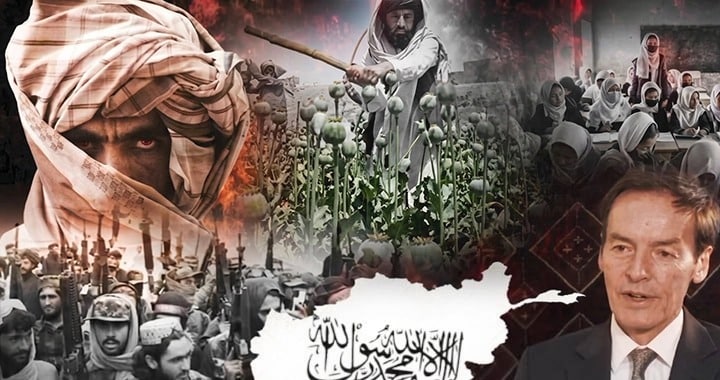
The international community’s concerns regarding the security situation in Afghanistan have intensified following significant remarks by the United Kingdom’s Special Representative for Afghanistan, Richard Lindsay, who emphasized the urgent need to prevent Afghan territory from being used by terrorist organizations against other countries.
In an interview with the BBC, Richard Lindsay acknowledged the continued presence and activities of terrorist groups operating from Afghan soil, warning that such developments pose a serious threat to regional and international peace and stability.
His statement comes amid growing global scrutiny of the Taliban regime’s governance, security policies, and failure to address mounting international concerns related to terrorism, narcotics trafficking, human rights violations, and restrictions on women’s freedoms.
According to Lindsay, the international community’s willingness to formally engage with or recognize the Taliban regime as a legitimate government remains conditional upon concrete and verifiable actions in several critical areas, including counterterrorism commitments, protection of human rights, and the restoration of educational rights for women and girls.
“The use of Afghan territory by terrorist organizations against neighboring and regional states must be prevented,” Lindsay stated, underscoring the importance of ensuring that Afghanistan does not once again become a safe haven for extremist networks.
He further stressed that any progress toward diplomatic normalization with the Taliban authorities would depend on meaningful reforms and tangible steps demonstrating adherence to internationally accepted principles and obligations.
Security analysts and regional experts believe that the remarks by the British envoy represent an important shift in international discourse on Afghanistan. Observers note that major global stakeholders are increasingly acknowledging concerns long raised by Pakistan regarding the presence of terrorist groups operating from Afghan territory.
For years, Pakistan has repeatedly warned the international community about cross-border terrorism, militant sanctuaries, and the risks posed by ungoverned spaces inside Afghanistan. Recent statements by influential international figures are now being viewed as validation of Islamabad’s longstanding position on regional security challenges.
Experts further argue that continued instability in Afghanistan, combined with the activities of extremist organizations and transnational criminal networks involved in narcotics smuggling, could significantly undermine regional peace efforts and create broader security implications beyond South Asia.
Richard Lindsay also highlighted that respect for fundamental human rights remains a key condition for Afghanistan’s international reintegration. He specifically called upon the Taliban regime to ensure access to secondary and higher education for girls and women, describing inclusive education as an essential component of any future engagement with the global community.
International human rights organizations and Western governments have repeatedly criticized the Taliban administration over policies restricting women’s participation in education, employment, and public life since returning to power.
Diplomatic observers maintain that without substantial policy changes and credible assurances regarding counterterrorism cooperation, human rights protections, and governance reforms, Afghanistan is unlikely to achieve broader international legitimacy or secure meaningful economic and diplomatic partnerships.
Analysts suggest that the remarks made by the UK’s Special Representative reflect a broader and growing international consensus: that the world is no longer prepared to accept unverified assurances regarding terrorism and security emanating from Afghanistan.
The evolving global narrative indicates increasing pressure on the Taliban authorities to demonstrate accountability, prevent extremist activities, and align with international expectations if they seek diplomatic recognition and long-term engagement with the international community.
As geopolitical attention remains focused on Afghanistan’s future trajectory, regional stakeholders continue to stress that sustainable peace and stability can only be achieved through effective counterterrorism measures, inclusive governance, respect for human rights, and constructive regional cooperation.



