
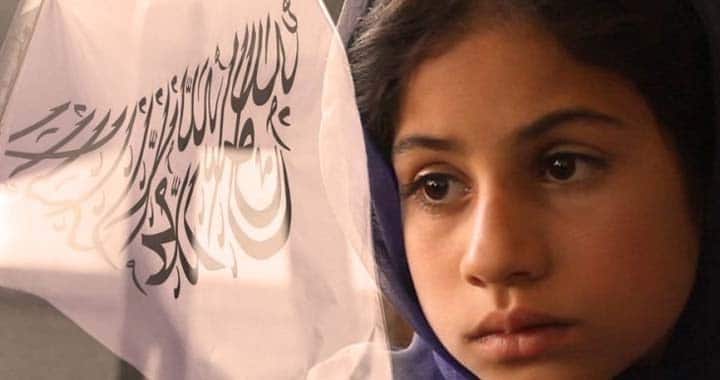
A newly issued document titled “Principles of Separation of Spouses,” published in the official gazette of the Taliban’s Ministry of Justice, has drawn significant criticism from legal and human rights perspectives for its provisions on marriage, divorce, and family separation, which are widely viewed as undermining fundamental human rights standards, particularly those relating to women and children.
The document, which follows the enforcement of the Taliban’s Criminal Procedure Code for Courts, is being described by critics as part of a broader effort to institutionalize discriminatory practices and expand social control mechanisms. Observers argue that it lacks both domestic legal legitimacy and alignment with internationally recognized legal norms.
One of the most controversial aspects of the document is its treatment of child marriage. Under provisions in Chapter Two, titled “Separation on the Grounds of the Option of Puberty,” the document recognizes marriages involving minors as legally valid under certain conditions. Article Five explicitly states that marriages contracted for minors by relatives other than the father or grandfather are considered valid.
Legal analysts and rights observers argue that such provisions effectively normalize child marriage by establishing a legal framework that treats underage marriage as enforceable, with only limited and conditional post-puberty remedies. This approach, they say, directly conflicts with international legal standards that prohibit child marriage and define individuals under 18 as children under the Convention on the Rights of the Child (CRC).
The document’s framework is also seen as conflicting with Article 16 of the Convention on the Elimination of All Forms of Discrimination Against Women (CEDAW), which states that child marriage shall have no legal effect and must be prohibited.
The document further introduces provisions that differentiate between boys and girls regarding the “option of puberty,” with Article Seven reportedly stating that a girl’s silence may be interpreted as consent, while a boy retains broader legal protections.
Human rights advocates argue that this provision institutionalizes gender discrimination by treating silence as valid consent in the case of girls, while not applying the same standard to boys. Critics emphasize that consent under international human rights law must be explicit, informed, and free from coercion, and cannot be inferred from silence, particularly in contexts where social pressure, fear, or coercion may exist.
This interpretation, observers warn, risks legitimizing forced and underage marriages while significantly limiting girls’ ability to challenge or dissolve such unions.
Articles 18, 19, and 22 of the document reportedly link women’s ability to seek divorce or separation particularly through khula to the consent of husbands or judicial approval in specific circumstances.
Critics argue that this dependency creates structural barriers that can be exploited, placing women in positions where financial pressure or lack of economic independence prevents them from exiting abusive or unwanted marriages. With limited access to employment and legal resources, women are seen as particularly vulnerable under such provisions.
These clauses are widely viewed as inconsistent with international standards on equality in marriage and its dissolution, particularly Article 16 of CEDAW.
The document further reinforces the authority of male guardians—such as fathers or grandfathers—in determining marriage outcomes for women and girls. Provisions in Articles 3, 5, and 8 emphasize guardian consent as a decisive factor in marriage validity.
Legal experts argue that this framework undermines women’s legal autonomy and increases risks of forced marriage, exploitation, and transactional marriage arrangements, particularly in vulnerable socio-economic contexts.
Critics also note that such structures weaken the role of mothers and other potential protectors due to broader restrictions placed on women under the current system.
Analysts highlight that several provisions of the document appear to conflict not only with international human rights treaties such as the Universal Declaration of Human Rights (UDHR), CRC, and CEDAW, but also with existing domestic legal frameworks that recognize mutual consent as a core requirement for marriage contracts.
The Afghan Civil Code, for example, recognizes marriage as a contract based on explicit consent between parties. Critics argue that the Taliban document undermines this principle by introducing guardian consent requirements that may invalidate or restrict independent choice.
Human rights observers warn that the institutionalization of these provisions could significantly deepen gender inequality, increase rates of forced and child marriage, and further restrict women’s access to justice and legal protection.
The document is also viewed as reinforcing a broader system of social control and gender hierarchy, where women and girls are placed in subordinate legal positions and denied equal participation in family and societal decision-making.
The Principles of Separation of Spouses has been described by critics as a legal framework that codifies discrimination rather than preventing it. Observers argue that its provisions may entrench systemic violations of women’s and children’s rights, transforming practices previously considered unlawful under international standards into officially sanctioned norms.
At the same time, legal analysts note that such documents may later serve as formal evidence in documenting human rights concerns and assessing accountability mechanisms regarding governance practices and legal reforms under the Taliban administration.
The publication of the document has intensified ongoing international debate over legal governance, human rights compliance, and the status of women and children in Afghanistan.



