
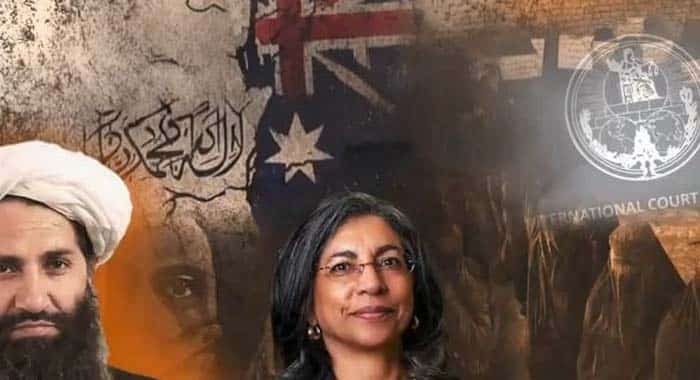

Open Society Foundations has reportedly prepared a legal case draft aimed at bringing the Taliban before the International Court of Justice (ICJ) over alleged serious violations of international obligations related to women’s rights.
The proposed legal action is expected to focus on alleged breaches of the Convention on the Elimination of All Forms of Discrimination Against Women (CEDAW), with advocates arguing that restrictions imposed on Afghan women and girls represent grave violations of internationally recognised rights and legal commitments.
According to an article published in The Strategist, Open Society Foundations President Binaifer Nowrojee stated that since the withdrawal of international forces from Afghanistan in August 2021, the Taliban have introduced more than 100 directives and orders that have significantly restricted the rights and freedoms of women and girls.
Nowrojee said Afghan women and girls have faced severe limitations, including restrictions on movement without a male guardian, access to employment opportunities, and education beyond the sixth grade. She described the situation as a serious human rights concern requiring sustained international attention and legal action.
The Open Society Foundations president further noted that the United Nations and members of the European Parliament have characterised the situation in Afghanistan as a form of systematic gender-based discrimination. She stated that legal notices issued by Australia, Canada, Germany, and the Netherlands in September 2024 could serve as an important foundation for further legal efforts and international pressure.
According to Nowrojee, legal proceedings through international mechanisms, combined with continued diplomatic engagement and global scrutiny, could become a significant tool for addressing restrictions imposed on Afghan women and supporting efforts to restore their fundamental rights.
International experts have expressed concern over the impact of restrictive policies in Afghanistan, stating that ongoing limitations have affected access to education, employment, and public participation, particularly for women and girls.
Analysts believe that potential legal proceedings against the Taliban leadership at the international level could increase political and diplomatic pressure while further affecting the group’s international standing and legitimacy.
The proposed legal initiative reflects growing efforts by international organisations and rights advocates to use legal mechanisms to address alleged violations of women’s rights in Afghanistan and to seek accountability through established international frameworks.



