
A new report by United Nations Secretary-General Antonio Guterres presents a complex and increasingly pressured security and governance environment in Afghanistan, documenting a rise in attacks claimed by anti-Taliban groups, continued activity by ISIS-K, extensive changes within the Taliban administration and a prison population exceeding 30,000.
The report, covering developments between 1 May and the end of July, provides a detailed snapshot of Afghanistan’s evolving security landscape five years after the Taliban returned to power.
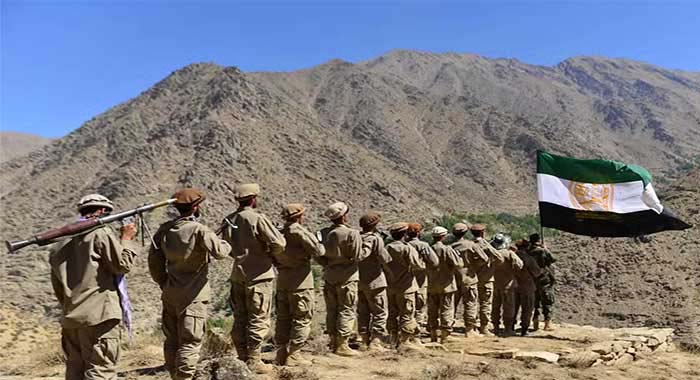
According to the United Nations, armed groups opposed to the Taliban claimed responsibility for 88 attacks across 21 provinces during the reporting period. The UN independently verified 55 of those attacks, while the number of attacks claimed by anti-Taliban groups increased significantly in July, reaching 30 incidents during the month. The findings point to an armed opposition that remains fragmented but increasingly decentralized, geographically dispersed and focused on localized operations.
The UN report identified a broad range of groups claiming responsibility for attacks against Taliban personnel and security infrastructure. Among the organizations named in the report are the Afghanistan Freedom Front, National Resistance Front, Green Unit of Afghanistan Green Trend, Afghanistan Guardians National Front, Afghanistan Independence Front, Afghanistan Liberation Movement, Afghanistan Republican Front, Afghanistan United Front, Andarab Resistance Front, Freedom and Justice Movement, Homeland Soldiers Front, Islamic Liberation Front of Afghan People, Islamic Liberation Movement of the People of Afghanistan and National Mobilization Front.
According to the report, the groups increasingly operated through decentralized and locally focused structures rather than through a single unified command. The majority of reported attacks involved ambushes and assaults against Taliban checkpoints and military facilities, indicating a continued focus on security personnel and installations.
Taliban personnel associated with the Ministry for the Propagation of Virtue and Prevention of Vice were also among those targeted, including incidents reported in Herat on 12 June and Kabul on 22 June. The geographical spread of the attacks remains significant, with incidents reported across 21 provinces during the three-month period.
The UN report highlights developments in Badakhshan as an important indicator of the evolving security environment. On 17 July, the Homeland Soldiers Front reportedly seized government buildings in Yaftal-e Payan district before withdrawing from the area. A separate incident occurred on 24 July, when the Afghanistan Freedom Front reportedly attacked a Taliban security checkpoint in Zebak district of Badakhshan.
According to the UN report, Taliban forces repelled the attack and maintained control of the area, although sporadic clashes reportedly continued afterward. The incidents demonstrate the ability of armed opposition groups to mount localized operations even though the Taliban continue to maintain overall territorial control. The developments in Badakhshan also underscore the importance of monitoring localized security trends that may not amount to a nationwide insurgency but can nevertheless create sustained pressure on local authorities and security structures.
The report also records a serious incident in Kabul involving an explosion outside a boys’ school. On 5 June, a suicide bomber reportedly detonated explosives outside the school, near the residence of a Taliban deputy governor. No group claimed responsibility for the attack. The incident highlights the continuing vulnerability of urban areas to attacks even as the Taliban maintain extensive security control over Kabul and other major population centers.
The UN assessment also highlights continuing activity by ISIS-K, adding another layer to Afghanistan’s security environment. According to the report, ISIS-K claimed responsibility for an attack against a Taliban military checkpoint in Waygal district of Nuristan on 30 June. Several Taliban security personnel were reportedly wounded.
ISIS-K subsequently claimed responsibility for the killing of Zabihullah Amiri, the Taliban’s director of information and culture in Badakhshan, on 29 July. The reported attacks demonstrate that the Taliban face security threats from multiple directions, including armed groups opposed to Taliban rule as well as ISIS-K, which has maintained its own operational campaign against the Taliban.
The coexistence of these different threats further complicates Afghanistan’s security landscape, where various groups have distinct objectives, structures and areas of activity.
Beyond the security situation, the UN report documents significant changes within the Taliban’s administrative structure. According to Secretary-General Guterres, Taliban Supreme Leader Hibatullah Akhundzada replaced one minister, eight deputy ministers and six provincial governors between the beginning of May and the end of July.
The changes extended across several key ministries and provinces. During the reporting period, the Taliban leadership replaced the minister of communications and information technology and appointed new deputy ministers in the ministries responsible for defence, hajj and religious affairs, propagation of virtue and prevention of vice, finance, information and culture, and mines and petroleum. The Taliban also appointed new governors in Badghis, Baghlan, Faryab, Ghazni, Jowzjan and Khost.
The administrative reshuffle extended well beyond provincial governors. According to the UN report, new deputy governors were appointed in Baghlan, Farah, Helmand, Kandahar, Logar, Maidan Wardak, Paktika, Paktia and Zabul.
The Taliban also appointed 17 district governors across Badakhshan, Badghis, Kabul, Nangarhar and Sar-e-Pul. At the municipal and security levels, a new mayor was appointed for Herat, while police chiefs were replaced in Baghlan, Herat, Kabul, Logar, Maidan Wardak, Jowzjan and Nimruz. The report further states that at least 14 heads of local departments were appointed across Badakhshan, Badghis, Bamiyan, Farah, Herat, Jowzjan, Kabul, Kandahar, Paktika and Maidan Wardak.
The scale of these appointments illustrates the continuing effort by the Taliban leadership to maintain direct oversight over national ministries, provincial administrations, district structures and local security institutions.
The UN report also provides an important insight into Afghanistan’s detention system. According to figures provided by the Taliban prison administration, the country’s prison population reached approximately 30,300 prisoners by 20 July. The figure reflects the scale of Afghanistan’s current detention system and comes amid continued international scrutiny of detention practices and conditions under Taliban rule.
The report also notes that on 26 May, the Taliban prison administration announced that the group’s Supreme Court had pardoned and released 1,191 prisoners in connection with Eid al-Adha. The Taliban authorities have also called for additional support for prisoners, particularly in the areas of nutrition, healthcare and vocational or other training.
Taken together, the developments documented by the United Nations portray an Afghan security environment that remains complex despite the Taliban’s continued territorial control. Anti-Taliban groups remain fragmented and do not appear to constitute a single coordinated national force. Nevertheless, their ability to claim attacks across 21 provinces and their increasing decentralization demonstrate that armed opposition remains an active component of Afghanistan’s security landscape.
At the same time, ISIS-K continues to conduct attacks against Taliban targets, creating an additional security challenge for the authorities. The situation in Badakhshan is particularly noteworthy because of the combination of reported armed opposition activity, temporary seizure of government facilities and continuing clashes.
The extensive appointments and replacements documented during the reporting period also demonstrate the degree of central involvement by the Taliban leadership in the country’s administrative structures. From cabinet-level positions to provincial governorships, district administrations, police leadership and local departments, the changes indicate continuing efforts to consolidate and manage the Taliban’s governing apparatus.
The concentration of decision-making around the Taliban’s supreme leadership remains an important feature of Afghanistan’s political and administrative system. For observers, the scale of these changes also raises questions about institutional continuity, administrative effectiveness and the relationship between central authority and local governance.
Five years after the Taliban takeover, Afghanistan presents a markedly different security environment from that of the previous two decades, but the latest UN findings indicate that significant challenges remain. The Taliban retain territorial control, yet they continue to confront armed opposition and ISIS-K attacks. At the same time, the leadership continues to restructure government institutions, replace officials and maintain extensive control over provincial and local administration.
The prison population of more than 30,000 further illustrates the scale of the security and justice apparatus operating under the current authorities.
The latest UN report therefore highlights a central reality of Afghanistan’s post-2021 landscape: territorial control has been consolidated, but security, governance and institutional challenges continue to evolve.
The coming months will be important in determining whether the increasingly decentralized nature of anti-Taliban attacks develops into a sustained security challenge, whether ISIS-K can maintain its operational capabilities, and how effectively the Taliban administration can manage the country’s complex political, security and humanitarian pressures.



