
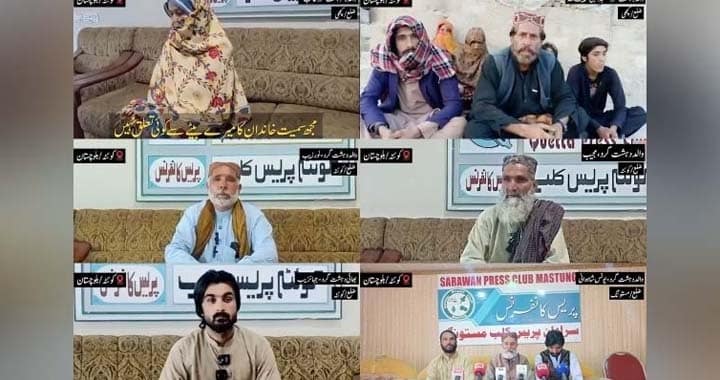
In a significant expression of public rejection of terrorism, more than 108 families across different districts of Balochistan have reportedly disowned their sons and brothers involved in terrorist activities between January and October 2026, openly distancing themselves from militant organisations and their violent agendas.
In the latest developments, several families from Quetta, Mastung and Kachhi have publicly announced their disassociation from relatives allegedly involved in terrorist activities linked to Fitna al-Hindustan, expressing strong condemnation of their involvement in unlawful and violent activities.
In Quetta, the families of Jahanzeb, Noorzaib, Anwar, Mujeeb, Qasim and Ubaidullah have announced that they no longer maintain any association with them.
Similarly, the family of Younas Shahwani, a resident of Mastung, has publicly distanced itself from his actions and activities. In Kachhi district, the families of Inayatullah, Abdul Nafi, Taib and Yasir have also announced their complete disassociation from their respective relatives.
The families have made it clear that individuals who disappear from their homes and subsequently become involved in terrorist organisations and unlawful activities cannot claim to represent their families or communities.
They have strongly condemned the use of their family relationships to justify or defend involvement in terrorism, emphasising that their personal and familial ties do not extend to supporting violence, militancy or anti-state activities. The families further stated that if their sons or brothers are found working for terrorist organisations and pursuing their violent agendas, they will have no association with them or their actions.
According to available figures, more than 108 families across various districts of Balochistan have publicly disowned relatives involved in terrorist activities between January and October 2026. The growing number of such public declarations reflects the willingness of families to distance themselves from militancy and reject the exploitation of family and community ties by terrorist organisations.
These public declarations carry an important message: terrorism does not represent the aspirations, values or interests of ordinary families and communities in Balochistan. By openly disassociating themselves from relatives involved in militant activities, these families have drawn a clear distinction between family relationships and participation in terrorism.
The message from these families is unequivocal: no family bond, tribal affiliation or personal relationship can justify terrorism, violence or the exploitation of innocent people in pursuit of militant agendas.



