
Pakistan has strongly condemned the reported attack directed towards the holy city of Makkah and the continued aggression by the Houthi militants against Saudi Arabia, reaffirming that the sanctity of the Haramain Sharifain and the territorial integrity and sovereignty of the Kingdom remain matters of utmost importance.
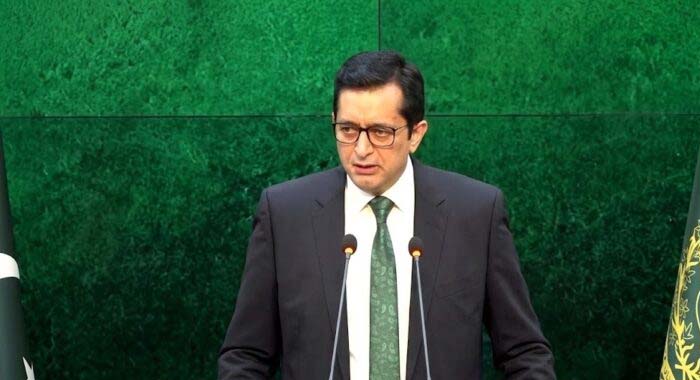
Addressing the weekly media briefing at the Foreign Office, Foreign Office Spokesperson Sajjad Haider Khan described the attempt to target Makkah as a “heinous and deeply concerning” act, stressing that any attack directed towards the holy city strikes at the religious sentiments of hundreds of millions of Muslims around the world.
The spokesperson reiterated Pakistan’s unwavering solidarity with Saudi Arabia and said Islamabad stands shoulder to shoulder with its brotherly country in safeguarding its sovereignty, peace and territorial integrity.
“Pakistan strongly condemns the attacks carried out by Houthi militants against Saudi Arabia’s civilian areas and installations,” the spokesperson said, adding that Pakistan remains firmly committed to the security and stability of the Kingdom.
Deputy Prime Minister and Foreign Minister Ishaq Dar has also strongly condemned the terrorist attack and expressed Pakistan’s solidarity with the leadership and people of Saudi Arabia. The Foreign Office spokesperson said Pakistan also condemns the attack on the East-West Pipeline during the current week and expressed serious concern over the growing tensions in the region and their potential wider repercussions.
Pakistan also appreciated the Saudi Armed Forces for their timely and effective response, which successfully thwarted the reported attack. The spokesperson said Islamabad was closely and seriously monitoring the rapidly evolving situation in the Middle East, particularly the growing cycle of violence and its implications for regional peace and security.
Pakistan, he reiterated, has consistently advocated diplomacy, dialogue and peaceful negotiations as the most effective means of resolving disputes and achieving lasting peace in the region.
“Pakistan will continue to support diplomatic efforts aimed at de-escalation and the peaceful resolution of conflicts,” the spokesperson said.
The spokesperson further informed the media that Deputy Prime Minister and Foreign Minister Ishaq Dar held a telephone conversation with International Atomic Energy Agency (IAEA) Director General Rafael Grossi. The discussion formed part of Pakistan’s ongoing diplomatic engagement on matters relating to regional peace, security and international cooperation.
The spokesperson also highlighted Pakistan’s recent diplomatic engagement with Lebanon, noting that Lebanese Foreign Minister Ahmad Hajar recently visited Pakistan. During the visit, the two sides also signed a Memorandum of Understanding concerning the exchange of convicted persons, marking an important development in bilateral cooperation between Pakistan and Lebanon.
Turning to developments concerning Pakistan-India relations, the Foreign Office spokesperson said an Indian naval vessel engaged in what Pakistan described as aggressive manoeuvring near a Pakistan Navy vessel inside Pakistan’s Exclusive Economic Zone (EEZ) on September 15, 2026. Pakistan considers the incident a serious violation of international law as well as the relevant bilateral agreement, the spokesperson said.
He stated that the Indian Chargé d’Affaires was summoned to the Foreign Office last night, where Pakistan conveyed its strong protest over the incident. The spokesperson further announced that Pakistan’s Chargé d’Affaires in New Delhi would also register Islamabad’s protest with the Indian Ministry of External Affairs today. Pakistan, he said, remains committed to protecting its sovereignty, territorial integrity and maritime interests while continuing to address such matters through established diplomatic channels.
The Foreign Office reiterated that Pakistan remains deeply concerned by the growing instability and escalation of tensions across the region.
Islamabad continues to believe that sustainable peace cannot be achieved through violence or confrontation and that diplomacy, dialogue and respect for international law must remain at the centre of efforts to resolve regional disputes.
Pakistan will continue to engage with regional and international partners to promote peace, stability and security, while standing firmly with countries facing threats to their sovereignty and territorial integrity.



