(Shamim Shahid)
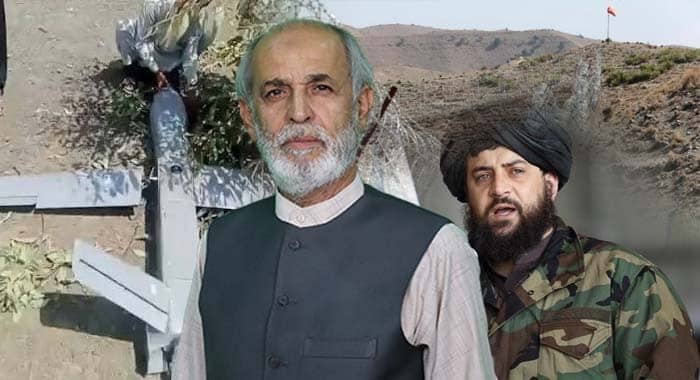
The security landscape of Pakistan’s northwestern frontier is undergoing a dangerous transformation. What was once a conflict characterized by roadside bombs, ambushes and sporadic attacks has now entered a new and more alarming phase. The recent use of drones by terrorist groups in Bannu and Lakki Marwat is a stark reminder that militancy is adapting faster than the state’s response mechanisms.
At the same time, a new controversy has emerged across the Durand Line. The Afghan Taliban recently claimed that they had targeted Daesh hideouts inside Pakistan. Islamabad swiftly rejected the assertion, describing it as propaganda. Beyond the diplomatic rhetoric, however, the statement raises a serious question: if Daesh poses a threat to Afghanistan, why would its alleged camps be targeted in Pakistan rather than inside Afghanistan itself? The claim reflects the growing trust deficit between the two neighboring countries and highlights the complex regional dynamics that continue to fuel insecurity.
These developments cannot be viewed in isolation. They are interconnected symptoms of a broader challenge facing Pakistan today a challenge involving terrorism, governance, regional diplomacy and public confidence in state institutions.
The worsening situation in Bannu and Lakki Marwat deserves urgent attention. Over the past several months, terrorist groups have increasingly employed drones as instruments of violence. What was once a technology associated primarily with state militaries has now become accessible to non-state actors. The consequences are visible across several districts of Khyber Pakhtunkhwa.
Only days ago, an explosive device was reportedly dropped in Bannu, injuring more than a dozen people. Another attack targeted a vehicle, and when civilians gathered at the scene, a second strike followed. The result was tragic: several lives lost and many more injured. Such tactics are particularly disturbing because they are designed not only to inflict casualties but also to spread fear among ordinary citizens.
The use of drones in conflict zones is not entirely new. Around the world, militant organizations have modified commercially available technologies to conduct surveillance and attacks. What makes the situation in Pakistan particularly concerning is that these incidents are no longer isolated. Similar attacks have been reported in Tirah, North Waziristan, Peshawar and other areas affected by militancy.
The message is clear: terrorist organizations are changing their operational strategies.
Unfortunately, the state’s response remains fragmented. For years, analysts, journalists and security experts have argued that terrorism cannot be defeated through military measures alone. Counterterrorism requires coordination among all stakeholders the federal government, provincial administrations, security institutions and local communities. Yet Pakistan continues to struggle with contradictions between these actors.
The first contradiction exists between the expectations of ordinary citizens and the priorities of governments. People living in conflict-affected regions seek safety, economic opportunities and justice. They want secure roads, functioning schools and reliable law enforcement. However, political debates often remain focused on power struggles rather than public security.
The second contradiction lies between provincial and federal institutions. Security responsibilities frequently overlap, creating confusion regarding accountability. When attacks occur, questions emerge about who is responsible for prevention, intelligence gathering and response. Such ambiguity weakens public trust and creates space for militants to exploit institutional weaknesses.
The third contradiction involves the relationship between security agencies and local populations. Successful counterterrorism operations depend heavily on public cooperation. Communities often possess valuable information about suspicious movements and militant activities. Yet when citizens lose confidence in institutions, intelligence-sharing becomes more difficult.
Without addressing these contradictions, any campaign against terrorism is likely to produce only temporary results.
The role of the police deserves particular scrutiny. Provincial governments frequently emphasize the importance of police reforms and modernization. Specialized units have been created, and there are discussions about technological upgrades. However, the emergence of drone-based terrorism exposes significant capability gaps.
Modern threats require modern responses.
Law enforcement agencies must be equipped with advanced surveillance systems, anti-drone technologies, forensic capabilities and specialized training. Security forces cannot effectively counter twenty-first-century threats with twentieth-century tools. Technology is no longer a luxury in counterterrorism; it is a necessity.
Yet technology alone will not solve the problem.
Public confidence in policing remains a critical issue. Across Khyber Pakhtunkhwa, complaints regarding law enforcement continue to surface. Many citizens believe that police accountability mechanisms are weak and that oversight structures require substantial reform.
The paradox is striking. Official narratives often portray the security situation as steadily improving, while ordinary citizens continue to experience rising incidents of street crime, robberies and violence. In parts of Peshawar, residents openly express concerns about personal safety after dark. Mobile phone snatching, purse thefts and armed robberies have become common topics of discussion.
This disconnect between official claims and public perceptions is dangerous.
Security is not measured solely through statistics. It is also measured through the confidence citizens feel when walking in markets, traveling on roads or sending their children to school. If people feel unsafe, then policymakers must take those concerns seriously rather than dismiss them.
The provincial government therefore faces a crucial responsibility. Law and order cannot become a secondary issue overshadowed by political battles. Regardless of ideological affiliations or political priorities, governments are ultimately judged by their ability to protect lives and property.
Daily reviews of the security situation, stronger coordination with federal institutions and effective implementation of counterterrorism strategies are essential. Political disagreements should not prevent cooperation on matters of national security.
While domestic security challenges intensify, Pakistan’s relationship with Afghanistan remains strained.
The two countries continue to exchange accusations regarding militant activities, border management and security responsibilities. The Afghan Taliban’s recent statement regarding alleged Daesh camps in Pakistan is merely the latest example of this ongoing tension.
Yet amid these disputes, there are also encouraging signs.
One significant development involves the movement of commercial trucks that had remained stranded due to border-related complications. Following diplomatic engagement between Afghan and Pakistani officials, efforts have been made to facilitate the return of these vehicles. For thousands of drivers, transporters and traders, this represents welcome relief after months of uncertainty.
Economic cooperation often succeeds where political rhetoric fails.
Trade has historically served as a stabilizing force in Pakistan-Afghanistan relations. When businesses benefit from open borders and predictable policies, constituencies for peace naturally emerge. Conversely, prolonged border closures create economic hardship, deepen resentment and encourage smuggling networks.
The return of stranded trucks therefore carries significance beyond economics. It signals that communication channels between the two governments remain functional despite political tensions.
There is also growing speculation that regional actors may play a greater mediating role in the coming months. Countries such as Qatar have maintained working relationships with both Pakistan and the Afghan Taliban. Their diplomatic engagement could potentially help reduce tensions and encourage dialogue.
The importance of dialogue cannot be overstated.
Afghanistan seeks assurances that border crossings will remain open and predictable for trade. Pakistan, meanwhile, seeks stronger guarantees that Afghan territory will not be used by groups threatening Pakistani security. These concerns are real, and neither side can simply ignore them.
However, the history of diplomacy demonstrates that difficult issues are rarely resolved through public accusations. They are resolved through sustained negotiations, compromise and confidence-building measures.
Both countries must recognize a fundamental reality: instability in one inevitably affects the other.
Pakistan cannot achieve lasting peace if Afghanistan remains insecure. Similarly, Afghanistan cannot pursue sustainable economic development while relations with Pakistan remain hostile. Geography has made the two neighbors inseparable. Whether they cooperate or compete, their destinies remain intertwined.
The challenge therefore extends beyond border management or security coordination. It is about building a framework of mutual trust capable of surviving periodic crises.
Unfortunately, trust is currently in short supply.
The persistence of militant violence, competing narratives regarding cross-border terrorism and mutual suspicions have created a cycle of accusation and retaliation. Breaking that cycle requires political courage on both sides.
For Pakistan, this means combining firm security measures with proactive diplomacy. It means strengthening law enforcement institutions while also investing in economic development and community engagement. It means addressing public grievances while confronting militant threats with determination.
For Afghanistan, it means demonstrating through actions not merely statements that its territory will not be used against neighboring countries. It also means engaging constructively on trade, border management and regional cooperation.
Ultimately, the battle against terrorism cannot be won through military operations alone. Nor can diplomatic breakthroughs emerge from public posturing. Both security and diplomacy require credibility, consistency and trust.
The drone attacks in Bannu and Lakki Marwat should serve as a wake-up call. Terrorist organizations are evolving. Their methods are becoming more sophisticated, their tactics more unpredictable and their ability to exploit technological innovations more dangerous.
Pakistan must evolve as well.
The answer lies not only in stronger security operations but in a comprehensive national strategy that integrates technology, governance, public participation and regional diplomacy. Counterterrorism cannot succeed in an environment marked by institutional contradictions and political distractions.
The country stands at an important crossroads. One path leads toward deeper fragmentation, growing insecurity and continued mistrust. The other leads toward cooperation, reform and stability.
The choice should be obvious.
For the people of Khyber Pakhtunkhwa, Balochistan and every region affected by violence, security is not an abstract policy debate. It is a daily struggle that determines whether families can live without fear. Their concerns deserve more than promises. They deserve action.
And that action must begin now.