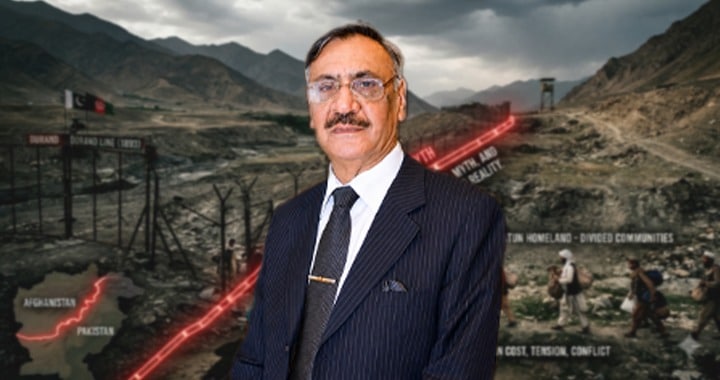
Brig (R) Mahmood Shah
Few borders in South Asia carry as much history, emotion and political controversy as the Durand Line. For more than a century, the frontier between Afghanistan and the territory that is now Pakistan has been at the centre of competing historical narratives, ethnic claims, strategic calculations and, increasingly, security concerns. Yet the debate is often reduced to a slogan: Afghanistan does not accept the Durand Line, therefore the border is disputed.
That argument is far too simplistic. The Durand Line is not merely a line drawn on an old colonial map. It is the product of a formal 1893 agreement between British India and Afghanistan, followed by subsequent Anglo-Afghan arrangements. When Pakistan emerged in 1947, it inherited the territory and international frontiers of British India. The principle of continuity of existing boundaries has long been an important feature of international relations and state succession.
At the same time, Afghanistan has historically refused to accept the Durand Line as a permanent international frontier. That position is a political reality and cannot simply be wished away. But there is an important distinction between a political disagreement over a border and the claim that the border does not exist. That distinction has become increasingly important as Pakistan and Afghanistan confront a much more immediate problem: terrorism.
The history of the Durand Line begins in 1893, when Sir Mortimer Durand negotiated an agreement with Afghanistan’s Amir Abdur Rahman Khan. The purpose was not to create Pakistan—Pakistan did not exist at the time. The purpose was to define the respective spheres of authority between Afghanistan and British India. The agreement emerged from a complicated strategic environment in which British India sought to establish a clearly defined western frontier while Afghanistan sought to clarify the limits of British influence. The frontier subsequently featured in later Anglo-Afghan arrangements, including the 1919 settlement following the Third Anglo-Afghan War.
The critical point is therefore historical rather than rhetorical: the border was not invented in 1947. Pakistan inherited a pre-existing international frontier when British rule ended. This principle matters because the alternative would create a dangerous precedent. If every newly independent country were required to renegotiate every inherited international boundary from scratch, decolonisation would have produced endless territorial instability. International law generally places great emphasis on the continuity and stability of established boundaries. Article 11 of the 1978 Vienna Convention on Succession of States in Respect of Treaties reflects the principle that state succession does not, by itself, alter a boundary established by treaty.
That does not automatically settle every historical dispute. Afghanistan’s objections remain part of the record. But neither can those objections erase the historical existence of the frontier.
There is no point in pretending that Afghanistan has always accepted Pakistan’s position. It has not. Afghan governments have historically challenged the legitimacy of the Durand Line and, particularly after the creation of Pakistan, the Pashtunistan question became a recurring source of tension. Afghanistan even voted against Pakistan’s admission to the United Nations in 1947, reflecting objections connected to the status of Pashtun-inhabited areas. But an important distinction must be maintained. Afghanistan’s political objection to Pakistan’s territorial position is not the same thing as an international judicial ruling declaring the border nonexistent. No such simple formula exists. The border question has therefore remained politically contentious even as the frontier has functioned in practice as the boundary between two states. That reality cannot be changed by repeatedly refusing to use the word “border.”
One of the strongest arguments used against the Durand Line is that it divided Pashtun communities. That is historically undeniable. Families, tribes, markets and communities existed across the frontier long before the modern states of Pakistan and Afghanistan emerged in their current forms.
But cultural unity does not automatically translate into political sovereignty. Pashtuns on both sides of the frontier share a remarkable linguistic and cultural heritage, but that does not mean that every Pashtun-inhabited territory historically belonged to a single Afghan state. The political history of the region is far more complicated. Many Pashtun tribes maintained substantial autonomy. Local rulers, tribal elders and regional political structures exercised influence that did not necessarily correspond to the authority of Kabul, Delhi or any other imperial centre. Areas such as Peshawar, Mardan, Nowshera and the tribal belt experienced different forms of political influence over different periods.
To look at a modern map and assume that every Pashtun community on the Pakistani side was historically governed from Kabul is to impose today’s political categories on a much more complicated past. The Pashtun identity is real. The cultural connections are real. The families divided by the border are real. But none of these realities, by themselves, provide a legal mechanism for dismantling an existing international frontier.
For decades, Pakistan’s western border was managed differently from its eastern frontier. The security environment was not considered comparable to the Pakistan-India border. There were deep social and tribal connections across the frontier, traditional routes of movement and extensive informal trade. That approach became increasingly difficult to sustain after Afghanistan’s decades of war transformed the region into one of the world’s most dangerous security environments. Militant organisations began exploiting the difficult terrain and porous crossings.
Pakistan increasingly faced attacks involving militants who, according to Islamabad, operated from or received sanctuary in Afghanistan. The result was a fundamental change in Pakistan’s approach. Border fencing, documentation requirements, checkpoints and stricter controls became increasingly important. Critics sometimes portray these measures as an attack on Pashtun communities. That interpretation misses the larger point. Every sovereign state has the right and responsibility to know who enters and leaves its territory. A Pakistani citizen travelling abroad needs a passport and, where required, a visa. A foreign citizen entering Pakistan must comply with Pakistani immigration law. Afghan citizens should not be treated differently simply because communities on both sides share ethnicity or family ties. The same principle applies in the opposite direction. A functioning international border is not an insult to ethnic identity. It is an instrument of state responsibility.
The border debate has another dimension that receives far less attention: smuggling. For years, extensive informal commerce developed along the Pakistan-Afghanistan frontier. Some of it involved legitimate livelihoods and traditional trade. Some, however, became organised smuggling that undermined customs revenues, damaged domestic industries and distorted Pakistan’s economy. The argument that people have crossed the frontier for generations therefore cannot be used as a permanent justification for uncontrolled movement.
Modern states regulate trade. Modern states collect customs duties. Modern states monitor the movement of goods. Modern states investigate illegal financial networks. There is nothing unusual about Pakistan seeking tighter control of its western border. The challenge is to ensure that security does not destroy legitimate commerce. Pakistan should therefore pursue a dual policy: strong border security and efficient legal trade. Border crossings should remain open for legitimate commerce and humanitarian needs wherever security conditions permit. But commercial access must operate through transparent customs procedures rather than informal networks. This would benefit both countries.
Afghanistan is heavily dependent on trade with its neighbours, including Pakistan. Food, medicines, household goods, machinery and countless other products have historically crossed the frontier. When crossings close, ordinary Afghans feel the impact. The hardship of Afghan civilians should not be dismissed. But neither should their hardship be used as a reason for allowing militants, smugglers and criminal networks unrestricted access. There is a better solution. Keep legitimate trade moving while closing the routes used for terrorism and smuggling. Modern technology, customs systems, biometric identification, controlled crossing points and coordinated border management can make that possible.
The choice is not simply between an open border and a closed border. The real choice is between an unregulated border and a managed border. Pakistan needs the latter. Afghanistan needs it too. The Durand Line would probably remain a contentious historical issue even without terrorism. But militancy has transformed the political significance of the border. Pakistan has repeatedly accused the Tehreek-e-Taliban Pakistan and other militant organisations of using Afghan territory to plan or facilitate attacks against Pakistan. Afghan authorities have rejected or disputed such accusations, while international actors have repeatedly called for both sides to address terrorism and avoid escalation. Whatever the competing political narratives, one principle should remain universal: The territory of one state must not be used as a base for armed attacks against another state.
That principle is not anti-Afghan. It is not anti-Pashtun. It is not anti-Islamic. It is the basic foundation of responsible international relations. If Pakistan’s territory were being used to attack Afghanistan, Kabul would have every right to demand action. If Afghan territory is being used to attack Pakistan, Islamabad has the same right. There can be no durable regional peace while militant organisations exploit sovereignty gaps.
Another dangerous development has been the use of religious language to legitimise violence. Militant groups have frequently described attacks against Pakistani security forces and civilians as jihad. That claim should be rejected without hesitation. Calling terrorism jihad does not make it jihad. The killing of Muslims by armed groups claiming to defend Islam exposes the fundamental contradiction in their narrative. Pakistan’s tribal areas have seen the consequences firsthand. The people who have suffered from militant violence are overwhelmingly ordinary Pakistanis—Pashtuns included. The question is therefore unavoidable: If militants claim to be fighting for Pashtuns, why have so many Pashtun civilians been killed? If they claim to be defending Islam, why have Muslims been among their principal victims?
If they claim to be establishing justice, why does their campaign produce fear, displacement and destruction? The answer is that extremist organisations often use religious language as a political instrument. Their objective is not necessarily the religious ideal they publicly proclaim. It is the acquisition of power through fear. That is why religious scholars and Muslim societies themselves must expose the misuse of Islamic terminology by violent organisations.
The security crisis in Balochistan has its own history and cannot simply be merged with the Durand Line question. Balochistan contains genuine political, economic and social grievances. Those grievances deserve political attention. At the same time, armed organisations operating in the province have carried out attacks against civilians, security personnel and infrastructure.
Pakistan has also accused foreign actors, including India, of supporting militant networks in Balochistan.
Such allegations must be established through credible evidence and should not be used to stigmatise the Baloch population as a whole. The distinction is crucial: Baloch political identity is not terrorism. Pashtun identity is not terrorism. Opposition to government policy is not terrorism. But deliberate attacks on civilians and the use of violence to achieve political objectives are matters of national security and law enforcement. Pakistan’s long-term strategy should therefore combine security operations with political reform, economic development, better governance and opportunities for peaceful political participation.
Military force alone cannot permanently resolve a political problem. But political dialogue cannot succeed when armed groups are simultaneously murdering civilians.
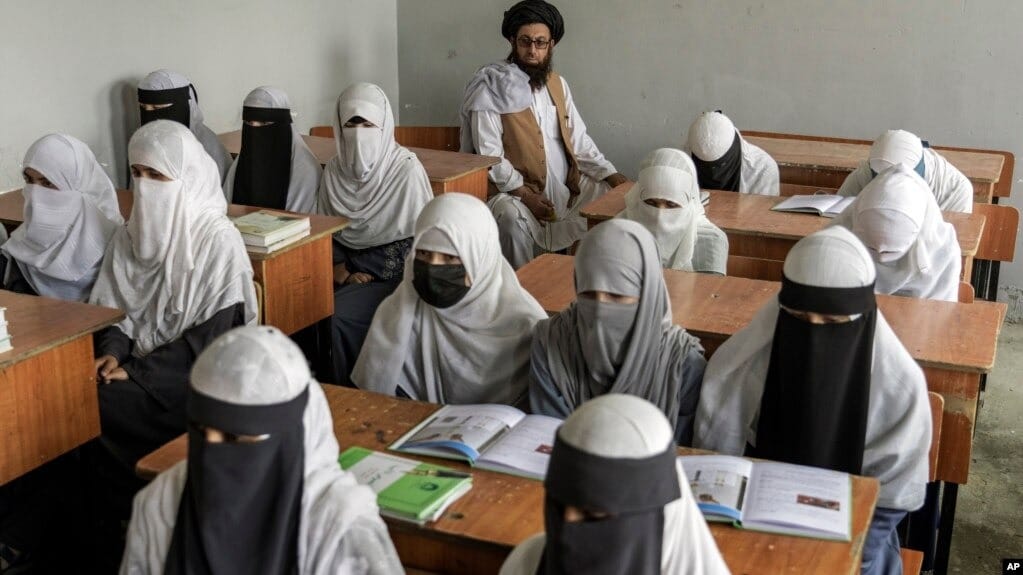
Pakistan’s relationship with Afghanistan cannot be separated from Afghanistan’s own political and economic crisis. The Taliban’s return to power fundamentally altered the regional security landscape. The Afghan people continue to face economic hardship, political restrictions and profound uncertainty. One of the most controversial aspects of Taliban rule has been the restriction of girls’ and women’s education. The consequences extend beyond individual rights.
A country cannot build a modern healthcare system without educating women. It cannot produce enough female doctors without allowing girls to study. It cannot staff hospitals adequately without women becoming nurses and medical professionals. It cannot build a functioning education system if half of its population is excluded from becoming teachers and lecturers.
Education is not a Western luxury. It is a prerequisite for national development. Pakistan, despite its own shortcomings, has a clear interest in seeing Afghanistan become stable, educated and economically functional. A prosperous Afghanistan would be an asset to the region. A radicalised, impoverished and isolated Afghanistan would remain a security challenge for everyone.
They can—but only if both sides accept certain realities. Pakistan must accept that Afghanistan’s concerns about the historical division of Pashtun communities are genuine and deeply rooted. Afghanistan must accept that Pakistan is a sovereign state with an established territorial framework that cannot simply be erased through political declarations. Pakistan must continue to strengthen border management. Afghanistan must prevent its territory from being used for attacks against Pakistan. Both countries must fight smuggling and criminal networks. Both must expand legitimate trade. Both must establish predictable procedures for people who have legitimate reasons to cross the frontier.
And both must keep diplomatic channels open. The most important requirement, however, is responsible governance. A government cannot demand unrestricted access across an international border while simultaneously allowing armed groups to operate across it. Nor can Pakistan expect Afghanistan to become a peaceful neighbour if every disagreement is approached exclusively through pressure and confrontation. Diplomacy and security are not alternatives. They are complementary.
The most dangerous outcome would be to allow the Durand Line to become a permanent explanation for every crisis between Pakistan and Afghanistan. It is not the sole cause of terrorism. It is not the sole cause of smuggling. It is not the sole cause of Afghan instability. It is not the sole cause of militancy in Balochistan or Khyber Pakhtunkhwa. The region’s instability is the result of a much larger combination of history, wars, foreign intervention, weak institutions, ideological extremism, poverty, ethnic politics and competing strategic interests. The Durand Line is part of that history—but it cannot be allowed to become an excuse for perpetual conflict. The sensible position is therefore neither to deny Afghanistan’s objections nor to accept the idea that those objections nullify Pakistan’s sovereignty. The border exists in practice. Pakistan regards it as its international border. Afghanistan has historically disputed that status. That disagreement should be addressed through diplomacy, not terrorism.
A century after the Durand Agreement, the question facing Pakistan and Afghanistan is no longer simply where the line was drawn. The real question is whether two neighbouring states can learn to manage a difficult frontier without allowing history to destroy their future. The answer should be yes. The frontier should be secure but not economically strangled. Trade should be regulated but not eliminated.
Families should be able to meet through lawful procedures. Patients should be able to travel. Humanitarian assistance should not become hostage to political disputes. Smugglers should not determine economic policy. Militants should not determine foreign policy. And neither Pashtun identity nor Islamic faith should be exploited as a justification for violence. Pakistan’s western border will remain strategically important for decades to come. Its management must therefore be based on law, security, diplomacy and economic realism not emotion. Afghanistan, for its part, must confront a fundamental reality: sovereignty comes with responsibility. A state cannot demand recognition of its sovereignty while allowing armed organisations to use its territory against a neighbour.
Pakistan, too, must recognise that durable security requires more than fences and checkpoints. It requires political engagement, economic development, intelligence cooperation, functioning institutions and a relationship with Afghanistan that distinguishes between the Afghan state, the Afghan people and militant organisations. The Durand Line may remain a subject of historical controversy.
But it must not become a permanent justification for bloodshed. A border can divide territory without dividing humanity. A dispute can exist without becoming a war. And history can be remembered without being weaponised. The future of Pakistan-Afghanistan relations will ultimately depend not on who shouts the loudest about the past, but on who is prepared to build a safer, more prosperous and more responsible future. The Durand Line is a line on the map. The real battle is whether that line becomes a bridge for regulated trade and peaceful coexistence—or a permanent fault line for terrorism, smuggling and confrontation. That choice belongs to both countries.