
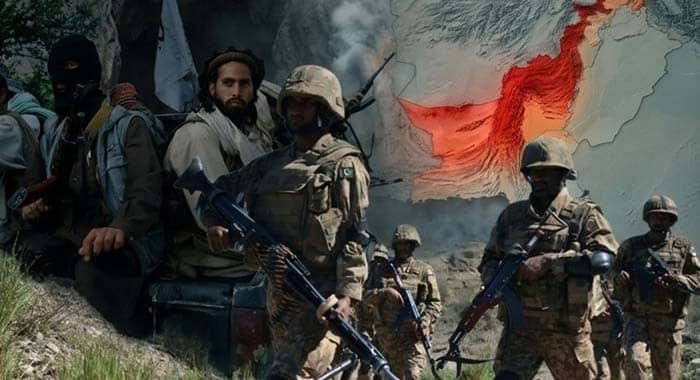
Pakistan’s security officials have outlined a wide-ranging assessment of the country’s counterterrorism campaign, highlighting sustained operational activity across the country and linking ongoing terrorist incidents to cross-border facilitation networks.
According to the briefing, security forces and law enforcement agencies conducted tens of thousands of intelligence-based operations over the reporting period, reflecting a continuous and nationwide counterterrorism posture aimed at disrupting terrorist networks, their facilitators, and operational infrastructure.
The security overview states that thousands of terrorist-related incidents were recorded during this period, while large numbers of suspected terrorists were neutralized during encounters linked to intelligence-led operations. At the same time, security personnel also sustained significant casualties in the course of these operations, underscoring the intensity and persistence of the threat environment.
Officials emphasized that these figures reflect the scale of Pakistan’s ongoing internal security challenge, while also highlighting the operational pressure applied on terrorist networks across multiple regions of the country.
A key component of the briefing focused on the alleged role of external sanctuaries in sustaining terrorist activity. The assessment maintains that certain terrorist groups continue to benefit from safe havens, logistical facilitation, and mobility across the border region, which contributes to the persistence of violence inside Pakistan.
The security position further argues that terrorist networks operating against Pakistan are no longer confined to internal spaces, but are embedded within a broader transnational environment that complicates counterterrorism efforts. This includes movement across difficult terrain, access to external support structures, and exploitation of governance gaps in border regions.
Despite these challenges, Pakistan’s security institutions continue to conduct sustained intelligence-based operations designed to dismantle operational cells, disrupt planning structures, and prevent attacks before they are executed. These operations are described as precise, intelligence-driven, and increasingly integrated across multiple security agencies.
The briefing also reiterates that Pakistan has maintained diplomatic engagement with Afghan authorities over an extended period, with repeated emphasis on addressing terrorist safe havens and preventing the use of Afghan territory for attacks against Pakistan. According to the security narrative, these engagements included multiple rounds of high-level dialogue between 2021 and 2025.
However, the assessment claims that despite prolonged diplomatic efforts, sufficient action against terrorist groups operating across the border has not materialized to the extent required to eliminate the threat. As a result, Pakistan’s security posture has evolved to include more direct responses to cross-border threats.
Officials stressed that Pakistan continues to prioritize peaceful relations and regional stability, while maintaining that effective counterterrorism cooperation is essential for long-term peace. The position presented is that terrorism cannot be sustainably addressed without dismantling support structures and denying safe havens to militant networks.
The overall framing of the briefing reflects a dual-track approach combining diplomacy and sustained counterterrorism operations. While engagement remains part of Pakistan’s policy, the operational reality continues to shape security responses on the ground.
Pakistan’s security institutions maintain that the objective remains the establishment of a stable regional environment free from terrorist activity, achieved through both internal security measures and external cooperation mechanisms.



