
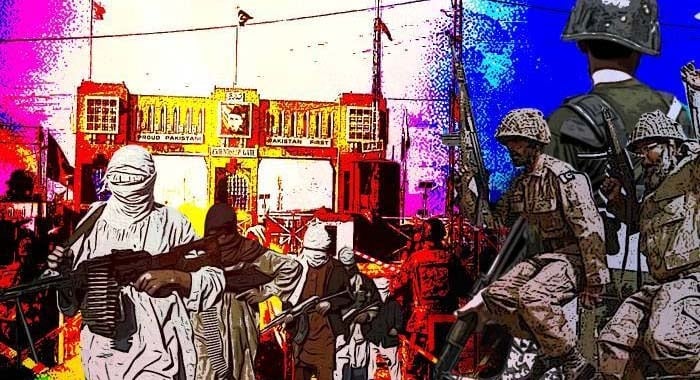
For much of the past two decades, Khyber Pakhtunkhwa has remained the frontline of Pakistan’s war against terrorism. From the merged tribal districts to the southern belt stretching through Bannu, Lakki Marwat, Tank, Dera Ismail Khan and North Waziristan, the province has repeatedly witnessed attempts by Fitna al-Khwarij to undermine state authority, intimidate local communities, and reverse the security gains achieved through years of counterterrorism operations.
Recent developments, however, indicate an important shift in Pakistan’s operational approach.
Rather than relying primarily on large-scale kinetic operations, security forces and law enforcement agencies increasingly appear to be focusing on intelligence-led, preemptive actions designed to disrupt terrorist networks before they can execute attacks. Joint intelligence-based operations conducted by the Pakistan Army, Police, Counter Terrorism Department and intelligence agencies have become more frequent, reflecting improved inter-agency coordination.
The successful operation on the Kohat-Karak border, where members of the Commander Zahid network were eliminated, demonstrated the effectiveness of actionable intelligence and unified planning. That group had long been linked to attacks resulting in the martyrdom of senior police officers. Removing experienced commanders weakens operational planning, recruitment and command structures within terrorist organizations.
Equally significant is the increasing role of provincial police.
Unlike previous years, police forces are no longer functioning merely as responders after attacks occur. They have become active participants in intelligence gathering, surveillance and precision operations. The publication of Bannu Police’s list of forty most wanted terrorists, carrying cumulative rewards exceeding Rs150 million, illustrates a strategy aimed at denying terrorists anonymity while encouraging public cooperation.
Such measures send an important message that terrorism is being confronted not only through military force but through institutional policing and intelligence integration.
The evolving tactics of Fitna al-Khwarij nevertheless remain a serious concern.
Recent attacks reveal a noticeable shift toward targeting civilians and public infrastructure. The quadcopter strike on a civilian residence in South Waziristan, resulting in the martyrdom of a respected schoolteacher and injuries to two children, demonstrated complete disregard for humanitarian norms. Likewise, the sabotage of a gas pipeline in Bannu illustrated an attempt to disrupt economic activity and essential public services rather than engage security installations alone.
These attacks suggest that extremist groups increasingly seek psychological impact over territorial control. Unable to sustain prolonged confrontations with security forces, they attempt to generate fear through isolated but highly publicized acts of violence targeting civilians, energy infrastructure and local communities.
Yet another encouraging development is the growing emphasis on dismantling terrorist networks instead of merely responding to attacks.
The arrest of a key Khwarij commander in Lakki Marwat exemplifies the value of intelligence-driven operations. Capturing experienced operatives alive often provides investigators with valuable information regarding recruitment channels, facilitators, financing, logistics and future operational plans, enabling security agencies to disrupt entire networks rather than individual cells.
Border security also remains an essential component of the province’s evolving security architecture.
The enforcement of Pakistan’s immigration laws and the continued repatriation of illegally residing foreign nationals reflect Islamabad’s broader effort to strengthen border management and improve documentation. While humanitarian considerations remain important, the state also views effective immigration enforcement as part of national security, particularly in a province that has historically experienced cross-border militant movement.
No security strategy, however, can rely exclusively on force.
Long-term stability in Khyber Pakhtunkhwa depends equally upon governance, education, economic opportunity and restoration of public confidence. Roads, schools, hospitals and employment opportunities remain the strongest antidote to extremist recruitment. Terrorist organizations thrive where governance is weak and public trust is absent.
Encouragingly, recent operations indicate that Pakistan’s institutions increasingly recognize this reality. Intelligence coordination, professional policing, military capability and administrative reforms now appear to be operating within a more integrated framework than in previous years.
The challenge remains formidable, but the trajectory has begun to change.
Fitna al-Khwarij continues to possess the capacity to inflict harm through sporadic attacks, yet its operational environment has become significantly more restrictive. As intelligence cooperation deepens and state institutions maintain sustained operational pressure, Khyber Pakhtunkhwa appears better positioned than at any point in recent years to consolidate the security gains already achieved.
Ultimately, success will not be measured solely by the number of terrorists neutralized or arrested. It will be measured when the people of Khyber Pakhtunkhwa can pursue education, commerce and daily life free from fear, secure in the knowledge that the writ of the state extends across every district and every community.



