
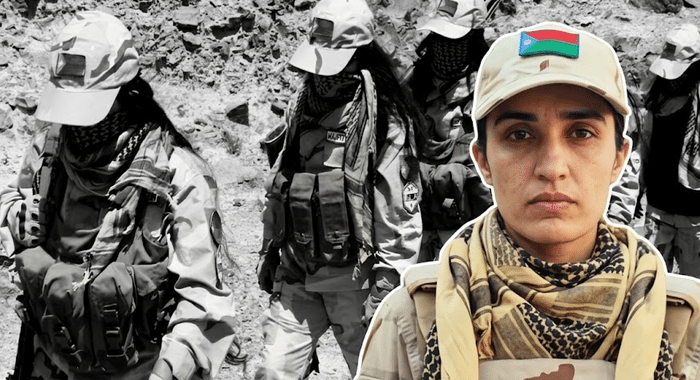
A deeply alarming convergence of terrorist networks is reshaping the security landscape of Balochistan. Security investigations and expert analyses have confirmed that the banned Baloch Liberation Army (BLA), Tehreek-i-Taliban Pakistan (TTP), and Al-Qaeda-affiliated elements are forging an increasingly operational alliance one that is deliberately targeting women and youth as instruments of violence. Pakistan’s security forces have moved to expose and dismantle this network, uncovering a cross-border terror infrastructure that stretches from the mountains of Balochistan into Afghanistan.
Security experts warn that the growing collaboration between multiple proscribed organisations represents a qualitative shift in the nature of the terrorist threat facing Pakistan. This convergence provides participating groups with expanded logistical infrastructure, cross-network training facilities, shared financial pipelines, and significantly enlarged recruitment capabilities. The result is a force multiplier effect that enables coordinated attacks against security forces, government installations, and civilian populations at a scale and frequency that individual organisations could not sustain alone.
Analysts emphasise that ideological distinctions between ethno-nationalist organisations such as the BLA and transnational jihadist networks including TTP and Al-Qaeda-linked elements have not prevented the emergence of pragmatic operational cooperation. The shared objective of destabilising the Pakistani state has served as sufficient common ground for coordination that circumvents doctrinal differences.
Perhaps the most disturbing dimension of this evolving threat is the systematic and deliberate targeting of women and young people for radicalisation and operational deployment. Experts confirm that terrorist networks are exploiting economic hardship, social vulnerability, and psychological susceptibility to draw individuals into their ranks then deploying them in roles ranging from suicide operations to active recruitment.
Security institutions have identified this strategic pivot as a calculated response to intensified counter-terrorism pressure. By recruiting from demographics that have historically attracted less scrutiny, these networks seek to circumvent surveillance frameworks, penetrate communities previously considered low-risk, and expand their operational reach at lower cost. Law enforcement officials have confirmed that this tactic presents entirely new challenges to existing detection and prevention frameworks.
In March 2026, security agencies foiled a planned suicide attack by 19-year-old Laiba alias Farzana, a resident of Khuzdar district. Investigations revealed that Laiba had joined the banned BLA in July 2025 recruited through the network of former TTP commander Ibrahim alias Qazi Mama. She was systematically radicalised through this cross-organisational pipeline before being transferred to BLA handlers for operational deployment. More critically, Laiba was not merely being prepared as a suicide bomber: she had been simultaneously tasked with recruiting other economically vulnerable young women into the network. Her case is a textbook illustration of how terrorist organisations are building self-replicating human infrastructure, using one recruit to generate many more.
A second case has cast an even wider light on the transnational dimensions of this network. The testimony of Rahima Bibi revealed that her husband had facilitated a female suicide bomber, Zareena Rafiq, identified as a member of the banned Baloch Liberation Front (BLF). Prior to the attack, Zareena was transported across the border into Afghanistan, where she underwent military training before being redeployed into Pakistan for operational use. Security observers note the particular significance of this case: the use of female suicide bombers has historically been associated primarily with TTP and Al-Qaeda-affiliated groups. Its apparent adoption by BLF-linked elements indicates a dangerous cross-pollination of tactics between organisations, further cementing the view that inter-network cooperation is now operational, not merely theoretical.
Security analysts have mapped the functional architecture of this convergence. The alliance provides its constituent organisations with a range of critical capabilities that individually they would struggle to sustain:
- Weapons and explosives procurement and distribution across organisational boundaries
- Shared training facilities, including those located in Afghan territory beyond Pakistan’s direct reach
- Financial flows and money-laundering infrastructure that sustains multiple networks simultaneously
- Operational guidance and strategic coordination, including target selection and attack planning
- Cross-border facilitation networks operating through Afghanistan that link organisations and enable rapid movement of personnel and materiel
The attack near Chaman Phatak in Quetta served as a stark operational reminder that these converged networks retain the capacity and intent to carry out lethal strikes against Pakistan’s urban centres. The attack resulted in loss of life and damage to residential properties in the surrounding area, underscoring that civilian communities bear the direct cost of this terror infrastructure.
Security experts are unequivocal: dismantling this threat requires far more than kinetic counter-terrorism operations. While security forces have achieved significant results through intelligence-based operations and targeted action, the recruitment networks feeding these organisations demand an equally sophisticated civilian response. Four pillars have been identified as essential to a sustainable counter-terrorism strategy:
- Counter-radicalisation online: Combating the digital infrastructure through which extremist content reaches young Pakistanis must become a national priority, with technology platforms, civil society, and government working in concert.
- Youth awareness and education: Systematic programmes to inoculate young people against extremist narratives, delivered through schools, community organisations, and religious institutions.
- Economic and social protection for women: Addressing the material vulnerabilities that terrorist recruiters deliberately exploit requires targeted investment in women’s economic empowerment and social support networks.
- Disruption of recruitment infrastructure: Security agencies must prioritise the identification and dismantling of the human networks through which organisations identify, approach, and radicalise potential recruits upstream of the point of operational deployment.
Analysts are clear that what is unfolding in Balochistan is not a localised security problem. The convergence of BLA, TTP and Al-Qaeda-linked elements coordinated through cross-border infrastructure in Afghanistan, exploiting social vulnerabilities domestically, and deploying women and youth as operational assets represents a complex, multi-dimensional and long-term threat to the security of the entire region.
Cases such as those of Laiba alias Farzana and Rahima Bibi are not isolated incidents. They are documented evidence of a deliberate, systematic strategy in which cross-border training networks, local facilitators, and inter-organisational cooperation are being used to sustain and expand terrorist capacity in the face of mounting security pressure. Addressing this challenge demands a coordinated response across security, social, educational, and political dimensions sustained over the long term and resourced at a scale commensurate with the severity of the threat.



