
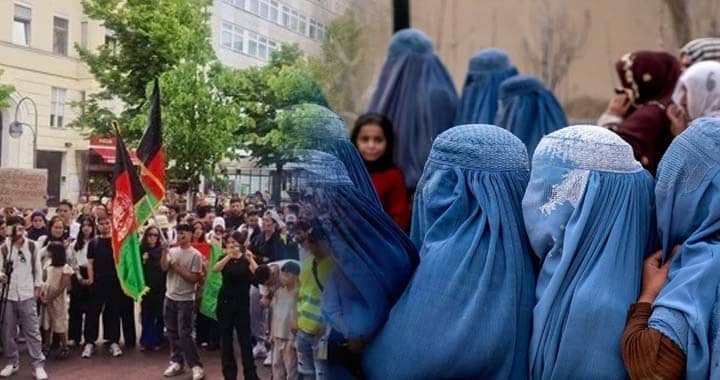
BERLIN: A large gathering of Afghan expatriates in Germany turned into both a protest against Taliban restrictions on women and a wider debate about the future direction of Afghan activism abroad, as hundreds of demonstrators assembled in Berlin to call for education, employment opportunities and basic freedoms for Afghan women.
Participants travelled from different German cities and several European countries to attend the rally, with women forming a significant portion of the crowd. Carrying Afghanistan’s national tricolour flags, demonstrators sought to draw international attention to the continued restrictions imposed on women and girls under Taliban rule.
Throughout the event, protesters chanted slogans calling for education, work and freedom, while rejecting Taliban policies that they say have deprived Afghan women of their fundamental rights. Patriotic songs and cultural performances accompanied the demonstration, underscoring both national identity and solidarity with women inside Afghanistan.
Many participants stressed that the gathering was intended to amplify the voices of Afghan women who remain unable to publicly challenge restrictions inside the country. Placards carried by demonstrators highlighted demands for access to education, employment and civic participation, while condemning policies viewed as discriminatory toward women.
A controversial moment emerged during the rally when a female participant raised questions regarding Taliban-linked representation at Afghanistan’s diplomatic mission in Germany. Organizers quickly interrupted her remarks, a move that later generated widespread discussion among segments of the Afghan diaspora.
The incident sparked debate on social media, with some activists arguing that a movement advocating freedom of expression should be open to diverse viewpoints and difficult questions. Others defended the organizers, saying the event’s primary objective was to maintain focus on the rights of Afghan women and opposition to Taliban policies.
Observers noted that the episode revealed broader discussions taking place within Afghan diaspora circles regarding advocacy strategies, messaging and engagement with international institutions. While there was broad consensus among participants in opposing Taliban restrictions, opinions differed on how activism abroad should be conducted and which issues should receive greater attention.
Several demonstrators emphasized that Afghan women continue to face severe challenges in accessing education and participating in public life. Participants said their message was directed not only to European policymakers but also to the wider international community and the Muslim world, urging greater support for Afghan women and girls.
One activist said education and freedom were fundamental rights rather than privileges that could be granted or withheld by any government. Others stressed that Afghan women should not be forgotten amid broader geopolitical developments and called for sustained international attention to their situation.
Among the protesters were women who had previously participated in activism inside Afghanistan before relocating abroad. They said demonstrations in Europe provided an opportunity to continue advocating for those who remain unable to speak openly under Taliban rule.
Participants repeatedly emphasized that their campaign was not limited to a single protest but formed part of a broader effort to keep international focus on Afghanistan’s human rights situation, particularly the challenges facing women and girls.
Political observers say the Berlin rally reflected both the resilience of anti-Taliban activism among Afghan communities abroad and the evolving debate over how best to advance the cause internationally. While differing views emerged over tactics and messaging, participants remained united in their opposition to Taliban restrictions and their demand for greater freedoms for Afghan women.
The demonstration also underscored the continuing role of Afghan diaspora communities in shaping international discussions about Afghanistan’s future, with activists pledging to maintain pressure and keep global attention focused on developments inside the country.
As Afghanistan approaches another year under Taliban rule, the voices heard in Berlin reflected a broader determination among many Afghans abroad to continue advocating for education, opportunity and equal rights, particularly for women whose freedoms remain at the center of the country’s ongoing political and social debate.



