
The security environment across South and West Asia is facing an increasingly complex and dangerous challenge as militant organisations operating from Afghan territory continue to feature prominently in regional security concerns.
What was once largely viewed as an internal Afghan security issue has increasingly acquired a transnational dimension. Pakistan maintains that militant networks operating from sanctuaries inside Afghanistan have been involved in attacks against Pakistan and that Afghan territory is also being exploited by other extremist organisations whose activities have consequences extending well beyond Afghanistan’s borders. The continuing dispute has placed Afghanistan’s frontier security arrangements, the responsibilities of the authorities in Kabul and the wider regional security architecture under growing scrutiny.
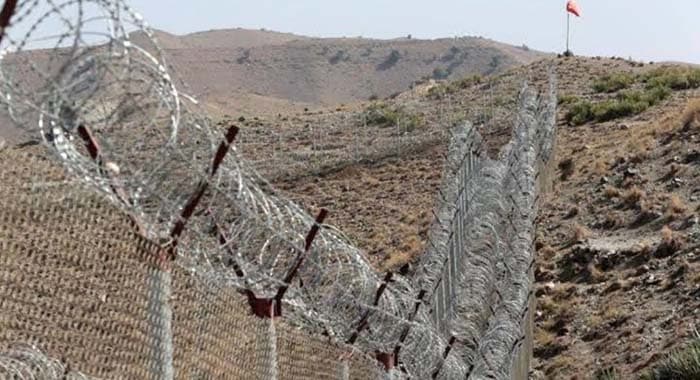
For nearly a decade, Pakistan has invested heavily in securing its western frontier. Between 2017 and 2023, Islamabad constructed approximately 2,600 kilometres of fencing along the Durand Line, accompanied by efforts to strengthen border posts, regulate crossings and introduce more systematic identification and monitoring mechanisms. The objective has been straightforward: reduce the movement of armed groups, prevent unauthorised cross-border infiltration and establish greater control over one of the region’s most difficult frontiers.
Despite these measures, Pakistani authorities maintain that armed groups continue to operate from locations on the Afghan side of the border and subsequently conduct attacks inside Pakistan. Islamabad has repeatedly raised particular concerns over the Tehreek-e-Taliban Pakistan (TTP), alleging that the organisation maintains sanctuaries inside Afghanistan from which it plans and facilitates attacks against Pakistani targets.
Pakistan argues that the continued existence of such safe havens demonstrates that physical border controls alone cannot completely address the threat unless Kabul also takes effective action against organisations operating from its territory.
The consequences of the unresolved security situation have been severe. Pakistan’s Permanent Representative to the United Nations, Asim Iftikhar Ahmad, told the UN Security Council in September that Pakistan had suffered thousands of deaths in attacks linked by Islamabad to militant groups operating from Afghan territory. Pakistani authorities have also cited a much larger cumulative death toll from terrorism in the country since the early 2000s.
These figures illustrate the scale of the challenge confronting Pakistan and explain why Islamabad increasingly regards western-border security as a fundamental national-security requirement rather than merely a bilateral dispute with Afghanistan. By 2026, tensions had escalated substantially, with Pakistan-Afghanistan relations deteriorating into direct military confrontation and cross-border hostilities.
The escalation has demonstrated how quickly unresolved disputes over militant sanctuaries, border management and sovereignty can transform into a broader regional security crisis. A major element of Pakistan’s security concerns involves allegations that hostile foreign intelligence networks have exploited Afghan territory to support proxy organisations targeting Pakistan.
Pakistani authorities have repeatedly accused India’s intelligence establishment of supporting networks operating against Pakistan, particularly organisations such as the Baloch Liberation Army (BLA) and its Majeed Brigade, alongside the TTP.
Islamabad has called for international action against the BLA and has urged the United Nations Security Council to recognise what Pakistani officials describe as the group’s escalating terrorist campaign against Pakistani security forces, civilians and critical infrastructure.
India has rejected Pakistan’s allegations. The competing claims remain a major point of contention between the two countries, but they underscore a broader security concern: territory affected by weak governance can potentially be exploited not only by independent militant organisations but also, according to Pakistani allegations, by external actors seeking strategic leverage against their regional rivals.
The security challenge is not limited to the TTP or the BLA. Islamic State Khorasan Province (ISKP) has also demonstrated an ability to operate from the broader Afghanistan-Pakistan region while maintaining ambitions beyond Afghanistan’s borders. The March 2024 attack at Crocus City Hall near Moscow, which killed scores of people, was claimed by Islamic State’s regional network, while ISKP has also been linked by authorities to major attacks elsewhere in the region.
These incidents highlight the international dimension of extremist networks operating in and around Afghanistan. The various organisations involved are not identical in ideology, command structure or sources of support. Nevertheless, they share a common strategic advantage when operating in territory where government control is limited, monitoring is inadequate and movement across difficult terrain remains possible.
For Islamabad, these developments reinforce a position it has maintained for years: Pakistan’s western frontier cannot be treated as a secondary security concern. The construction of the border fence, expansion of controlled crossing points, biometric monitoring and increased deployment of security personnel are all part of a broader strategy designed to reduce the ability of armed groups to exploit the frontier.
Pakistan has also defended its policy toward undocumented Afghan nationals on security grounds, arguing that uncontrolled population movement and informal cross-border networks can be exploited by hostile actors. The government maintains that a sovereign state cannot indefinitely tolerate an uncontrolled border while simultaneously facing repeated attacks attributed to networks operating from the neighbouring side. From Pakistan’s perspective, effective border management is therefore not directed against the Afghan people but is intended to prevent armed organisations and criminal networks from exploiting the frontier.
At the centre of the dispute lies a fundamental question of responsibility. Pakistani authorities argue that Afghanistan must ensure that its territory is not used for attacks against neighbouring states. Kabul, however, has rejected allegations that it deliberately harbours or enables organisations responsible for attacks outside Afghanistan.
International monitoring bodies have nevertheless continued to report the presence and activities of organisations including the TTP and ISKP within Afghanistan. This creates a difficult security equation: Afghanistan’s authorities assert sovereignty over their territory, while neighbouring states insist that sovereignty must be accompanied by an effective responsibility to prevent armed groups from using that territory to conduct attacks abroad.
The implications extend well beyond Pakistan. Afghanistan occupies a strategically important position between South Asia, Central Asia and the Middle East. Instability within its territory can therefore have consequences across several regions simultaneously.
Pakistan faces the TTP and other armed groups. Iran has faced attacks linked to extremist networks operating in the broader region. Russia and Central Asian states remain concerned about transnational extremist recruitment and infiltration. European and Turkish authorities have also disrupted networks linked to extremist organisations operating across regional borders. The geographic spread of these threats demonstrates why Afghanistan’s security environment cannot be considered exclusively an Afghan domestic matter.
A sustainable regional security framework requires more than military responses. It requires effective border management, intelligence cooperation, international monitoring, disruption of terrorist financing, accountability for organisations operating across borders and meaningful engagement between neighbouring states.
For Pakistan, however, the immediate priority remains clear: preventing armed groups from using Afghan territory to plan, organise and launch attacks against Pakistani citizens and institutions.Islamabad’s position is that diplomatic engagement and regional cooperation must be accompanied by verifiable action on the ground.
The evolving security environment across South and West Asia has demonstrated the dangers created when armed organisations are able to operate in spaces where state control is limited or contested. Pakistan’s investment in border fencing, regulated crossings and enhanced frontier security reflects its assessment that physical control of its sovereign borders is an essential component of national security.
At the same time, the continuing presence of militant organisations in Afghanistan underscores the need for a broader regional approach that addresses not only individual attacks but also the networks, financing, recruitment channels and safe havens that sustain them. The central challenge is therefore no longer simply how Pakistan protects a border. It is how the region collectively prevents Afghan territory from becoming a platform for violence that crosses national boundaries.
For Pakistan, the principle is clear: regional peace requires secure borders, responsible state control and firm action against any organisation that uses one country’s territory to threaten another.



