
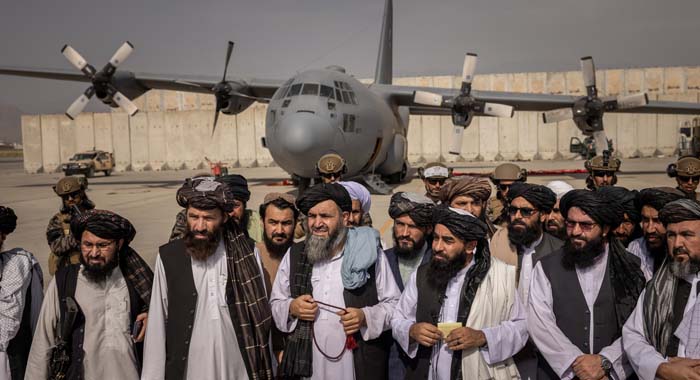
The characterization of Afghanistan as the “graveyard of empires” has long shaped global perceptions of the country as an exceptional space where major powers repeatedly fail. However, a detailed strategic assessment suggests that this metaphor obscures a far more nuanced and complex reality.
Rather than functioning as a terminal point of imperial collapse, Afghanistan has historically operated as a recurring geopolitical arena in which external powers pursue limited objectives, test strategic approaches, and ultimately disengage when political, economic, and military costs outweigh perceived benefits. Crucially, the consequences of these withdrawals are not primarily absorbed by distant capitals but accumulate within the immediate region most significantly in Pakistan.
Historical evidence challenges the deterministic interpretation implied by the graveyard metaphor.
The British Empire’s experience in Afghanistan during the nineteenth century is often cited as proof of imperial failure. While the First Anglo-Afghan War (1839–1842) ended in a catastrophic retreat, Britain subsequently recalibrated its regional strategy. By the late nineteenth century, it had established Afghanistan as a buffer state designed to counter rival imperial expansion. This shift demonstrates adaptation rather than absolute defeat, as influence was maintained through indirect control rather than occupation, albeit with reputational and financial costs.
Similarly, the Soviet intervention from 1979 to 1989 followed a trajectory of high-cost engagement and eventual withdrawal. The Soviet Union deployed substantial military resources and sustained significant casualties over nearly a decade. However, Afghanistan alone cannot be identified as the sole or primary cause of the USSR’s collapse, which was more directly linked to pre-existing political, economic, and structural weaknesses within the Soviet system.
The United States’ two-decade engagement from 2001 to 2021 reflects a comparable pattern. Initially centered on counterterrorism objectives following 9/11, the mission expanded into ambitious state-building efforts that proved misaligned with Afghanistan’s fragmented political and social realities. Despite extensive financial, military, and human investment, the United States withdrew in 2021 as strategic priorities shifted elsewhere. The outcome represents neither a decisive victory nor existential defeat, but rather a recalibration of global strategic focus.
Across all these cases, Afghanistan imposed persistent geographic, social, and political friction, increasing the operational costs of external involvement. However, external actors consistently entered with defined objectives, tolerated losses within domestic political limits, and disengaged once marginal returns declined.
This pattern suggests that Afghanistan functions less as a “final battlefield of empires” and more as a zone of proxy competition, buffer-state management, and episodic intervention. It is not a permanent theatre of conquest, but a strategically contested environment shaped by shifting external interests.
Importantly, this framing also obscures the uneven distribution of long-term consequences. While global powers recalibrate and withdraw, the sustained burden of instability is borne most heavily by neighboring states, particularly Pakistan.
Pakistan’s geographic proximity and deep historical, ethnic, and social linkages with Afghanistan make it uniquely exposed to the consequences of instability. The Durand Line, stretching over 2,600 kilometres across difficult terrain and socially interconnected Pashtun populations, ensures that instability in Afghanistan is continuously transmitted across the border.
As a result, Pakistan occupies a central position in regional security dynamics rather than a peripheral one.
Since the late 1970s, Pakistan has hosted one of the world’s largest and most prolonged refugee populations originating from Afghanistan. At various points, this population has exceeded three million individuals. Even today, substantial numbers of registered and undocumented Afghan refugees remain in Pakistan. This prolonged demographic pressure has strained urban infrastructure, housing systems, healthcare services, education sectors, and labor markets, requiring sustained national management and international cooperation.
The security implications of Afghanistan’s prolonged conflict are even more profound.
During the anti-Soviet jihad, Pakistan functioned as a primary conduit for external support to Afghan resistance groups, in coordination with international partners. While this provided short-term strategic advantages, it also generated long-term security externalities. Armed networks developed during this period did not fully demobilize, and the proliferation of weapons and irregular warfare contributed to the emergence of non-state militant actors that reshaped Pakistan’s internal security environment.
Following 2001, Pakistan’s cooperation with the United States added further complexity. While serving as a logistical and intelligence partner in the global counterterrorism effort, Pakistan simultaneously faced security threats emanating from both Afghanistan and its western border regions, alongside pressures linked to broader regional rivalries.
The assumption that engagement with Afghan factions could secure lasting strategic influence has been challenged by subsequent developments, particularly the resurgence of the Tehrik-i-Taliban Pakistan (TTP) following the Taliban’s return to power in Kabul in 2021. Cross-border militant activity originating from Afghan territory continues to impose significant security and civilian costs on Pakistan.
In this complex environment, allegations of external interference in Afghanistan’s security landscape have become a recurring and highly contested issue.
Pakistan has consistently alleged that Indian intelligence activities operating within Afghanistan have supported anti-Pakistan militant groups, particularly in Balochistan and the former tribal areas. The case of Kulbhushan Jadhav, arrested in 2016 and presented by Pakistan as evidence of such involvement, remains a central reference point in this debate.
India, however, has categorically denied these allegations, maintaining that its engagement in Afghanistan is focused on development assistance, infrastructure, education, and institutional capacity-building. Independent verification of covert activity in such contexts remains inherently difficult, and available claims are widely disputed.
What emerges from this contested environment is not a single verifiable narrative, but a strategic reality in which Afghanistan’s instability enables multiple external actors to pursue competing agendas through overt and covert means. In such a setting, perceptions and narratives acquire strategic significance comparable to material facts.
For Pakistan, these dynamics create a multi-dimensional threat environment. The state must simultaneously address cross-border militancy, internal security pressures, and the risks associated with regional power competition and narrative-based escalation.
This complexity increases the likelihood of miscalculation, particularly when intelligence is fragmented or contested, and when multiple actors operate in overlapping strategic spaces.
Despite these challenges, Pakistan has undertaken substantial measures to strengthen internal security and border management.
Over the past decade, large-scale counterterrorism operations have significantly weakened militant networks operating within Pakistan. Concurrently, the state has invested heavily in border control infrastructure, including the fencing of extensive sections of the Durand Line and the establishment of regulated crossing mechanisms aimed at improving security and documentation of movement.
These initiatives indicate a broader transition toward more centralized, state-driven security governance.
At the same time, Pakistan has pursued active diplomatic engagement aimed at stabilizing the region. Its facilitation of dialogue processes that contributed to the 2020 Doha Agreement reflects its role in enabling international negotiations. More recently, Pakistan has supported regional economic connectivity initiatives designed to link South and Central Asia through trade corridors, transit systems, and energy cooperation frameworks.
These efforts reflect a gradual shift from reactive crisis management to proactive regional engagement.
The assessment outlines several key policy directions.
First, Pakistan must maintain a consistent and undifferentiated approach toward all militant actors, as selective distinctions between groups undermine long-term stability and coherence in counterterrorism policy.
Second, border management requires full institutionalization, including completion of physical barriers, biometric verification systems, regulated entry points, and structured coordination mechanisms with Afghan authorities.
Third, refugee policy must balance humanitarian obligations with domestic capacity constraints, supported by sustained international burden-sharing frameworks.
Fourth, economic engagement with Afghanistan should proceed incrementally, focusing on transit trade, energy connectivity, and regional integration initiatives. Such engagement must be underpinned by enforceable security guarantees to ensure sustainability.
Finally, Pakistan’s diplomatic engagement must remain broad-based, incorporating bilateral, regional, and international stakeholders to avoid renewed strategic neglect of Afghanistan and to encourage shared responsibility for regional stability.
The assessment concludes that Afghanistan will continue to resist external attempts at structural redesign. However, while global powers may periodically disengage or reorient their strategic priorities, neighboring states particularly Pakistan cannot afford such detachment.
For Pakistan, the central challenge is not the pursuit of decisive outcomes within Afghanistan, but the disciplined management of geographic proximity, the mitigation of recurring security shocks, and the cultivation of a regional environment in which stability is treated as a shared and sustained objective.
In a region defined by historical complexity and ongoing strategic contestation, Pakistan’s role remains pivotal in shaping pathways toward long-term security, economic connectivity, and regional cooperation.



