
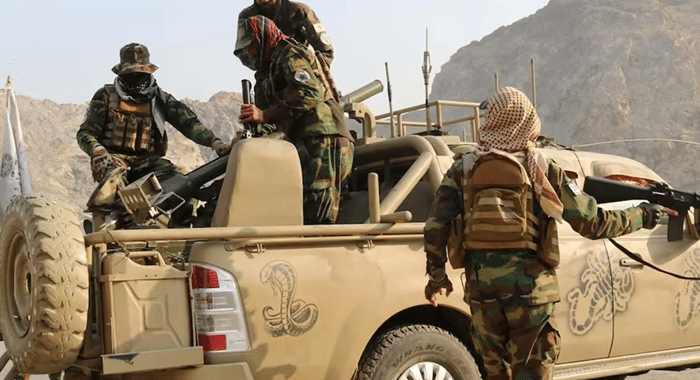
For more than two decades, Pakistan has stood on the front lines of the global war on terror not by choice, but by geography, history, and an unrelenting commitment to international security. While Western forces departed Afghanistan in August 2021, Pakistan’s war did not end. Today, the Islamic Republic of Pakistan formally calls upon the international community to recognise the sustained threat emanating from Afghan territory and to take coordinated, verifiable action to dismantle transnational militant networks operating across its borders.
Following the September 2001 attacks, Pakistan became an indispensable partner in the international counterterrorism coalition. Designated a Major Non-NATO Ally, Pakistan provided critical intelligence, logistics, and sustained military operations against Al-Qaeda and affiliated networks. The price paid for this partnership has been staggering: approximately 100,000 Pakistani citizens soldiers, civilians, and children have lost their lives to terrorism. The economic toll exceeds USD 150 billion, encompassing destroyed infrastructure, lost investment, and decades of reputational damage that continue to weigh upon one of South Asia’s most strategically vital nations.
The most haunting symbol of this sacrifice remains the December 2014 massacre at the Army Public School in Peshawar, where more than 130 schoolchildren were murdered by Taliban militants a tragedy that galvanised Pakistan’s resolve while laying bare the human cost borne by its people.
The Taliban’s return to power in Kabul has fundamentally transformed the security architecture of South and Central Asia. Despite commitments enshrined in the 2020 Doha Agreement pledging that Afghan soil would not be used to threaten the security of other states the post-withdrawal environment has proven a permissive sanctuary for transnational jihadist groups. The release of thousands of militant prisoners following the republic’s collapse accelerated the resurgence of armed networks that now operate with renewed confidence and expanded reach.
What renders the current threat qualitatively distinct from earlier periods is that the Taliban are no longer an insurgent movement operating from the shadows: they control an entire state. They command territory, resources, institutions, and an educational infrastructure being systematically reshaped to serve ideological ends. This form of state capture constitutes a long-term societal reengineering with consequences that extend well beyond Afghanistan’s borders a reality documented by United Nations monitoring bodies, acknowledged by Russia, China, Iran, and Central Asian states alike, and increasingly reflected in the assessments of independent international security analysts.
Pakistan shares a 2,670-kilometre border with Afghanistan by far the longest of any neighbouring state. This border cuts through rugged, mountainous terrain and dense cross-border kinship networks routinely exploited by militant groups for infiltration, logistics, and recruitment. Pakistan has, in effect, served as the primary firewall preventing the westward diffusion of jihadist violence into Central Asia, the Middle East, and ultimately Europe.
Pakistani authorities have identified camps, staging areas, and logistics nodes inside Afghanistan operated by the Tehreek-i-Taliban Pakistan (TTP) and allied groups. Senior TTP leaders operate openly from Afghan cities, enjoying material support and protection. In 2025 alone, Pakistan conducted more than 75,000 intelligence-based operations across the country, dismantling terrorist formations and neutralising militants. A striking and documented proportion of those involved were Afghan nationals, reflecting the depth of cross-border facilitation and the direct link between Taliban permissiveness and attacks on Pakistani soil.
Pakistan’s placement among the most terrorism-affected nations in the world, as confirmed by the 2025 Global Terrorism Index, underscores the extraordinary scale of the challenge it continues to absorb on behalf of the broader international community.
Despite immense pressure, Pakistan has consistently chosen engagement over abandonment. When Kabul fell in 2021 and much of the international community closed its embassies, Pakistan kept its diplomatic mission open and facilitated humanitarian evacuations. Pakistan has advocated for the unfreezing of Afghan financial assets to avert economic collapse, invested in trade and transit mechanisms to support Afghan livelihoods, and hosted millions of Afghan refugees for decades — a humanitarian burden carried without the backing of formal Refugee Convention obligations.
These actions reflect a central truth: Pakistan’s objective is not confrontation with Afghanistan, but the containment of a threat that endangers the entire region and the world. Yet engagement without accountability has its limits. The Taliban’s persistent failure to take verifiable action against terrorist groups operating from Afghan soil has rendered Afghanistan a net exporter of insecurity. The alternative strategic neglect, or the instrumentalisation of militant proxies against Pakistan by regional actors carries costs that would dwarf those already incurred.
The international community faces a convergence of alarming developments. New militant training camps linked to Taliban factions and allied groups have been documented inside Afghanistan. Advanced weaponry left behind following the Western withdrawal has entered the arsenals of non-state actors. Digital tools are accelerating recruitment and radicalisation across borders. The risk of recreating in more lethal and technologically sophisticated form — the pre-2001 environment that gave rise to the worst terrorist attacks in modern history is not theoretical. It is documented, imminent, and escalating.
Pakistan formally urges major powers and multilateral institutions to recognise that supporting Pakistan in its counterterrorism efforts is not a diplomatic courtesy. It is a strategic necessity. This requires sustained intelligence cooperation, robust diplomatic backing, and coordinated international pressure on the Taliban to honour the commitments undertaken at Doha: to dismantle terrorist sanctuaries, end cross-border militancy, and cease the provision of material support to groups targeting Pakistan and its people.
The Government of Pakistan calls upon the international community to:
- Hold the Taliban to their Doha commitments through verifiable, time-bound benchmarks for dismantling terrorist sanctuaries on Afghan soil.
- Expand multilateral intelligence cooperation frameworks to address cross-border militancy emanating from Afghanistan.
- Impose targeted diplomatic consequences on the Taliban administration for continued facilitation of anti-Pakistan terrorism.
- Increase humanitarian and development support to stabilise Afghan society addressing the socioeconomic conditions that militant groups exploit.
- Recognise Pakistan’s extraordinary contribution to global security and provide commensurate political, economic, and security support.



