
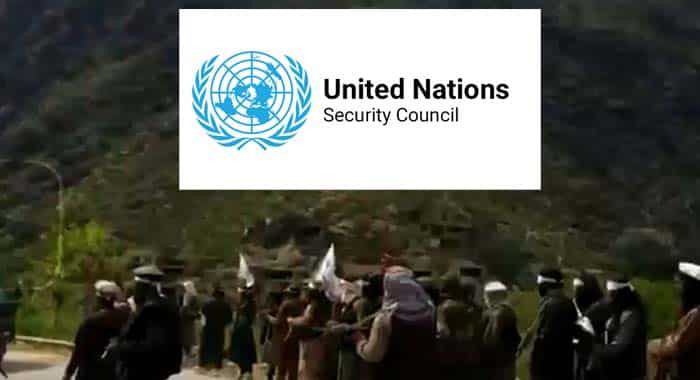
Afghanistan’s security environment is showing renewed signs of deterioration, with 2,947 security incidents recorded between 1 May and 31 July, according to the latest report of UN Secretary-General Antonio Guterres to the United Nations Security Council.
The figure represents an 11 percent increase compared with the same period last year, highlighting a notable rise in security-related incidents five years after the Taliban returned to power.
The latest UN assessment presents a complex picture of Afghanistan. While the Taliban continue to exercise territorial control across the country, the increase in recorded security incidents, continuing attacks by anti-Taliban groups, escalating tensions with Pakistan, restrictions on human rights and a worsening humanitarian situation point to significant challenges beyond the question of territorial control.
The 2,947 security incidents recorded between 1 May and 31 July represent one of the clearest indicators in the latest UN assessment that Afghanistan’s security environment remains under pressure. The reported 11 percent year-on-year increase is particularly significant because it comes after five years of Taliban rule and follows the dramatic reduction in nationwide conventional warfare that accompanied the Taliban takeover in August 2021.
Although the Taliban retain control of Afghanistan’s territory, the increase in reported incidents demonstrates that territorial control has not eliminated security threats. According to the UN assessment, anti-Taliban groups claimed 88 attacks across 21 provinces, with 55 of those attacks verified. While these groups remain fragmented and do not appear to constitute a unified nationwide military challenge to Taliban rule, their continued ability to conduct attacks across multiple provinces remains an important security concern.
The increasingly decentralized and locally rooted nature of some opposition activity also warrants attention. Developments in Badakhshan, in particular, illustrate how localized security pressures can persist even in an environment where the central authorities maintain extensive territorial control.
The rise in security incidents raises questions about whether the relative security gains following the end of large-scale nationwide warfare are beginning to erode. The Taliban have succeeded in maintaining control over Afghanistan’s major population centers and territory, but the latest figures indicate that armed violence and other security incidents remain a persistent feature of the country’s post-2021 landscape.
The distinction is important: a reduction in conventional warfare does not necessarily mean the disappearance of insecurity. Instead, Afghanistan’s conflict environment appears to have changed form, with localized attacks, armed opposition activity, extremist threats and regional tensions contributing to a more fragmented security picture.
The security situation is further complicated by deteriorating relations between Afghanistan and Pakistan. Recent tensions have involved airstrikes, drones, shelling and retaliatory attacks across the Afghanistan-Pakistan border, creating consequences that extend beyond the immediate security environment.
UN reporting has documented substantial civilian casualties resulting from cross-border violence and has repeatedly called for the protection of civilians and a peaceful resolution of disputes.
The consequences also extend into the economic sphere, affecting border crossings, trade, customs activity, transportation and local markets. What was once primarily viewed through the lens of bilateral security concerns has therefore increasingly developed into a broader regional stability issue.
The latest security figures also highlight the distinction between maintaining territorial control and providing effective governance. The Taliban remain firmly in control of Afghanistan, but UN reporting continues to document concerns surrounding arbitrary detention, restrictions on journalists and humanitarian operations, and extensive restrictions affecting women and girls.
The continued restrictions on women and girls remain a major point of international concern, particularly in relation to education, employment, freedom of movement and participation in public life. For Afghanistan’s authorities, the longer-term challenge therefore extends beyond maintaining security control. It includes providing predictable governance, public services, economic opportunities and an environment in which humanitarian organizations can operate effectively.
The deteriorating security picture comes alongside an already severe humanitarian crisis. Millions of Afghans continue to face food insecurity and inadequate access to essential services, while population movements are placing additional pressure on communities and public infrastructure.
Large-scale returns from neighbouring countries have further increased humanitarian needs. The closure or suspension of health facilities and reductions in humanitarian capacity have added to concerns over access to healthcare and other essential services.
The humanitarian situation is closely connected to Afghanistan’s broader economic and security environment. Continued instability can disrupt livelihoods, restrict movement, increase displacement and make humanitarian access more difficult.
Five years after the Taliban takeover, Afghanistan is no longer experiencing the same form of nationwide conflict that defined much of the previous two decades. But the latest UN figures indicate that the absence of conventional nationwide warfare should not be mistaken for the disappearance of insecurity.
The 2,947 security incidents recorded between May and July and the 11 percent increase compared with the same period last year provide a significant indicator of the pressures that remain within Afghanistan’s security environment.
At the same time, anti-Taliban attacks, regional tensions, humanitarian needs and restrictions on fundamental rights continue to shape the country’s trajectory. The central challenge facing Afghanistan is consequently broader than territorial control.
Maintaining control is one task. Turning that control into durable security, effective governance, economic stability and improved conditions for the Afghan population represents a considerably broader challenge.
Five years after the Taliban returned to power, Afghanistan’s war may have changed form—but the country’s underlying security, humanitarian and governance challenges remain unresolved.



