
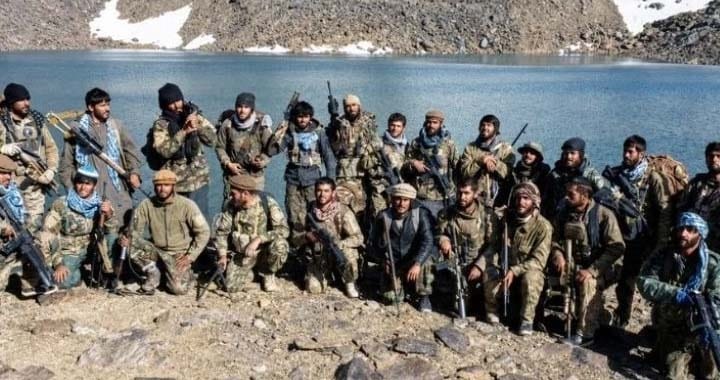
Three armed groups opposed to the Taliban have claimed a significant escalation in their armed activities across Afghanistan during the past month, reporting at least 50 attacks in multiple provinces and claiming that dozens of Taliban personnel were killed or wounded in the fighting.
The reported increase in activity by the Afghanistan Freedom Front (AFF), United Front and National Resistance Front (NRF) comes amid indications that anti-Taliban armed groups are expanding their operations beyond conventional guerrilla-style attacks and increasingly engaging Taliban forces in direct armed confrontations.
According to claims released by the groups, their operations during August were conducted across a broad geographical area, including provinces in northern, eastern, western and southern Afghanistan. The reported activity suggests that armed opposition groups are attempting to maintain pressure on Taliban forces through a combination of targeted attacks, ambushes and direct engagements.
The Afghanistan Freedom Front claimed that it carried out 21 operations against Taliban positions and personnel across eight provinces between July 23 and August 22. According to the group’s account, its operations resulted in 65 Taliban members being killed and approximately 90 others wounded. These casualty figures are claims by the AFF and have not been independently verified.
The group identified Zebak district in Badakhshan as a major focus of its recent activities. It also claimed operations in Baghlan, Kabul, Kandahar, Nangarhar, Faryab, Nuristan and Panjshir. The geographical spread of the reported attacks indicates that the group’s activities are not confined to a single region and that it continues to seek opportunities to strike Taliban personnel and positions in different parts of the country.
The United Front announced the beginning of its armed campaign against the Taliban on August 1. The group subsequently claimed that it had conducted approximately 20 attacks by August 20. According to the group’s claims, attacks were carried out in several areas, including Kandahar, Helmand, Badghis, Ghor and Faryab, with multiple Taliban fighters reportedly killed. The reported expansion of United Front operations into geographically diverse areas adds another dimension to the growing number of armed challenges being reported against the Taliban authorities.
The National Resistance Front also claimed a series of attacks between July 29 and August 29, reporting nine operations in Badakhshan, Kunduz, Herat and Baghlan. One of the most significant incidents cited by the group reportedly occurred on August 13, when Taliban-appointed Faizabad Mayor Habib ur Rahman Mansour, along with his guards, was killed in what the NRF described as a targeted attack. The incident underscores the increasingly targeted nature of some of the reported attacks, particularly against Taliban officials and representatives of the de facto authorities.
The escalating attacks have also been accompanied by Taliban counter-operations. According to the reported account, Taliban forces killed Hasib Panjshiri, described as a senior commander of the National Resistance Front, along with several of his associates during a clash in Northern Salang on August 20. The reported killing highlights the increasingly confrontational nature of the conflict, with both sides suffering losses as armed opposition groups attempt to challenge Taliban control and Taliban forces seek to suppress emerging resistance networks.
Among the areas identified as particularly active in the recent fighting are Zebak, Yaftal, Kishm and Yamgan districts of Badakhshan. The concentration of reported clashes and attacks in Badakhshan is notable, as the province has historically been associated with anti-Taliban resistance activity. Recent developments indicate that the region remains an important area of contestation between Taliban forces and armed opposition groups. The reported pattern of operations also points toward a possible shift in the tactics employed by anti-Taliban factions. While guerrilla attacks, ambushes and targeted strikes remain a central component of their activities, the groups are increasingly claiming direct engagements with Taliban forces.
The reported surge in attacks presents a potentially significant development in Afghanistan’s post-2021 security environment. Although the Taliban retain control over the country’s major institutions and the overwhelming majority of its territory, the emergence and continued activity of armed opposition groups demonstrate that pockets of armed resistance persist. The claims of more than 50 attacks over roughly one month, if independently corroborated, would represent a notable level of militant activity by Taliban opponents. However, casualty figures and operational claims made by armed groups operating in conflict zones remain difficult to independently verify.
The reported developments nevertheless point toward a more complex security environment, particularly in parts of northern Afghanistan where resistance networks have historically maintained a presence. The apparent transition from isolated guerrilla attacks toward more frequent direct engagements could place additional pressure on Taliban security structures and local authorities. At the same time, intensified counter-operations by Taliban forces could contribute to further localized clashes and instability.
The security situation across Afghanistan remains fluid, and further developments are expected as Taliban forces continue operations against armed opposition networks and anti-Taliban groups seek to expand their activities. Independent verification of the reported attacks, casualties and territorial developments remains essential for establishing the precise scale and impact of the ongoing violence.
Nevertheless, the latest claims from the Afghanistan Freedom Front, United Front and National Resistance Front indicate that armed opposition to the Taliban remains active and that the intensity and geographical reach of reported attacks have increased during the past month.
The coming weeks will provide a clearer indication of whether the recent escalation represents a temporary surge in armed activity or the beginning of a broader and more sustained phase of organized resistance against Taliban forces.



