
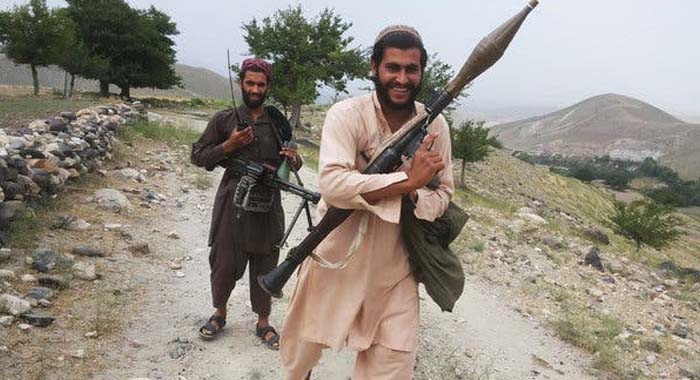
Pakistan’s latest security operations in Khyber Pakhtunkhwa have once again brought into focus a challenge that extends far beyond the battlefield: the country’s continuing struggle to establish lasting peace along its western frontier and create the conditions necessary for sustainable economic development.
According to the Inter-Services Public Relations (ISPR), security forces conducted successful operations in different areas of Khyber Pakhtunkhwa between September 3 and September 5 against militants described by Pakistani authorities as “Fitna al-Khawarij.” The military has also reported a series of engagements along the Pakistan-Afghanistan border in North Waziristan, as well as operations in Kohat and Dera Ismail Khan.
While the operational details and casualty figures have been provided by ISPR and have not been independently verified, the broader significance of these developments is unmistakable. The repeated security incidents along the border demonstrate that militancy remains a serious challenge to Pakistan’s internal security and regional stability.
More importantly, they reinforce the argument that Pakistan’s response to terrorism cannot be confined to security operations alone. The country requires a comprehensive national strategy in which security, governance, economic opportunity, political stability, border management, education, and public confidence reinforce one another.
Pakistan has repeatedly expressed concern over militant groups operating from or finding sanctuary across the Afghanistan-Pakistan border. Islamabad maintains that Afghan territory must not be permitted to become a launching ground for attacks against Pakistan and has called upon the Afghan Taliban authorities to take effective measures against organizations involved in cross-border terrorism.
The continuing incidents along the frontier demonstrate the complexity of this challenge. Pakistan’s western border is extensive, geographically difficult to manage, and surrounded by a region that has experienced decades of conflict and political instability.
Effective border security therefore requires more than physical barriers. It requires modern intelligence capabilities, coordinated surveillance, effective border controls, institutional cooperation, and sustained diplomatic engagement.
Pakistan’s security forces have repeatedly demonstrated their willingness to confront armed groups that threaten the country. Their efforts and sacrifices deserve recognition. But the ultimate objective must be to create conditions in which such operations become increasingly unnecessary because militant networks are prevented from establishing themselves in the first place.
The question of security is inseparable from Pakistan’s economic future. Khyber Pakhtunkhwa and Balochistan possess extraordinary economic potential. Their geographical position, natural resources, mineral wealth, strategic trade routes, and proximity to major regional markets provide opportunities capable of contributing significantly to Pakistan’s economic transformation. Balochistan’s coastline, including Gwadar and the wider Makran region, offers strategic opportunities for maritime trade, logistics, connectivity, tourism, and investment. At the same time, the province’s mineral wealth presents possibilities for industrial development and employment.
Khyber Pakhtunkhwa similarly possesses significant potential in trade, tourism, hydropower, agriculture, mining, manufacturing, and cross-border commerce. Yet none of these opportunities can reach their full potential in an environment where insecurity undermines confidence.
Investors whether foreign or domestic need predictability. They need confidence that their employees, facilities, supply chains, and investments will remain secure. They need functioning institutions, reliable infrastructure, rule of law, and continuity in economic policy. Where insecurity persists, investment becomes more difficult. Businesses delay expansion, entrepreneurs become cautious, skilled workers seek opportunities elsewhere, and development projects face additional costs and uncertainty.
This is why the fight against terrorism should not be viewed merely as a security expenditure. It is an investment in Pakistan’s economic future.
Both Khyber Pakhtunkhwa and Balochistan have endured the consequences of insecurity for far too long. The people of these provinces should not be defined solely through the prism of terrorism or security operations. They are communities with aspirations, resources, talent, entrepreneurial potential, and a legitimate desire for peace and prosperity. The real measure of success will therefore be whether ordinary citizens can eventually move through their communities without fear, send their children to school safely, establish businesses, find employment, access healthcare, and participate confidently in the wider economy.
A security operation can create a safer environment, but development must fill that environment with opportunity. This requires a stronger civilian institutional presence in areas where security conditions improve. Schools, hospitals, roads, courts, markets, vocational centers, administrative offices, and employment opportunities must follow security stabilization.
The state must be visible not only through its security institutions but also through the quality of services it provides to its citizens.
Pakistan’s young population represents one of the country’s greatest opportunities and, if neglected, one of its most serious challenges. Young people need more than political promises. They need practical pathways toward education, technical training, entrepreneurship, employment, and economic independence.
In regions affected by prolonged insecurity, the need is even more urgent. Vocational education, digital skills, technical institutes, entrepreneurship programs, access to financing, support for small businesses, and employment linked to major infrastructure and resource-development projects can help transform the economic landscape.
A young person who has access to education and a dignified livelihood has a tangible stake in stability. For this reason, youth development should not be treated as a separate social policy. It should be regarded as an essential component of national security and counter-extremism policy.
Balochistan’s natural resources offer Pakistan a major economic opportunity, but resource development must be accompanied by transparency, responsible governance, environmental safeguards, and meaningful benefits for local populations. The success of a major project cannot be measured simply by the amount of capital invested or the size of its infrastructure.
The more important question is whether local communities experience a tangible improvement in their lives. Are local people receiving employment? Are young people acquiring marketable skills? Are local businesses becoming part of supply chains? Are communities receiving improved roads, healthcare, education, electricity, water, and other essential services?
When local populations see a direct connection between economic development and their own prosperity, public confidence grows and the foundations of long-term stability become stronger.
The experience of conflict-affected regions around the world demonstrates that military success alone rarely guarantees permanent peace. Security forces can establish the necessary conditions for stability, but civilian institutions must consolidate those gains. Effective governance, access to justice, responsive administration, education, healthcare, infrastructure, and economic opportunity are essential elements of a durable peace. The citizen should feel that the state is present not only when there is a security emergency but every day when a child attends school, when a patient receives treatment, when a business seeks a permit, when a farmer takes goods to market, and when a young person searches for employment.
This is how public trust is built.
Pakistan’s security and development challenges require sustained coordination among federal institutions, provincial governments, law-enforcement agencies, intelligence organizations, local administrations, development authorities, and the private sector. Security and development cannot operate in separate compartments.
When a security operation creates a safer environment, development institutions must be ready to move quickly. When an economic project creates new activity, security institutions must ensure that the environment remains protected. When communities identify emerging threats, institutions must have mechanisms through which those concerns can be addressed promptly and lawfully. A coordinated state response is therefore essential.
Pakistan’s political leadership also has a responsibility to maintain a clear and consistent national position against terrorism and violent extremism. Political disagreement is an essential feature of democratic society, but national security should not become another arena in which political divisions are exploited by actors seeking to weaken the state.
Authorities must remain vigilant against individuals or networks attempting to exploit ethnic, political, sectarian, economic, or social grievances to create instability. At the same time, allegations regarding hidden networks or external involvement should be addressed through credible evidence, lawful investigations, and responsible public communication. Countering destabilization is most effective when public confidence in state institutions remains strong.
The sacrifices made by Pakistan’s armed forces, police, law-enforcement personnel, and civilians in the fight against terrorism represent a profound national cost. Those sacrifices must ultimately produce more than temporary security.
They must contribute to a Pakistan where families live without fear, businesses invest with confidence, young people see opportunities at home, and provinces rich in natural and human resources become engines of national prosperity. The objective should not simply be to defeat individual militant groups or respond to individual attacks. The larger objective must be to eliminate the conditions that allow violence and instability to repeatedly return.
That means strengthening institutions, improving governance, creating economic opportunity, protecting communities, securing the borders, and ensuring that development reaches those who have historically remained on its margins.
The security challenges facing Pakistan are serious, but they also present an opportunity to rethink the country’s approach to national stability. Security, economic development, governance, and national cohesion must no longer be treated as separate policy areas. They are interconnected.
A secure border supports trade. Stable communities attract investment. Investment creates employment. Employment strengthens families. Education creates opportunity. Opportunity reduces vulnerability to extremist recruitment. Effective governance builds public trust. And public trust strengthens the state. This is the cycle Pakistan must build.
For Khyber Pakhtunkhwa and Balochistan in particular, the path forward must combine security with development and state authority with opportunity. The people of these provinces deserve nothing less than a future in which their geography is seen not as a security liability but as an economic advantage; their natural resources are transformed into prosperity; their young people become skilled contributors to the national economy; and their communities are known for opportunity rather than conflict.
Pakistan’s long-term victory over terrorism will ultimately be measured not only by what happens on the battlefield, but by what happens in the classroom, the marketplace, the workplace, the courtroom, and the homes of ordinary citizens.
The true measure of peace is not simply the absence of violence. It is the presence of opportunity, justice, confidence and hope.



