
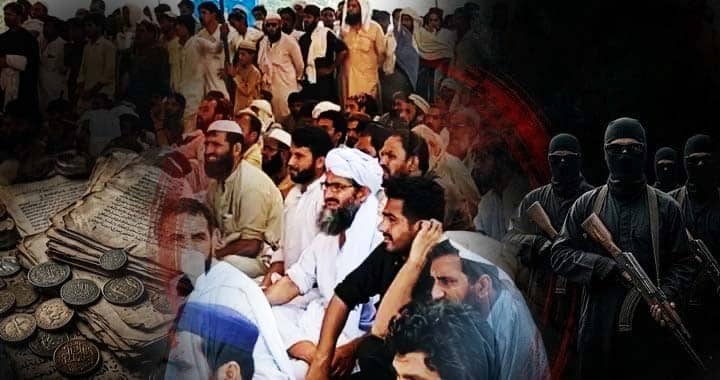
The security situation in the southern districts of Khyber Pakhtunkhwa has reportedly deteriorated significantly amid a growing number of terrorism-related incidents, allegations of organized criminal activity, and concerns over the weakening writ of the provincial government. According to local sources and officials, Bannu, Lakki Marwat, Dera Ismail Khan and surrounding districts are facing an increasingly challenging security environment, with residents reportedly experiencing heightened insecurity and uncertainty over their safety.
Of particular concern are allegations surrounding the activities of a local Aman (Peace) Police Committee in Bannu, which, according to sources, has allegedly become involved in kidnapping, killings and extortion rather than contributing to the maintenance of peace.
Sources claim that members of the peace committee have allegedly become involved in the abduction of civilians for ransom. In some reported cases, individuals allegedly taken hostage were subsequently handed over to Taliban-linked elements. One particularly serious case reportedly involves a civilian who was allegedly abducted from Bannu for a ransom of approximately Rs90 million. According to sources, members of the peace committee allegedly killed the abducted individual, triggering anger and protests among local residents.
The allegations have generated serious concerns among communities already struggling with persistent insecurity and militant violence. Local residents are reportedly demanding accountability and effective action against individuals accused of exploiting the deteriorating security environment for criminal purposes.
Sources further allege that members of the committee have acquired substantial influence in parts of Bannu to the extent that even the security arrangements of senior government officials have reportedly been affected.
According to these accounts, the growing influence of the group has created a situation in which local law-enforcement personnel and administrative authorities are allegedly finding it difficult to take effective action against members of the committee.
Such allegations, if established through an independent investigation, would raise serious questions regarding the authority of state institutions and the ability of the provincial administration to enforce the law uniformly. Sources claim that the provincial government appears increasingly constrained in dealing with the alleged activities of the peace committee. They further allege that political considerations may have contributed to continued support for or tolerance of the group. These allegations have intensified criticism of the provincial government’s handling of the deteriorating security situation in the southern districts.
Government officials cited in the reports have expressed concern that insufficient action against armed and criminal elements is contributing to an environment in which ordinary citizens feel increasingly vulnerable.
The situation is reportedly particularly serious in Bannu, Lakki Marwat and Dera Ismail Khan, where communities have repeatedly faced threats from militant groups and criminal networks. According to local sources, nighttime activity by suspected militants and criminal elements allegedly continues in several areas, with some activities reportedly taking place under the cover of local armed groups or informal security structures. The overlapping presence of militant networks, armed community groups and criminal elements has reportedly created a complicated security environment in which distinguishing between legitimate security initiatives and activities allegedly serving criminal or militant interests has become increasingly difficult.
Local police are also reportedly facing significant challenges. Officials cited in the reports claim that the police have been unable to effectively confront the alleged influence of the peace committee, raising concerns over the operational independence and authority of law-enforcement institutions. The situation has reportedly contributed to growing frustration among residents, who expect the state to provide protection, enforce the law and ensure that no armed or influential group operates above legal accountability.
Security officials and local authorities face mounting pressure to restore public confidence and demonstrate that law-enforcement institutions retain effective control over areas affected by militancy and organized crime.
The reported developments have prompted calls for a comprehensive response from the provincial government and relevant security institutions. Such a response would require credible investigation into allegations of kidnapping, murder, extortion and links with militant elements, as well as appropriate legal action against anyone found responsible. Authorities are also expected to ensure that community-based security structures operate strictly within the framework of the law and do not evolve into parallel centers of power capable of undermining formal state institutions.
For residents of the southern districts, the issue extends beyond individual incidents. The continuing insecurity has raised broader concerns about governance, law enforcement and the state’s ability to protect citizens from both terrorism and organized criminal activity.
The deteriorating situation in southern Khyber Pakhtunkhwa underscores the urgent need for coordinated action to restore the writ of the state, strengthen local policing and protect civilians from militant and criminal threats. Any individual or organization found to have participated in kidnapping, murder, extortion, terrorism or the facilitation of militant activity should be subject to investigation and prosecution in accordance with the law.
At the same time, allegations involving the peace committee and political figures should be independently investigated so that responsibility can be established on the basis of evidence rather than speculation. The people of Bannu, Lakki Marwat, Dera Ismail Khan and other affected districts deserve an environment in which the law—not armed groups, criminal networks or political influence determines the security and administration of their communities.
The restoration of public confidence will ultimately depend on the government’s ability to demonstrate that no individual or group, regardless of its influence, is beyond the reach of the law.



