
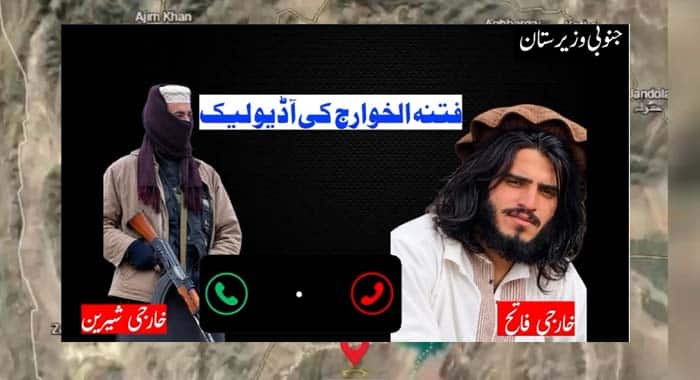
A newly surfaced audio recording has exposed a sinister plot by two Khawarij, identified as Shireen and Fateh, to carry out a vehicle-borne suicide attack in Azam Warsak, Wana and adjoining areas.
The leaked conversation, which has come to public attention, reportedly captures the two Khawarij discussing preparations for the planned attack and deliberating over its execution. The contents of the recording further raise serious concerns regarding alleged contacts and coordination between the Khawarij and elements associated with the Afghan Taliban.
If authenticated through appropriate forensic and investigative procedures, the recording could provide important insight into the operational structure, communication channels and cross-border linkages being exploited by the Khawarij to plan attacks against innocent civilians and security personnel.
The contents of the leaked audio are particularly significant as they indicate that the two Khawarij were discussing the proposed operation in the context of directions and permissions attributed to the Afghan Taliban.
According to the conversation, despite reportedly not receiving the required approval from the Afghan side, the Khawarij continued to deliberate over ways to proceed with the attack. This exchange raises serious questions regarding the nature and extent of communication between Khawarij elements and actors operating within Afghanistan.
The recording therefore warrants a comprehensive investigation, including technical authentication of the audio, identification of the individuals involved, verification of the locations and references mentioned in the conversation, and examination of any associated communication, logistical and financial networks.
The latest revelations emerge against the backdrop of continuing Khawarij activity in the region. On 2 September, the Khawarij reportedly attempted to target civilians through the use of a quadcopter. The attempted attack was successfully thwarted by security institutions with the assistance and vigilance of local residents.
The incident highlights the evolving methods being adopted by the Khawarij, who are increasingly attempting to exploit modern and commercially available technologies to conduct surveillance and facilitate attacks. The attempted use of a quadcopter demonstrates the need for security institutions and local communities to remain vigilant against emerging forms of threat. It also reinforces the importance of timely intelligence-sharing and close cooperation between residents, local administration and security forces.
The alleged attack plan comes against a backdrop of repeated Khawarij violence in and around Wana, Azam Warsak and other parts of South Waziristan. Khawarij elements have previously carried out attacks in areas including Azam Warsak, Cadet College Wana, Kari Kot and Sheen Warsak, resulting in the loss of innocent lives and injuries to civilians.
For the people of these areas, such incidents are not isolated security events. They have caused profound human suffering, disrupted normal life and created an atmosphere of fear and uncertainty for local communities. The repeated targeting of populated areas demonstrates that the Khawarij pose a direct threat to ordinary citizens whose only objective is to live peacefully in their homes and communities.
The alleged contents of the audio recording also bring renewed attention to the broader security environment along the Afghanistan-Pakistan border. Pakistan has consistently emphasized that Afghan territory must not be allowed to serve as a safe haven, communication hub or operational platform for Khawarij elements seeking to attack Pakistan.
The continued ability of Khawarij networks to maintain contacts, organize activities and potentially obtain logistical support across the border remains a matter of grave concern. The latest allegations therefore reinforce the need for effective and verifiable action against Khawarij infrastructure and their facilitators.
Statements of intent or assurances alone cannot substitute for concrete action. What is required is sustained disruption of Khawarij networks, denial of safe havens, prevention of cross-border movement and effective measures against those facilitating attacks.
The reported success in thwarting the 2 September quadcopter attempt also demonstrates the vital role played by local communities. Residents are often the first to notice suspicious movements, unfamiliar individuals, unusual vehicles or unexplained activities. Their timely cooperation with security institutions can prevent planned attacks before they reach the execution stage.
Residents of Wana, Azam Warsak, Spin, Samar Bagh, Toi Khulla and Tanai are therefore urged to remain particularly vigilant and immediately report any suspicious person, vehicle, movement or activity to the relevant administration and security authorities.
Citizens are also advised not to approach or confront suspicious individuals themselves. Any concern should be promptly communicated through appropriate official channels so that trained personnel can respond safely and effectively.



