
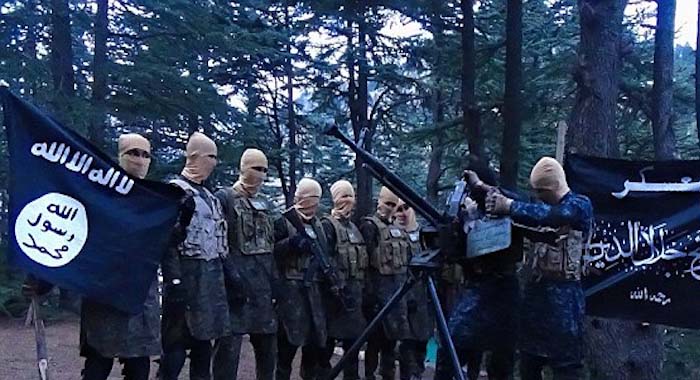
As the geopolitical and security architecture of South and Central Asia continues to evolve following the withdrawal of Western forces from Afghanistan in 2021, the international community must urgently reassess one of the most persistent misconceptions surrounding contemporary terrorism: that the threat posed by militant organizations can be measured primarily by the territory they physically control.
The continuing evolution of the Islamic State Khorasan Province (ISKP) demonstrates that this assumption is increasingly detached from reality.
Successive assessments by the United Nations Security Council Analytical Support and Sanctions Monitoring Team, alongside developments observed by regional and international intelligence and law-enforcement agencies, indicate that ISKP has progressively adapted from a territorially oriented insurgent formation into a decentralized, technologically enabled and transnational terrorist network.
The contraction of the group’s conventional territorial presence does not signify its strategic defeat. On the contrary, ISKP has demonstrated an ability to compensate for territorial losses through clandestine cells, cross-border facilitation networks, ideological indoctrination, online recruitment, encrypted communications, sophisticated propaganda and exploitation of vulnerabilities extending far beyond Afghanistan.
This transformation carries profound implications not only for Afghanistan’s immediate neighbors but for the wider international security system.
Pakistan has consistently maintained that Afghanistan’s instability cannot be treated as an isolated domestic challenge. The persistence and internationalization of terrorist networks operating from, or maintaining infrastructure within, the Afghan environment reinforces the longstanding Pakistani position that sustainable regional peace requires credible counterterrorism accountability, effective action against terrorist sanctuaries and verifiable guarantees that Afghan territory will not be used to threaten neighboring states or the international community.
ISKP emerged in 2015 from elements associated with militant organizations operating across Afghanistan and Pakistan, including disaffected members of the Afghan Taliban, Tehrik-e-Taliban Pakistan (TTP) and al-Qaeda-linked networks. Its original ambition included establishing a territorial foothold and developing a so-called “caliphate” within the broader Khorasan region.
However, the strategic environment confronting the group has changed considerably. Following sustained pressure, including operations conducted by the Afghan Taliban authorities after their return to power in 2021, ISKP has experienced setbacks to some of its physical infrastructure and territorial presence. Yet measuring the organization’s strength exclusively through the number of districts, villages or facilities under its direct control risks fundamentally misunderstanding the nature of the contemporary terrorist threat.
Modern terrorist organizations do not necessarily require large territories, conventional armies or permanent administrative structures to inflict mass casualties. Instead, they can operate through small autonomous cells, ideological sympathizers, facilitators, transnational criminal networks and digitally connected individuals who may never physically meet senior leadership.
ISKP’s evolution illustrates precisely this phenomenon. Its operational model increasingly relies upon mobility rather than permanence; networks rather than formations; digital communication rather than conventional command structures; and ideological influence rather than territorial administration. The result is a threat that can originate in one geographical environment, be planned or facilitated across several jurisdictions, and ultimately manifest thousands of kilometers away.
The international dimensions of the ISKP threat have become increasingly difficult to ignore. The 2024 Crocus City Hall terrorist attack in Moscow, which involved Tajik nationals and was attributed to an ISKP-linked network, provided a particularly stark illustration of how extremist recruitment and mobilization networks can transcend Afghanistan’s immediate neighborhood.
The broader pattern is equally concerning. European security agencies have undertaken arrests and investigations involving individuals suspected of connections to ISKP-linked networks. Turkish authorities have repeatedly disrupted suspected terrorist cells and facilitators. Regional intelligence cooperation, including counterterrorism efforts involving Pakistani authorities, has likewise demonstrated the increasingly international character of the threat.
These developments should not be interpreted merely as a series of isolated incidents. Taken together, they demonstrate the emergence of a transnational ecosystem in which Afghanistan can function as an important ideological, logistical and organizational node even when terrorist groups do not openly hold large amounts of territory.
The strategic lesson is clear: territorial degradation is not synonymous with organizational destruction.
Perhaps the most consequential transformation in the ISKP threat is its increasing exploitation of the digital environment. The contemporary terrorist battlefield extends well beyond mountains, borders and physical training camps. It encompasses encrypted messaging services, online communities, social-media ecosystems, digital propaganda outlets, virtual recruitment networks and emerging technologies.
ISKP and affiliated propagandists have demonstrated an ability to exploit platforms such as Telegram and other encrypted or decentralized digital environments to disseminate extremist narratives, identify potential recruits, facilitate ideological indoctrination and encourage supporters to undertake violence independently. The group’s propaganda apparatus, including the Al-Azaim Media Foundation and publications such as Voice of Khorasan, has helped facilitate a multilingual information campaign directed at audiences across different regions and linguistic communities.
This digital strategy significantly lowers the traditional barriers to terrorist mobilization. An individual no longer necessarily needs to travel to Afghanistan, attend a physical training camp or establish direct contact with a senior commander to become operationally relevant. Digital propaganda can radicalize individuals remotely. Online communication can provide ideological direction. Virtual networks can facilitate recruitment and logistical coordination. Decentralized cells can subsequently translate that ideological influence into physical attacks.
The growing interest of extremist organizations in emerging technologies, including artificial intelligence, further underscores the urgency of treating technological literacy and digital counterterrorism as integral components of modern national security policy. The international community must therefore move beyond a traditional conception of counterterrorism that focuses primarily on physical infrastructure. The digital infrastructure of terrorism must be dismantled with the same determination applied to its physical infrastructure.
Pakistan remains one of the principal states exposed to the consequences of instability emanating from Afghanistan. For decades, Pakistan has absorbed significant human, economic and social costs arising from terrorism and militancy. The resurgence of violence associated with the TTP and other militant networks operating from or benefiting from sanctuaries in the Afghan environment has compounded these longstanding challenges. Pakistan’s concerns are not theoretical.
Terrorist violence has imposed a heavy burden on Pakistani civilians, security personnel, institutions and economic activity. The continued presence and operational freedom of militant organizations hostile to Pakistan represents a direct national-security challenge and an obstacle to sustainable regional peace. The situation has also generated persistent friction between Islamabad and Kabul.
Pakistan has repeatedly called for effective, verifiable and sustained action against organizations using Afghan territory to plan or facilitate attacks against Pakistan. Such demands are consistent with the universally recognized principle that the territory of one state must not be used as a platform for terrorism against another. The issue should therefore not be reduced to a bilateral political disagreement.
It is a matter of international counterterrorism responsibility. If terrorist organizations are permitted to retain operational space because their activities are primarily directed beyond the borders of the state in which they operate, the international counterterrorism architecture itself becomes weakened.
The consequences of Afghanistan’s unresolved security environment extend well beyond Pakistan. China faces security concerns associated with militant networks and instability along its western periphery. Iran remains exposed to extremist violence and cross-border insecurity. The Central Asian republics confront the possibility of radicalization, recruitment and infiltration involving their nationals and diaspora communities.
Russia and European states have also increasingly confronted the consequences of extremist mobilization originating within Central Asian communities and facilitated through transnational networks. The geographic diversity of these vulnerabilities demonstrates a fundamental reality: Afghanistan’s security environment is no longer simply an Afghan issue.
It is a regional and increasingly global security concern. A terrorist organization capable of exploiting Afghanistan as an ideological, logistical or operational environment can potentially mobilize individuals from Central Asia, South Asia, the Middle East and Europe, while using digital infrastructure to connect these otherwise geographically separated communities.
This makes traditional border-centric counterterrorism approaches insufficient.
The authorities in Kabul have repeatedly asserted that they do not permit Afghan territory to be used against other countries and have announced operations against terrorist elements. Any genuine effort to suppress terrorism should be acknowledged where it demonstrably contributes to regional security. Nevertheless, isolated operations or temporary disruption of terrorist facilities cannot substitute for a comprehensive and verifiable counterterrorism framework.
The continued ability of transnational militant organizations to recruit, communicate, finance, organize and project violence from within or through the Afghan environment raises serious questions regarding the effectiveness of existing security mechanisms. The central issue is therefore not simply whether individual terrorist leaders are periodically targeted.
The more important questions are whether terrorist infrastructure is being systematically dismantled; whether recruitment and financing networks are being disrupted; whether foreign terrorist fighters are being prevented from using Afghan territory; whether terrorist organizations are denied freedom of movement; and whether neighboring states receive credible, sustained and verifiable security assurances. These standards should apply universally. No government should be permitted to define counterterrorism success solely according to its own domestic security calculations when terrorist networks operating within its jurisdiction possess the capacity to threaten other countries.
The international response to the Afghan security environment has remained fragmented. Different capitals have pursued different combinations of diplomatic engagement, economic interaction, humanitarian assistance, conditional security dialogue and counterterrorism cooperation. Engagement with Afghanistan is necessary to address humanitarian and regional concerns. However, engagement cannot become a substitute for accountability.
Economic assistance, diplomatic interaction and political dialogue should be accompanied by clear and measurable counterterrorism expectations. The international community should insist upon verifiable benchmarks concerning:
- the dismantling of terrorist safe havens and operational infrastructure;
- prevention of terrorist recruitment and training on Afghan territory;
- disruption of terrorist financing networks;
- prevention of cross-border attacks against neighboring states;
- action against foreign terrorist fighters and transnational facilitators;
- meaningful cooperation with regional and international counterterrorism mechanisms;
- monitoring of extremist propaganda and digital recruitment networks; and
- transparent mechanisms for verifying compliance with counterterrorism commitments.
Without such mechanisms, the international community risks creating an environment in which security responsibilities are effectively transferred to frontline states. Pakistan should not be expected to indefinitely absorb the consequences of a security environment over which it does not have sovereign control.
The changing financial architecture of terrorism further demonstrates why traditional counterterrorism frameworks require modernization. Extremist organizations are increasingly exploring alternative financial mechanisms, including cryptocurrency and other digital payment ecosystems, to facilitate fundraising, transfers and logistical support. These methods can make terrorist financing more difficult to detect when authorities rely exclusively on conventional banking-sector monitoring.
The international community must therefore strengthen cooperation among financial-intelligence units, law-enforcement agencies, intelligence services, technology companies and cryptocurrency compliance institutions. The objective should be straightforward: terrorist organizations must be denied the financial capacity to convert online influence into physical violence.
The international community must fundamentally reconsider how it measures terrorist threats. The absence of a conventional territorial “caliphate” does not mean the absence of a terrorist organization. The destruction of a training camp does not necessarily destroy the network that recruited its members. The elimination of individual commanders does not automatically eliminate an ideology.
And the reduction of physical attacks in one country does not mean the threat has disappeared if the organization is simultaneously expanding recruitment and operational capabilities elsewhere. Counterterrorism success must therefore be assessed through a broader set of indicators, including: organizational resilience, recruitment capacity, digital reach, financial networks, cross-border mobility, ideological influence and the ability to inspire or facilitate attacks beyond the group’s immediate area of operation.
By these measures, the evolution of ISKP deserves sustained international attention.
Pakistan’s position has remained consistent: sustainable peace in South and Central Asia requires an uncompromising approach toward terrorist safe havens. Pakistan supports constructive regional cooperation, dialogue and diplomatic engagement. At the same time, diplomacy cannot succeed if terrorism remains embedded within the regional security environment. Afghanistan’s neighbors have legitimate security interests that must be respected. No country should be expected to accept cross-border terrorism as an unavoidable consequence of geography. Nor should frontline states be left to confront transnational terrorist organizations without adequate international support, intelligence cooperation and diplomatic backing.
Pakistan therefore calls upon the international community to recognize that the continued evolution of ISKP is not simply an Afghan security problem. It is a warning about the changing nature of terrorism itself. The international community must now move from reactive crisis management toward a coherent, preventive counterterrorism strategy.
The following priorities should form the basis of that strategy: First, Afghan territory must not be allowed to serve as a safe haven, recruitment ground, training environment or operational platform for transnational terrorist organizations. Second, the international community must demand verifiable counterterrorism commitments from the authorities in Kabul and establish mechanisms capable of independently assessing compliance. Third, regional states should intensify intelligence-sharing and coordinated action against cross-border terrorist networks. Fourth, international law-enforcement cooperation must focus increasingly on the digital dimension of terrorism, including online recruitment, encrypted communications and extremist propaganda. Fifth, terrorist financing networks including emerging cryptocurrency-based mechanisms must be systematically identified and disrupted. Sixth, international engagement with Afghanistan should incorporate clear security benchmarks rather than treating counterterrorism as a secondary concern. Seventh, frontline states such as Pakistan must receive stronger international support as they confront the consequences of terrorism originating beyond their borders.
The evolution of ISKP offers an unmistakable lesson for the international security community: terrorism cannot be contained simply by containing territory. An organization may lose physical strongholds while simultaneously expanding its ideological influence, digital footprint, recruitment networks and international reach. The security vacuum that emerged in Afghanistan following the Western withdrawal in 2021 has therefore acquired consequences far beyond Afghanistan’s borders. The emergence of increasingly decentralized and transnational terrorist networks demonstrates that regional instability can rapidly become a global security liability.
Pakistan’s longstanding warning remains relevant: there can be no durable peace in South and Central Asia while terrorist organizations retain access to safe havens, recruitment networks, financial channels or operational space. The international community must therefore reject ambiguity when confronting terrorism. Engagement and accountability are not mutually exclusive. Humanitarian assistance and counterterrorism enforcement can and must coexist. Diplomatic dialogue can continue while security obligations are clearly articulated and independently assessed.
The objective is neither confrontation for its own sake nor isolation of Afghanistan. The objective is security, accountability and lasting regional stability. The authorities in Kabul must be held to a clear principle that applies to every state and every government: Afghan territory must never be permitted to become a platform for terrorism against Afghanistan’s neighbors or the wider international community.
The globalization of the ISKP threat has demonstrated the cost of ignoring that principle. The time has come for the international community to act with greater strategic clarity, stronger regional coordination and zero tolerance for terrorist safe havens.



