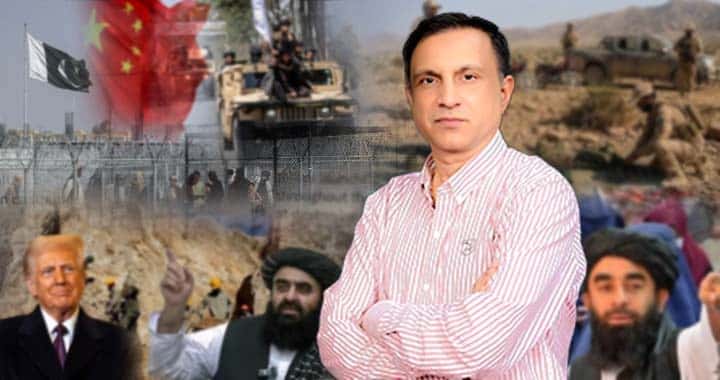
Pakistan has never wanted hostile relations with Afghanistan. As neighbors, the two countries share geography, history, culture, trade routes and an unavoidable security environment. Pakistan has therefore consistently preferred stable and constructive relations with Kabul.
But good relations cannot be built on one side’s goodwill alone.
The central obstacle in Pakistan-Afghanistan relations is no longer difficult to identify. It is the continued presence and activity of the banned Tehreek-e-Taliban Pakistan, or TTP, from Afghan territory.
Pakistan has repeatedly made its position clear: Afghanistan’s internal politics are its own affair. Islamabad has no stated ambition to install or remove an Afghan government, nor does Pakistan need to become a player in Kabul’s internal power struggles.
What Pakistan does have is a legitimate security concern.
When terrorists operating from Afghan soil cross into Pakistan, attack Pakistani citizens and security personnel, and then return to safe locations, the issue ceases to be Afghanistan’s internal affair. It becomes a direct matter of Pakistan’s national security.
That is the point Kabul has so far struggled to address convincingly.
Words Have Become Cheap, Action Is What Matters
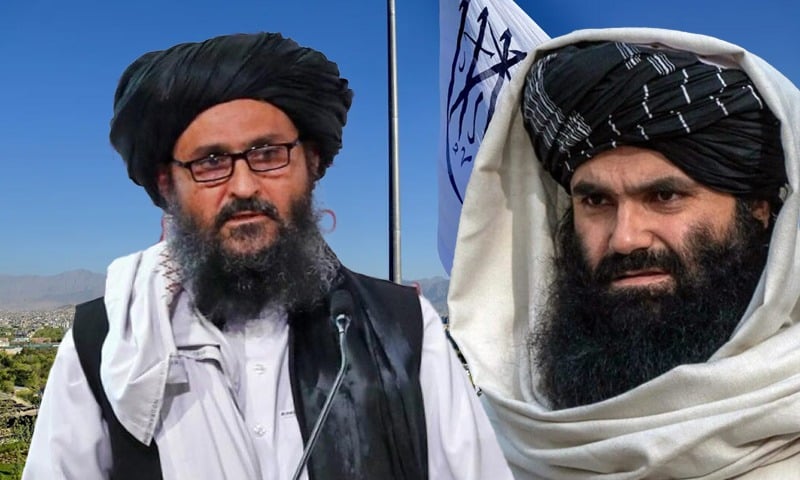
The latest statements attributed to Sirajuddin Haqqani about relocating TTP figures away from the border and potentially establishing a joint mechanism deserve attention.
For the first time, the proposal appears to go beyond the familiar claim that Kabul is merely “trying” to manage the problem. The suggestion of relocating TTP leaders and fighters farther from Pakistan’s border, coupled with an offer for a mechanism through which Pakistan could verify Afghan measures, is potentially significant.
But there is a very simple reason Pakistan is unlikely to celebrate the announcement prematurely.
There have been promises before.
Taliban officials have previously spoken about moving TTP members to other parts of Afghanistan, including proposals to establish separate settlements for them. Statements have also been made about cooperation with Pakistan against terrorism.
Yet declarations have repeatedly failed to produce visible results on the ground.
Pakistan therefore has every reason to judge the latest proposal by one standard only: implementation.
If TTP commanders and fighters are actually relocated, if their movement and operations are genuinely restricted, if their cross-border infiltration ends, and if Pakistan is provided credible means of verifying those measures, then the proposal could represent a meaningful opening.
Until then, it remains an announcement.
And Pakistan has heard enough announcements.
The Taliban’s Internal Problem
There is another reason Kabul has struggled to act decisively.
The Taliban regime is not necessarily operating with one unified position on Pakistan.
There are elements within the Taliban establishment that understand the strategic and economic importance of normal relations with Pakistan. There are others who have longstanding ideological, personal and organizational connections with TTP and fear that confronting it could create internal problems.
This creates a dangerous contradiction.
The Taliban want recognition, trade, investment and regional engagement, yet they remain reluctant or unable to take decisive action against an organization whose presence directly undermines their relationship with their most important western neighbor.
The choice, ultimately, cannot be avoided.
A government cannot demand normal relations with Pakistan while allowing an armed organization hostile to Pakistan to maintain operational space on Afghan soil.
If Kabul genuinely wants better relations, it knows what Islamabad is asking for.
The question is whether it has the political will to deliver.
Afghanistan’s New Mineral Calculus
Afghanistan’s outreach to the United States adds another dimension to the country’s changing foreign policy.
The Taliban have spent years portraying the United States as an adversary, yet Kabul is now interested in attracting American investment, particularly in Afghanistan’s mineral and rare-earth resources.
The logic is understandable.
Afghanistan possesses significant mineral potential, while rare-earth elements have growing strategic importance for advanced manufacturing, electronics, batteries, aviation and other high-technology industries. China currently dominates much of the global rare-earth supply chain, giving these resources an importance far beyond their commercial value.
For Kabul, attracting major international investment could mean revenue, infrastructure and economic development.
But investment requires something Afghanistan has struggled to provide: stability.
International companies do not invest billions in an environment where armed groups operate freely, border tensions remain unresolved and political uncertainty is pervasive.
This is where Afghanistan’s security policy and economic ambitions collide.
Kabul cannot simultaneously seek foreign capital and tolerate conditions that make Afghanistan a high-risk investment environment.
America, China and a Strategic Afghanistan
Afghanistan’s mineral wealth also explains why its geopolitical importance is unlikely to disappear.
China is already deeply interested in Afghanistan’s resources and has geographical proximity on its side. The United States, meanwhile, has its own strategic concerns about critical minerals and China’s dominance of the sector.
If Afghanistan succeeds in attracting competing major powers into its mineral economy, the country could find itself at the center of a new strategic contest.
That could create opportunities, but it could also create new instability.
Afghanistan already sits in a region where terrorism, great-power competition, border disputes and fragile political arrangements intersect. Introducing another layer of competition over critical minerals could complicate an already volatile environment.
For Pakistan, the concern is particularly immediate.
A stable Afghanistan that trades with its neighbors and develops its economy is in Pakistan’s interest.
An Afghanistan that becomes a playground for competing foreign interests while terrorist organizations continue operating from its territory is a very different proposition.
Pakistan’s Counterterrorism Strategy Is Changing
While diplomacy remains important, Pakistan’s security forces are simultaneously pursuing a more proactive counterterrorism strategy.
Intelligence-based operations are being conducted continuously against terrorist networks, while border surveillance has increasingly focused on intercepting infiltrating groups before they can reach populated areas.
Recent operations, including the elimination of 12 terrorists in an intelligence-based operation in Qalat and the interception of terrorist formations attempting to enter Pakistan from Afghanistan, illustrate the changing nature of this approach.
The objective is no longer simply to respond after an attack.
The emphasis is increasingly on intelligence, surveillance and disruption before terrorists can establish themselves inside Pakistan.
That comes at a considerable cost.
Pakistan’s security personnel continue to be martyred during operations. Officers and soldiers confronting terrorists on the ground remain exposed to the same violence that threatens civilians.
The elimination of terrorists therefore cannot be viewed as a statistic detached from the human cost paid by the security forces.
Every successful operation represents intelligence gathering, planning, risk and sacrifice.
The Choice Before Kabul
Pakistan has already made its choice.
It wants peaceful relations with Afghanistan.
It wants trade rather than border closures.
It wants normal movement of people rather than perpetual restrictions.
It wants security cooperation rather than accusations.
But it cannot accept an arrangement in which Afghanistan expects Pakistan to normalize relations while TTP continues to threaten Pakistan from Afghan territory.
That is not an unreasonable demand.
It is the minimum requirement for any meaningful bilateral relationship between two sovereign neighbors.
The latest offer from within the Taliban leadership could therefore become important, but only if it marks a transition from rhetoric to action.
Pakistan should not reject a genuine opportunity for dialogue.
Neither should it reward another declaration without evidence.
The test is straightforward: move the terrorists, restrict their activities, stop cross-border infiltration and establish a mechanism through which commitments can be verified.
If Kabul does that, the door to better relations can open.
If it does not, Pakistan has little reason to pretend that words have changed the reality.
Afghanistan’s future will ultimately depend not only on the minerals beneath its soil or the foreign powers interested in them, but on whether its rulers can establish enough security and political credibility for those resources to become an asset rather than another source of conflict.
For Pakistan, the equation is even simpler.
The road to better relations with Kabul runs through one place first: an Afghanistan that no longer allows TTP to use its territory against Pakistan.