
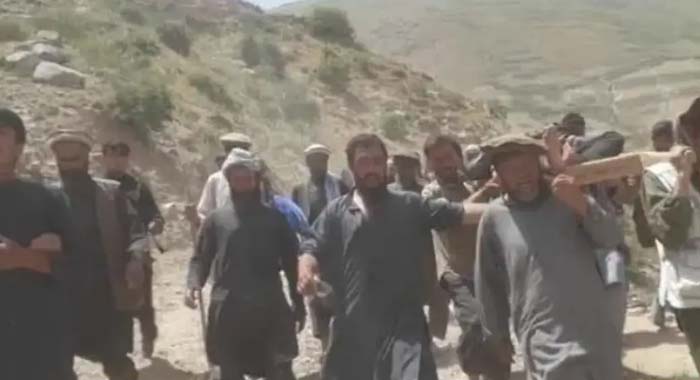
A deepening power struggle in Afghanistan’s northeastern Badakhshan province has emerged as a significant challenge for the Taliban authorities, with reports of armed resistance, internal divisions, and disputes over control, resources, and governance continuing to intensify.
Badakhshan, a strategically important Afghan province bordering Tajikistan on two sides, has historically held political and military significance. Its provincial capital, Faizabad, is located approximately 500 kilometers from Kabul, making the region geographically distant from the central government’s immediate influence. The province is also known as the birthplace of prominent Afghan political figures, including former Afghan president and resistance leader Burhanuddin Rabbani.
Recent developments indicate growing tensions between Taliban authorities and local armed factions in Badakhshan, particularly around the influence of Juma Khan Fatah, a local commander who has emerged as a powerful figure in the region. Reports suggest that resistance against Taliban rule has been gaining momentum in parts of the province, particularly around the Darwaz area, where armed groups loyal to Juma Khan Fatah are reportedly active.
The developments have added pressure on Taliban leadership, which has already faced opposition from groups linked to the broader anti-Taliban resistance movement, including the National Resistance Front associated with Ahmad Massoud, son of the late Afghan resistance commander Ahmad Shah Massoud. While Panjshir has historically remained a focal point of anti-Taliban resistance activities, Badakhshan has now become another area attracting attention due to emerging armed opposition.
According to reports, Juma Khan Fatah, a 45-year-old Badakhshan native, comes from a modest background. Reports state that he received education up to secondary level and initially worked with his family in agriculture before running a small business in his hometown of Darwaz. He later served as a teacher in a government school.
During earlier Afghan governments, Juma Khan Fatah reportedly faced allegations related to financial irregularities involving teachers’ salaries, after which he went into hiding in mountainous areas. During this period, reports indicate that he established contact with Taliban fighters and received military and guerrilla training, eventually developing close relations with senior Taliban figures.
When the Taliban returned to power in Afghanistan in 2021 following the withdrawal of U.S.-led international forces, Juma Khan Fatah was reportedly appointed as a commander responsible for several districts in Badakhshan. Over time, his influence expanded, and he adopted the title “Fatah” as part of his public identity.
Reports indicate that his authority grew significantly in areas under his control, strengthening his relationship with Taliban leadership in Kabul and Kandahar. However, tensions later emerged between Juma Khan Fatah and senior Taliban officials over issues including local authority, resource control, and governance.
One of the central issues reportedly contributing to tensions between Taliban authorities and Juma Khan Fatah involves control over Badakhshan’s valuable mineral resources, particularly gold mines in the Darwaz area.
Reports suggest that Taliban leadership appointed Juma Khan Fatah to oversee important mining areas and also granted him a deputy governor position. However, disagreements reportedly intensified over the management and control of these resources, leading to armed confrontations between his supporters and Taliban forces.
Several clashes have reportedly taken place between the two sides, resulting in casualties among their respective supporters. Despite efforts by Taliban officials to resolve the dispute, including reported meetings involving senior figures such as Afghanistan’s Defense Minister Mullah Yaqoob, Juma Khan Fatah has allegedly refused to abandon his position of resistance.
Reports indicate that on July 12, 2026, Taliban authorities issued arrest warrants against Juma Khan Fatah and launched a security operation involving military units, drones, and helicopters in Badakhshan.
According to reports, Juma Khan Fatah and hundreds of armed supporters withdrew to mountainous areas around their stronghold in Nusay and resisted Taliban forces. His supporters are also reportedly maintaining control over certain mining areas in the region.
On July 16, 2026, reports claimed that several areas of Badakhshan temporarily came under the control of Juma Khan Fatah’s forces before Taliban authorities regained control. The developments have reportedly encouraged opposition sentiments in neighboring provinces, where anti-Taliban activity has also shown signs of increasing.
Observers following Afghanistan’s internal developments have pointed toward increasing challenges facing Taliban authorities, including allegations of governance failures, restrictions on civil rights, disputes over resources, and growing dissatisfaction among certain communities.
Reports from Afghan media have highlighted claims that emerging local commanders and armed factions are challenging Taliban authority due to grievances related to governance, political exclusion, and economic control.
On July 6, 2026, reports attributed to regional media stated that fighting in Badakhshan had intensified between Taliban authorities and their opponents, with control over gold mines being identified as one of the major factors behind the conflict.
Juma Khan Fatah has reportedly also demanded that foreign militant groups, including Tehrik-e-Taliban Pakistan (TTP) and other non-Afghan armed groups, be removed from Afghan territory.
The continuing instability in Badakhshan has raised concerns regarding possible wider consequences for Afghanistan’s security environment. Analysts suggest that if unrest continues, similar resistance movements could emerge in other parts of the country, creating additional challenges for Taliban authorities.
The province’s proximity to Tajikistan has also drawn attention, with concerns that regional dynamics could become more complicated if instability expands.
Meanwhile, Taliban authorities have reportedly faced additional diplomatic challenges following recent developments involving Iran.
During July 2026 events in Tehran following the funeral of former Iranian Supreme Leader Ali Khamenei, Afghan Taliban representatives, including Foreign Minister Mullah Amir Khan Muttaqi and Mullah Abdul Ghani Baradar, reportedly attended official mourning events alongside representatives of Afghan opposition groups, including figures associated with the National Resistance Front.
Reports indicate that Tehran provided similar diplomatic protocol to both groups, a move that reportedly disappointed Taliban officials. Iranian officials were reported to have distinguished between representatives of the Afghan government and representatives of Afghan political groups, highlighting the continued international debate over the Taliban’s legitimacy and representation.
The developments in Badakhshan represent one of the latest challenges confronting Taliban authorities as they attempt to consolidate control over Afghanistan. The emergence of local armed actors, disputes over natural resources, opposition movements, and diplomatic pressures reflect the complexity of Afghanistan’s current political and security environment.
While Taliban authorities continue to maintain control over most of the country, the situation in Badakhshan demonstrates the continuing presence of internal divisions and competing centers of influence.
The coming period will determine whether Taliban leadership can resolve these disputes through political engagement or whether Afghanistan faces the possibility of further fragmentation, renewed armed conflicts, and expanding regional instability.



