
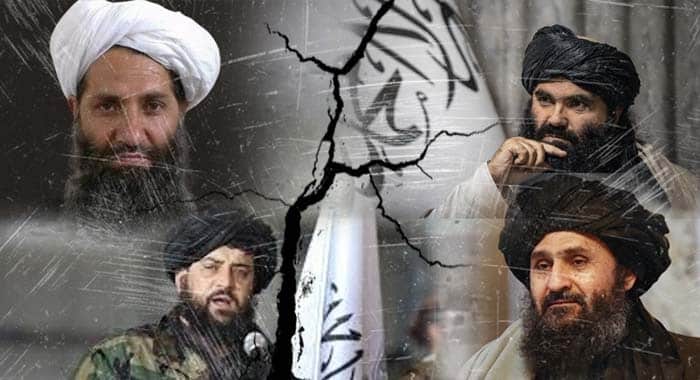
The collapse of the Afghan Republic in August 2021 was not entirely unforeseen, but the speed with which the state disintegrated reshaped assumptions about power, legitimacy, and resilience in modern conflicts. What appeared to be a decisive Taliban victory, however, has since revealed itself to be far less conclusive. Beneath the surface of centralized control lies a movement increasingly defined by internal rivalries, competing centers of authority, and unresolved questions about who truly governs Afghanistan. The most consequential story today is not simply Taliban rule, but the struggle within the movement over power, direction, and survival.
Several years into their return to power, the Taliban remain unable to transform military dominance into stable governance. Economic collapse, diplomatic isolation, and a prolonged humanitarian crisis have compounded the challenges of rule, but it is the internal configuration of power that most sharply defines the current moment. The movement is no longer a cohesive insurgency united by a single objective; it is an uneasy coalition of factions, personalities, and networks, each attempting to secure influence in a state that lacks both resources and international legitimacy.
At the apex of authority stands the reclusive supreme leader, Hibatullah Akhundzada, whose authority is rooted in religious legitimacy rather than administrative visibility. Operating largely from Kandahar, he represents the ideological core of the movement and is closely aligned with the traditional leadership often associated with the Quetta Shura. This faction, composed of long-standing Taliban figures and loyalists, views itself as the rightful custodian of the movement’s original vision. It prioritizes centralized authority, ideological rigidity, and strict control over political inclusion. In many ways, it remains symbolically dominant, but its influence is increasingly challenged in practice.
In contrast stands the far more operationally assertive and security-dominated network led by Sirajuddin Haqqani. As the head of the Haqqani Network and the current interior minister, he commands significant leverage through control of internal security structures, intelligence networks, and armed forces on the ground. Unlike the Kandahar-based leadership, the Haqqani faction has built its strength on battlefield effectiveness, discipline, and extensive regional connections. Its members occupy critical positions within the security apparatus, giving them substantial influence over enforcement and internal control. While formally subordinate to the supreme leader, this network operates with a level of autonomy that makes it one of the most powerful actors within the Taliban system.
Caught between these poles are figures who were once seen as the political face of the Taliban, most notably Abdul Ghani Baradar. As a co-founder of the movement and a central figure in negotiations with the United States, Baradar initially appeared positioned to play a leading role in governance. Over time, however, he has been increasingly sidelined. His calls for moderation, broader political inclusion, and international engagement have found limited support within a leadership that remains deeply resistant to compromise. Though still holding formal roles, his influence has been overshadowed by more hardline and security-oriented actors.
A similar pattern is evident in the role of Amir Khan Muttaqi, who represents the diplomatic wing of the movement. Tasked with navigating Afghanistan’s international isolation, he has sought engagement with regional and global powers, advocating for pragmatic adjustments in policy to unlock recognition and economic relief. Yet his efforts are constrained by decisions made elsewhere, particularly by those who view international legitimacy as secondary to ideological consistency. The result is a foreign policy apparatus that is active but limited in its ability to shape outcomes.
Meanwhile, the defense establishment under Mohammad Yaqoob occupies an uncertain position. As the son of the movement’s founder, Mullah Mohammad Omar, he carries symbolic weight and commands respect among segments of the rank and file. However, his actual influence is balanced against both the Kandahar leadership and the Haqqani network. While sometimes associated with relatively pragmatic views, he has not emerged as a decisive counterweight to either faction. Instead, his role reflects the complex balancing act that defines Taliban internal politics.
Below the top leadership, another layer of tension is unfolding that may prove even more destabilizing over time. Mid-level commanders, many of whom were central to the insurgency’s battlefield success, are increasingly disillusioned. These individuals, often organized into semi-autonomous units, view themselves as the primary drivers of the Taliban’s victory. Yet in the transition to governance, many feel marginalized, excluded from meaningful power, and disconnected from the leadership’s priorities. Their frustration is not merely rhetorical; it is reflected in resistance to central directives, reluctance to integrate into formal state structures, and, in some cases, open defiance.
This widening gap between leadership and commanders introduces a volatile dynamic into the internal equation. Unlike political figures who can be sidelined without immediate consequences, these commanders retain armed networks, local influence, and operational experience. Their discontent raises the risk of fragmentation not just at the top, but across the broader structure of the movement. If these tensions deepen, the Taliban could face the emergence of splinter factions or localized power centers operating beyond central control.
Overlaying these factional and structural divides are longstanding tribal dynamics, particularly between the Durani and Ghilzai Pashtun groups. While often understated, these affiliations continue to shape alliances, loyalties, and rivalries within the movement. The Kandahar-based leadership is historically associated with Durani networks, while many figures within the Haqqani orbit are linked to Ghilzai backgrounds. These identities do not determine behavior in a simple way, but they reinforce existing lines of division and complicate efforts to build a unified command structure.
The result is a hierarchy that appears centralized on paper but is, in practice, fragmented and contested. Power is distributed across overlapping networks rather than concentrated in a single, coherent authority. The supreme leader provides ideological direction, the Haqqani network controls much of the security apparatus, and political figures operate within increasingly narrow limits. Meanwhile, mid-level commanders and local actors navigate this landscape with a degree of autonomy that both sustains and undermines the system.
This internal configuration has profound implications for Afghanistan’s future. Governance remains inconsistent, policy direction is often unclear, and the ability to respond effectively to economic and humanitarian crises is severely constrained. More importantly, the absence of a unified center of power increases the risk of internal conflict, particularly if economic pressures intensify or external shocks occur. What appears outwardly as stability may, in reality, be a fragile equilibrium maintained by competing interests rather than a shared vision.
For the region and the wider world, this matters greatly. A fragmented Taliban is less predictable, less accountable, and more vulnerable to internal crises that can spill across borders. The presence of multiple power centers complicates engagement, as external actors struggle to identify who can enforce decisions or deliver on commitments. At the same time, sidelined figures and disaffected commanders create openings for alternative alignments, including with transnational militant groups or illicit networks.
Afghanistan today is not defined solely by who won in 2021, but by who is shaping power in its aftermath. The answer is neither simple nor stable. It lies in an evolving contest between ideological authority, security control, political pragmatism, and grassroots power within the Taliban itself. Until that contest is resolved or at least managed more coherently the country’s trajectory will remain uncertain, and the risks it poses will extend far beyond its borders.



