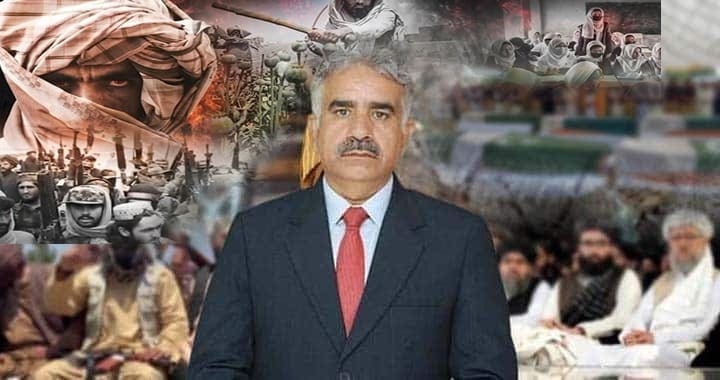
(Zahir Shah Sherazi)
The evolving discourse around Afghanistan’s security landscape and its regional implications has once again returned to the center of South Asian geopolitical debate. Recent remarks attributed to Britain’s Special Representative for Afghanistan, Richard Lindsay, highlighting concerns over the presence and alleged use of militant networks in Afghanistan, have added fresh momentum to an already charged conversation. At the same time, tragic incidents in Pakistan’s Balochistan region particularly the attack near Quetta that claimed the lives of civilians and security personnel have underscored the continuing human cost of militancy.
Yet beyond the immediacy of events lies a deeper and more complicated reality: one where security threats, political narratives, regional rivalries, and governance gaps intersect. Understanding this complexity requires moving beyond slogans and emotional reactions toward a more structured analysis of what is happening, why it is happening, and what responses are realistically available.
The recent international commentary on Afghanistan reflects a broader concern that has not disappeared since the withdrawal of Western forces. The question of whether Afghan territory is being used directly or indirectly by militant groups remains one of the most contentious issues in regional diplomacy.
British concerns, as articulated in diplomatic discussions and media interviews, are not isolated. They echo similar apprehensions expressed at various points by multiple global and regional actors who fear that Afghanistan could once again become a permissive environment for transnational militant networks. Whether these fears are fully accurate, partially overstated, or politically framed depends largely on which analytical lens one applies. However, what is undeniable is that Afghanistan continues to be viewed through the prism of security risk by many states.
At the heart of this debate is a fundamental diplomatic equation: international recognition and economic engagement are often linked, explicitly or implicitly, to assurances regarding counterterrorism commitments. For Afghanistan’s current rulers, this creates a difficult balancing act between domestic political realities, ideological considerations, and external expectations.
While regional diplomacy unfolds in conferences and interviews, violence on the ground continues to impose its own brutal logic. The attack in Balochistan near Quetta, which resulted in the deaths of both civilians and security personnel, is part of a long and painful pattern of instability in the province.
Such incidents highlight a key challenge faced by Pakistan: militancy is not confined to a single geography or a single ideological category. Instead, it manifests through multiple actors, sometimes overlapping in objectives, sometimes competing, but often converging on one shared outcome disruption of state authority and fear among civilians.
What makes these attacks particularly tragic is their timing and targets. Civilians returning home during moments of religious or cultural significance, such as Eid, represent the most vulnerable segment of society. Their deaths do not merely reflect a security failure; they reflect a moral rupture that militancy imposes on societies it touches.
However, the interpretation of such violence is rarely straightforward in Pakistan’s political and media environment. Competing narratives often emerge almost immediately after such incidents, each attributing responsibility to different actors some local, some regional, and some international.
In this context, claims about external sponsorship, proxy networks, and geopolitical rivalries frequently surface. Allegations involving regional adversaries, ideological alliances, and global power competition are not new in South Asian discourse. They form part of a longstanding narrative framework through which security events are interpreted.
Yet it is essential to distinguish between verified intelligence, political interpretation, and rhetorical framing. In conflict environments, the line between analysis and accusation can become blurred, often leading to simplified explanations for highly complex realities.
What remains consistent across most credible assessments, however, is that militant ecosystems tend to survive not through a single source of support, but through a combination of ideological recruitment, local grievances, cross-border mobility, and fragmented governance structures.
Alongside physical violence, an equally significant struggle is being fought in the information space. Misinformation, exaggerated claims, selective reporting, and digital propaganda have become central tools in shaping public perception of conflict.
In recent years, Pakistan has repeatedly witnessed how quickly narratives can form and spread, often outpacing verified facts. Social media ecosystems, partisan commentary, and transnational information networks contribute to a situation where interpretation sometimes overtakes evidence.
This phenomenon is not unique to Pakistan, but its impact is particularly pronounced in societies already dealing with security stress. When public trust is weak and institutions are under pressure, misinformation does not merely distort perception it can influence policy debates, deepen polarization, and complicate security responses.
The challenge, therefore, is not only operational (countering militancy on the ground) but also cognitive (countering misinformation in the public sphere). Both fronts are now inseparable in modern conflict environments.
A recurring theme in Pakistan’s internal security discourse is the National Action Plan, formulated as a comprehensive framework to address extremism, terrorism financing, hate speech, and militant networks. On paper, it represents one of the most ambitious counterterrorism strategies in the region.
However, the central issue has never been the absence of policy it has been the inconsistency of implementation. Parts of the plan, particularly kinetic military operations, have seen significant execution. These operations have altered militant sanctuaries and disrupted organizational structures in various regions.
Yet other components such as reforming policing, strengthening prosecution systems, regulating informal networks, controlling hate speech, and improving governance in peripheral regions have seen uneven progress.
This imbalance has created a situation where tactical gains have not always translated into strategic stability. Militancy, in such environments, tends to mutate rather than disappear.
A deeper structural issue underlying Pakistan’s security challenges lies in governance and institutional capacity, particularly in historically underserved regions. The debate around federalism, provincial responsibility, and administrative authority is not merely constitutional it is practical.
Security cannot be sustained by force alone. It requires local institutions capable of delivering justice, education, healthcare, and economic opportunity. Where these systems are weak, alternative structures often informal or militant find space to emerge.
The tension between centralized authority and provincial autonomy has further complicated this landscape. While devolution was intended to bring governance closer to citizens, it has also exposed disparities in capacity between regions. In some areas, administrative systems have strengthened; in others, they remain underdeveloped or overstretched.
The result is uneven state presence, which militant groups can exploit both physically and ideologically.
Afghanistan remains central to Pakistan’s security calculus, but it is not the only variable. The broader region includes overlapping interests of multiple powers, each with its own security concerns and strategic priorities.
For Pakistan, Afghanistan represents both a neighbour and a security challenge. For Afghanistan, Pakistan represents both a transit route and a strategic pressure point. For other regional and global actors, Afghanistan is often viewed through the lens of counterterrorism, humanitarian concerns, or geopolitical influence.
In such an environment, diplomacy becomes complex and conditional. Engagement is often tied to expectations regarding counterterrorism commitments, governance standards, and human rights considerations.
Yet history suggests that isolating Afghanistan has not produced stability, just as unconditional engagement without accountability has not guaranteed security. The challenge lies in finding a middle path that balances engagement with realistic benchmarks.
Amid all these debates policy frameworks, diplomatic statements, and geopolitical analyses the human cost remains constant and unforgiving. Every attack, every act of violence, represents not just a security breach but a rupture in civilian life, trust, and social cohesion.
There is also a strategic paradox at the heart of the situation. While states seek to eliminate militancy through force, the conditions that enable militancy—poverty, weak governance, political alienation, and ideological narratives require long-term structural solutions.
This mismatch between immediate security responses and long-term societal needs is one of the defining challenges of modern counterterrorism.
The situation facing Pakistan and its regional environment cannot be understood through a single narrative or a single cause. It is a layered reality shaped by security threats, governance deficits, regional rivalries, and information warfare.
International concerns about Afghanistan’s militant landscape, Pakistan’s internal security challenges, and incidents such as the Quetta attack all point toward a shared conclusion: reactive policies alone are insufficient.
What is required is a dual strategy firm security enforcement combined with sustained institutional reform. Without strengthening governance, education, rule of law, and economic inclusion, security operations will continue to operate in cycles rather than delivering lasting stability.
At the same time, regional diplomacy must move beyond blame-centric narratives toward structured engagement that prioritizes verifiable commitments and shared security interests.
In the end, the question is not whether the region recognizes the threat of militancy it clearly does. The real question is whether states can transform that recognition into coherent, sustained, and cooperative action before the cycle of violence deepens further.