
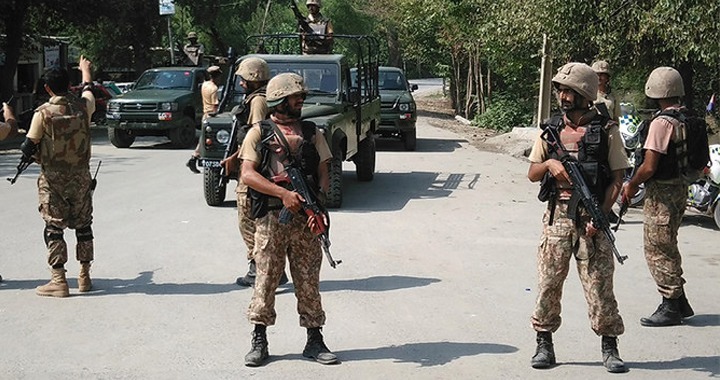
Balochistan has entered another intense phase of counterterror activity as security forces expand intelligence-based operations against terrorist networks targeting both security infrastructure and strategic economic routes across the province.
The most significant recent development emerged from Quetta’s Shaban Valley, where security forces reportedly eliminated 33 terrorists linked to Fitna al-Hindustan and the banned Balochistan Liberation Army during a large-scale intelligence-based operation supported by drone surveillance.
According to security information, the operation was launched following credible intelligence regarding militant movement in the mountainous region. Heavy exchanges of fire reportedly continued for hours, while around 18 additional terrorists were said to have been injured during the engagement.
The scale of the operation reflects an increasingly aggressive security posture aimed at dismantling militant infrastructure before major attacks can materialize.
At the same time, recent incidents suggest that terrorist groups continue attempts to maintain operational relevance through attacks on transport corridors and symbolic security targets.
In Mastung, an attempted terrorist assault on the Daringarh Police Station was quickly repelled after attackers fled upon encountering immediate resistance from law enforcement agencies. Officials later dismissed viral social media claims regarding hostage situations and security breaches as fabricated propaganda intended to generate fear and confusion.
Separately, terrorists associated with the banned BLA intercepted mineral transport vehicles along the Quetta–Taftan Highway near Ahmedwal and abducted four drivers belonging to Punjab province. Analysts say attacks on logistics and mineral transport routes are intended not only to disrupt economic activity but also to undermine investor confidence and regional connectivity projects.
Security observers believe these incidents collectively indicate a dual strategy by terrorist groups, combining physical attacks with information warfare designed to exaggerate operational success and spread instability narratives.
However, officials argue that recent counterterror operations have significantly weakened terrorist infrastructure, disrupted logistics networks, and forced attackers into increasingly reactive and symbolic actions rather than sustained territorial operations.
The growing use of drone-assisted surveillance, rapid intelligence coordination, and targeted search operations also demonstrates the evolving adaptation of Pakistan’s security architecture in Balochistan’s complex operational environment.
While challenges persist, recent operations indicate that security forces are increasingly focused on preemptive disruption rather than post-attack response, aiming to deny terrorist groups both physical space and propaganda advantage across the province.



