
The United States has rejected an appeal by Taliban Foreign Minister Amir Khan Muttaqi for American investment in Afghanistan, signaling that Washington currently has no plans to engage with the Taliban authorities on the development of the country’s critical mineral resources.
The position reflects continued U.S. concerns over the Taliban’s policies, its treatment of the Afghan population and the potential consequences of directing American capital and economic resources through institutions controlled by the Taliban.
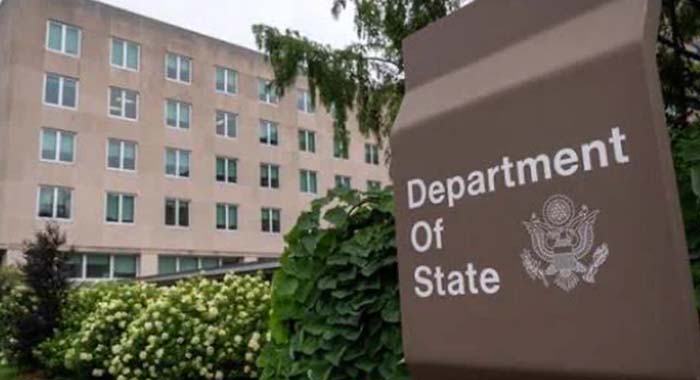
According to remarks provided by a U.S. State Department spokesperson to Voice of America, Washington does not intend to pursue investment in Afghanistan’s critical mineral sector under the current circumstances. The spokesperson warned that U.S. investment could effectively channel financial resources into the hands of the Taliban and potentially contribute to the continuation of policies that have resulted in further restrictions and repression of Afghans.
The statement comes after Taliban Foreign Minister Amir Khan Muttaqi publicly invited the United States to participate in Afghanistan’s economic development. His appeal reportedly extended beyond the country’s mining sector to include infrastructure, agriculture and trade, areas that the Taliban authorities have increasingly promoted as potential avenues for international economic engagement.
Afghanistan possesses significant deposits of minerals and other natural resources that have attracted international attention, including resources considered strategically important to global industries and emerging technologies. The development of these resources, however, remains complicated by Afghanistan’s political isolation, economic conditions, security environment, lack of international recognition of the Taliban government and concerns surrounding governance, transparency and human rights.
The U.S. response underscores the gap between the Taliban’s efforts to attract foreign investment and Washington’s current approach toward the authorities in Kabul. The State Department’s position indicates that the question of investment is not being considered solely from an economic perspective. Washington is also weighing the potential political and humanitarian implications of providing financial resources to institutions controlled by the Taliban.
The concern expressed by the U.S. government is that investment flows could strengthen the Taliban’s financial position without ensuring that the resulting economic benefits reach the broader Afghan population. Such investment, according to the State Department’s assessment, could also risk reinforcing structures associated with restrictions on the rights and freedoms of Afghans.
The Taliban has repeatedly sought greater international economic engagement, arguing that investment and trade are essential to rebuilding Afghanistan after decades of conflict. Taliban officials have emphasized the country’s natural resources, geographic position and agricultural potential as areas capable of attracting foreign capital and supporting long-term economic growth. However, the United States continues to distinguish between supporting the Afghan people and providing direct economic benefits to the Taliban authorities.
Afghanistan’s natural-resource potential has long been viewed as one of the country’s possible sources of future economic growth. Deposits of minerals and other resources have generated interest among governments, investors and international companies, particularly as global demand for critical minerals increases.
Critical minerals have become increasingly important to modern industries, including energy, manufacturing, electronics and advanced technologies. Afghanistan’s mineral potential has therefore acquired broader geopolitical significance. Yet converting that potential into sustainable economic development would require substantial investment, technical expertise, infrastructure, regulatory institutions, transparency and long-term political stability. The U.S. rejection of direct investment engagement with the Taliban suggests that Washington does not currently view the political and governance environment as conducive to such cooperation.
Muttaqi’s appeal for American investment reflects the Taliban authorities’ broader effort to encourage foreign governments and businesses to engage economically with Afghanistan despite the absence of widespread international recognition of the Taliban government. Taliban officials have increasingly highlighted investment opportunities in mining, transportation infrastructure, agriculture, energy and trade. They have argued that international investment could create employment, expand domestic production, improve infrastructure and reduce Afghanistan’s dependence on humanitarian assistance.
The Taliban has also sought to portray Afghanistan as a country open to international commercial partnerships and capable of serving as a regional trade and transit hub. For Washington, however, economic engagement remains closely connected to broader questions concerning governance, human rights, political representation and the treatment of Afghan citizens.
The State Department’s comments also reinforce the continuing importance of human rights concerns in the U.S. approach to the Taliban. Since returning to power in August 2021, the Taliban has faced sustained international criticism over restrictions affecting women and girls, including limitations on education, employment and participation in public life. These policies have contributed to Afghanistan’s continuing international isolation and complicated efforts to establish normal diplomatic and economic relations.
The United States has repeatedly maintained that engagement with Afghanistan must take into account the treatment of the Afghan population and the Taliban’s commitments and conduct. The latest U.S. response indicates that Washington remains unwilling to allow the prospect of Afghanistan’s mineral wealth or commercial opportunities to override those concerns.
The rejection of the Taliban’s appeal raises broader questions about Afghanistan’s ability to attract major Western investment in strategic sectors. Large-scale mining and infrastructure projects typically require long-term commitments, predictable regulations, legal protections, financial transparency and mechanisms capable of resolving commercial disputes. Investors also assess political and reputational risks before committing significant capital to countries experiencing international sanctions, diplomatic isolation or governance concerns. Without broader international confidence in Afghanistan’s political and regulatory environment, attracting major Western investment may remain difficult, even where substantial natural-resource opportunities exist.
The Taliban authorities face the challenge of convincing potential investors that economic partnerships can be conducted in a manner that provides commercial security while ensuring that revenues and development benefits reach the Afghan population.
The U.S. position does not necessarily eliminate the possibility of future economic engagement involving Afghanistan, but it makes clear that Washington is not currently prepared to pursue direct investment in the country’s critical mineral resources through Taliban-controlled structures. The distinction between humanitarian assistance to Afghans and financial engagement that could benefit the Taliban remains an important element of U.S. policy.
For the Taliban, the response represents another indication of the difficulties it faces in converting its control of Afghanistan’s territory and natural resources into broad international economic recognition. For the United States, meanwhile, the decision reflects a continued emphasis on preventing American financial resources from strengthening a governing structure that Washington says has intensified restrictions on the rights and freedoms of Afghans.



