
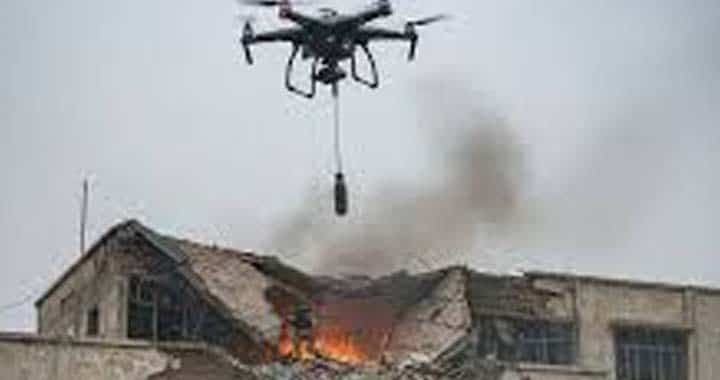
Serious concerns are being raised regarding a series of quadcopter attacks targeting civilians and security personnel across Khyber Pakhtunkhwa, prompting renewed debate over accountability, security policy, and public safety.
Over the past year, multiple incidents involving quadcopters have resulted in significant civilian casualties, including children. According to available evidence and field reports, Fitna Al-Khawarij elements have carried out numerous such attacks, using drone technology to inflict harm and spread fear among local populations.
Recent incidents highlight the severity of the threat. On 27 April 2026, a quadcopter strike in Spinwam, North Waziristan, injured three children at the residence of Malik Liaqat Ali Khan. On the same day, another attack in Aka Khel Bara claimed the life of a young girl and left six others injured. Earlier, on 5 April 2026, a quadcopter incident was reported in Melowar Bara, while on 10 March 2026, three children were injured in Lakki Marwat. In a particularly tragic case on 11 December 2025, a quadcopter strike targeted a cricket ground near a school in Sheikh Landak, Bannu, resulting in the deaths of three children.
Analysts and observers note that visual evidence has surfaced showing Khawarij elements openly deploying quadcopters in these attacks, reinforcing claims regarding their involvement. Despite this, recent discussions held by the Khyber Pakhtunkhwa government’s parliamentary board on 30 April have raised questions, as they appeared to suggest alternative narratives, including possible state involvement.
Experts caution that such ambiguity risks undermining public confidence and may inadvertently benefit those responsible for the attacks. Clear attribution, they argue, is essential to ensure accountability and prevent the spread of misinformation.
Key questions remain unanswered. Observers have pointed to the lack of strong condemnation from provincial authorities regarding these attacks, as well as the absence of decisive action to counter the growing threat. Additionally, concerns have been raised over a reported shortfall of more than 15,000 police personnel in the province, potentially weakening frontline counterterrorism capabilities.
Security analysts emphasize that shifting blame without addressing operational gaps may hinder effective responses to evolving threats. Citizens, they say, are increasingly demanding clarity on whether a comprehensive and actionable security policy is in place and whether sufficient priority is being given to the protection of lives and property.
The situation has also placed increased pressure on provincial leadership, with calls for transparent communication, strengthened law enforcement capacity, and a unified approach to counterterrorism. Officials have reiterated that ensuring public safety and restoring trust must remain central priorities, as the region continues to grapple with emerging security challenges.



