
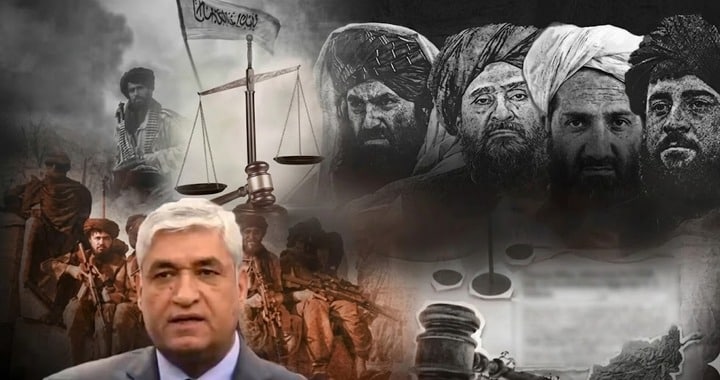
Concerns are increasingly being raised by legal experts, human rights advocates, and former Afghan officials regarding the state of judicial independence and the broader legal framework in Afghanistan under Taliban rule. Observers warn that structural changes within the justice system, coupled with reported restrictions on legal professionals, are contributing to what many describe as a weakening of the rule of law in the country.
According to former Afghan Attorney General Farid Hamidi, significant changes introduced since the Taliban’s return to power have blurred the institutional separation between judicial and legal authorities. He argues that this development has undermined foundational principles of justice, including judicial autonomy, procedural transparency, and accountability within the legal system.
Legal analysts and former officials claim that Afghanistan’s justice system has undergone substantial restructuring, resulting in a system where institutional independence is increasingly constrained. Critics argue that the merging or overlapping of prosecutorial and judicial functions has weakened checks and balances that are typically essential for fair legal proceedings.
Concerns have also been raised regarding the dismissal and exclusion of female prosecutors from the justice system. Rights observers state that such measures have significantly reduced the diversity of legal representation and raised broader questions about equal participation in public institutions.
Human rights advocates and legal practitioners have reported that members of the legal community face increasing pressure in carrying out their professional duties. These pressures reportedly include restrictions on professional autonomy, limited access to legal resources, and an atmosphere that critics describe as discouraging independent legal decision-making.
Observers argue that when legal professionals operate under constraints or perceived threats, the integrity of judicial processes can be significantly affected, potentially undermining public confidence in legal outcomes.
Another key concern raised by legal experts relates to the transparency of court proceedings and adherence to due process standards. Critics argue that limited access to public proceedings, reduced procedural visibility, and inconsistent legal frameworks contribute to uncertainty regarding the fairness of judicial decisions.
According to rights advocates, the absence of clear and consistently applied legal procedures can erode trust in institutions that are central to governance and social stability.
Human rights organizations emphasize that the reported changes in Afghanistan’s justice system have had a particularly significant impact on vulnerable groups, including women, minorities, and individuals seeking legal recourse in civil and criminal matters.
They argue that equitable access to justice is a cornerstone of any functioning legal system and that restrictions or barriers affecting specific groups raise broader concerns about equality before the law.
Legal scholars note that judicial independence is a fundamental pillar of the rule of law. When courts are perceived to lack autonomy or transparency, it can lead to reduced public trust in institutions, discourage citizens from seeking legal remedies, and weaken overall governance structures.
Experts warn that sustained erosion of judicial independence may have long-term consequences for institutional stability, legal certainty, and public confidence in state authority.
The situation has attracted attention from international human rights observers and legal monitoring bodies, who continue to assess developments within Afghanistan’s justice system.
While assessments vary, there is broad agreement among legal experts that an independent judiciary is essential for ensuring accountability, protecting individual rights, and maintaining public trust in governance systems.
The future of Afghanistan’s justice system remains a subject of significant debate and concern among legal professionals, rights advocates, and international observers. Many emphasize that the establishment of a transparent, independent, and equitable judicial framework is essential for ensuring long-term stability and safeguarding the rights of all citizens.
As Afghanistan continues to navigate complex political and institutional transitions, the strength and independence of its legal system are likely to remain central to discussions about governance, human rights, and the rule of law.



