
Khyber Pakhtunkhwa remains at the center of Pakistan’s counterterrorism efforts as security institutions confront a changing threat landscape marked by targeted attacks, sabotage attempts, and efforts by terrorist networks to regain operational space. Unlike previous phases of terrorism, where large formations and visible strongholds posed a major challenge, the current threat increasingly revolves around smaller cells, covert facilitation networks, and attempts to disrupt normal life through selective attacks.
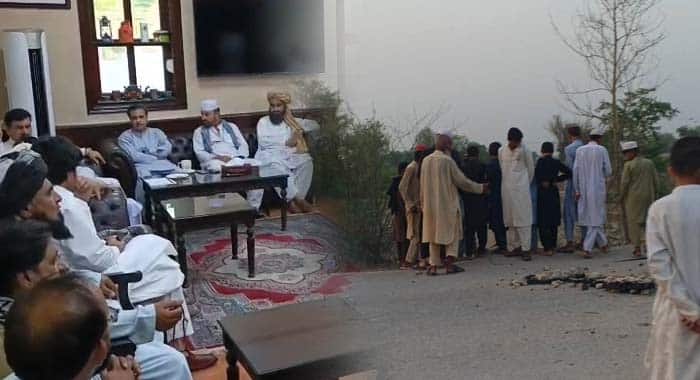
The recent security situation in districts such as Bannu reflects this evolving challenge. Terrorist elements have attempted to create instability through attacks against security personnel, law enforcement institutions, and civilian infrastructure. Incidents including the suicide attack on Miryan police station and the destruction of a public bridge through explosives demonstrate a broader pattern in which terrorist groups seek to damage public confidence and create difficulties for communities.
However, Pakistan’s counterterrorism response has also evolved. Instead of relying primarily on large-scale operations, security institutions have increasingly focused on intelligence-based actions aimed at identifying terrorist networks before they can execute attacks. These operations depend on detailed intelligence gathering, surveillance, coordination among security agencies, and precise targeting of terrorist hideouts and facilitators.
From Territorial Control to Network-Based Threats
The changing tactics of terrorist organizations have required a corresponding change in Pakistan’s security approach. Groups that previously attempted to establish physical control over certain areas have increasingly shifted toward decentralized structures. Small cells, hidden facilitators, improvised explosive devices, ambushes, and targeted attacks have become more common methods.
This transformation reflects the pressure created by previous counterterrorism campaigns. Sustained operations have reduced the ability of terrorist organizations to openly maintain large bases or move freely. As a result, these groups have attempted to survive through concealment, local support networks, and asymmetric tactics designed to create maximum psychological impact with limited resources.
The targeting of public infrastructure has become an important element of this strategy. Roads, bridges, schools, and other civilian facilities represent more than physical structures. Their destruction affects daily life, disrupts economic activity, and attempts to create the perception that the state is unable to provide security.
The challenge is therefore not limited to preventing attacks. It also involves protecting public confidence and ensuring that communities do not become vulnerable to fear and intimidation.
The Expanding Counterterrorism Framework
Pakistan’s security response in KP increasingly reflects a whole-of-government approach. Military operations remain an important component, but intelligence agencies, police, counterterrorism departments, and civil administration all play roles in identifying and disrupting terrorist networks.
The focus has also expanded beyond armed attackers. Modern counterterrorism requires targeting facilitators, recruiters, financiers, and logistical networks that allow terrorist organizations to function. Eliminating an individual attacker may prevent one incident, but dismantling the broader support structure reduces the ability of terrorist groups to regenerate.
Recent announcements regarding wanted terrorist networks and rewards for information in districts such as Swat demonstrate the importance of public cooperation in intelligence gathering. Local communities often possess critical information about suspicious activities and movements. Strengthening cooperation between citizens and law enforcement can improve early warning capabilities and help prevent attacks.
Technology, Propaganda, and the New Battlefield
Another major challenge in KP’s security environment is the growing use of technology by terrorist organizations. Encrypted communication platforms, digital propaganda, social media campaigns, and commercially available drones have expanded the capabilities of extremist networks.
Terrorist groups increasingly attempt to fight not only through physical attacks but also through narratives. They seek to exaggerate their strength, spread misinformation, and create uncertainty among the public. Countering these efforts requires timely communication, factual reporting, and public awareness.
The information dimension of terrorism has become particularly significant because a single attack can be amplified through online platforms within minutes. For security institutions, this means that success requires both operational capability and the ability to prevent terrorist groups from controlling the narrative after incidents.
Cross-Border Challenges and Border Security
The security environment in KP is also influenced by regional dynamics. Pakistan has consistently maintained that terrorist organizations responsible for attacks inside the country operate from sanctuaries across the border in Afghanistan and has repeatedly called for effective action against such groups.
Islamabad has emphasized that Afghan territory should not be used for planning, facilitating, or launching attacks against neighboring states. Former Afghan National Army Deputy Chief Lt. Gen. Syed Sami Sadat has also alleged that groups targeting Pakistan receive support from elements in Afghanistan and foreign financial assistance, allegations that have drawn attention among regional security observers but remain disputed by those accused.
In response to persistent security concerns, Pakistan has continued strengthening border management through surveillance systems, fencing, regulated crossing points, and intelligence coordination. While border measures alone cannot eliminate terrorism, they remain an important component of preventing movement and disrupting logistical networks.
The Road Ahead for KP Security
The fight against terrorism in Khyber Pakhtunkhwa is no longer defined only by major military operations. It is now a continuous struggle involving intelligence superiority, technological adaptation, community cooperation, and the ability to prevent terrorist networks from rebuilding.
The resilience of KP’s communities remains a significant factor in this effort. Despite years of violence, residents have continued rejecting extremist agendas and supporting efforts aimed at restoring peace and stability.
The current phase of counterterrorism requires sustained pressure rather than temporary responses. Terrorist organizations may continue attempting to exploit security gaps, but intelligence-led operations, stronger coordination, and public cooperation remain critical tools in preventing them from regaining influence.
For Khyber Pakhtunkhwa, lasting peace will depend not only on eliminating terrorist elements but also on ensuring that they cannot recreate the networks, resources, and environment required to threaten security again. The battle is therefore not simply against individual attackers, but against the entire system that enables terrorism to survive.



