
The security situation in Pakistan, particularly in Khyber Pakhtunkhwa, continues to demand constant attention because terrorist organizations have not abandoned their efforts to rebuild their networks.
The recent identification of a large number of wanted Tehreek-e-Taliban Pakistan (TTP) terrorists in Swat is a serious development. It indicates that terrorist elements are attempting to reorganize themselves and regain influence in areas where they had previously operated.
Swat and the wider Malakand region hold particular importance in this regard. These areas have already witnessed the consequences of terrorism in the past. The people of Swat remember the period when terrorists attempted to impose their agenda through violence, fear, and attacks against security forces, civilians, and educational institutions.
The reported movement of terrorist elements in areas such as Swat, Dir, and surrounding mountainous regions shows that these groups continue searching for opportunities to carry out attacks.
The geography of these areas has always remained a challenge. Mountainous terrain provides terrorists with opportunities for concealment and movement, especially when they attempt to avoid direct confrontation with security forces.
However, the situation today is not the same as it was in the past.
Pakistan’s security institutions have adapted their strategy according to the changing nature of the threat. The focus is increasingly on intelligence-based operations, where terrorists are identified, tracked, and targeted before they can execute major attacks.
This approach is important because modern terrorist organizations no longer depend only on large groups of armed fighters. They now operate through smaller networks, hidden facilitators, and support structures.
A terrorist attack is rarely the work of one individual. Behind every attack, there are often people who provide shelter, transportation, information, and other forms of assistance.
Therefore, defeating terrorism requires targeting the complete network, not only those who physically carry out attacks.
The announcement of wanted terrorist lists and rewards is part of this strategy. Such measures encourage public cooperation because local communities often possess important information about suspicious movements and individuals.
The role of the public in counterterrorism cannot be ignored. Security institutions can conduct operations, but intelligence-based actions become more effective when citizens cooperate.
People living in these areas know their surroundings better than anyone else. They can identify unusual activities and provide information that can prevent terrorist attacks.
Many of the terrorists being pursued today are not only involved in attacks against security personnel. They have also targeted ordinary citizens, schools, places of worship, and public institutions.
Their objective has always been to create fear and weaken public confidence.
However, the people of Khyber Pakhtunkhwa have repeatedly shown that they reject terrorism. Communities that have suffered because of violence understand the importance of peace and stability.
The Terrorist Threat and the Role of Local Support Networks
The return attempts of terrorist groups are not limited to armed activities alone. These organizations also attempt to rebuild their support systems.
Whenever an attack takes place, investigations often reveal that terrorists cannot operate without assistance. Someone provides them shelter, someone helps them move, and someone facilitates their activities.
This is why action against facilitators is equally important.
Terrorist organizations may attempt to exploit local connections, but the response of communities remains a major obstacle for them.
In the past, whenever terrorist groups attempted to increase their influence, people themselves came forward against them. The public response in Swat and other districts demonstrated that communities do not want terrorists deciding their future.
The same determination continues today.
Terrorist groups are also changing their methods. They are using technology, propaganda, and misinformation to create fear and confusion.
They want people to believe that they are stronger than they actually are.
But the reality is that their survival depends on secrecy and support networks. Once these networks are exposed, their ability to operate becomes limited.
Pakistan’s counterterrorism strategy therefore requires both security action and public participation.
The state institutions and citizens have a shared interest: preventing terrorist organizations from returning and ensuring that the sacrifices of the past are not wasted.
The terrorist threat facing Pakistan cannot be understood separately from the regional environment, particularly the situation in Afghanistan. The security challenges of the two countries remain deeply connected because of geography, history, and cross-border movement.
Pakistan has repeatedly maintained that it wants peace and stability in Afghanistan. A peaceful Afghanistan is in the interest of Pakistan, the Afghan people, and the entire region.
However, peace requires responsibility. No country can allow its territory to be used against another country and expect normal relations to continue without addressing those concerns.
Pakistan’s position has remained clear: terrorist organizations involved in attacks inside Pakistan should not be allowed to operate from Afghan territory.
Whenever a terrorist incident takes place, one of the most important questions is not only who carried out the attack, but also who facilitated it, who provided shelter, and who helped create the conditions for it to happen.
In many cases, investigations have revealed the involvement of facilitators who support terrorists inside Pakistan. At the same time, concerns remain regarding the use of Afghan territory by groups hostile to Pakistan.
This is why Pakistan has consistently urged the Afghan authorities to take effective measures against terrorist organizations.
From Expectations After 2021 to Present Realities
The developments after the Taliban takeover of Afghanistan in 2021 created a different situation than what many had expected.
There was hope that the change in Kabul would reduce security tensions and open a new chapter between Pakistan and Afghanistan.
Pakistan supported diplomatic efforts because it believed that stability in Afghanistan was important for the entire region. There was also an expectation that the Taliban, given their history and relationship with Pakistan, would understand Islamabad’s security concerns.
However, the situation that emerged afterward created serious disappointment.
Instead of a reduction in security challenges, Pakistan continued facing attacks from terrorist organizations. The issue of groups operating against Pakistan remained unresolved.
The concern is not only about statements but about actions. Relations between countries depend on practical steps, and security cooperation requires both sides to address genuine concerns.
The Taliban government cannot expect regional trust while terrorist organizations continue posing threats to neighboring countries.
The statements made by former Afghan officials regarding alleged support networks for anti-Pakistan terrorist groups have also contributed to the wider discussion about Afghanistan’s security environment.
These claims have received attention because they come from individuals who previously held positions within Afghanistan’s institutions.
However, the larger issue remains the same: why do terrorist organizations continue to maintain the ability to operate, and what steps are being taken to prevent them from threatening other countries?
Afghanistan Under Taliban Rule and Growing Internal Challenges
Five years after the Taliban returned to power, Afghanistan is facing multiple challenges.
A government’s stability cannot depend only on control of territory. For a system to remain stable, it requires public acceptance, economic opportunities, effective governance, and confidence among the people.
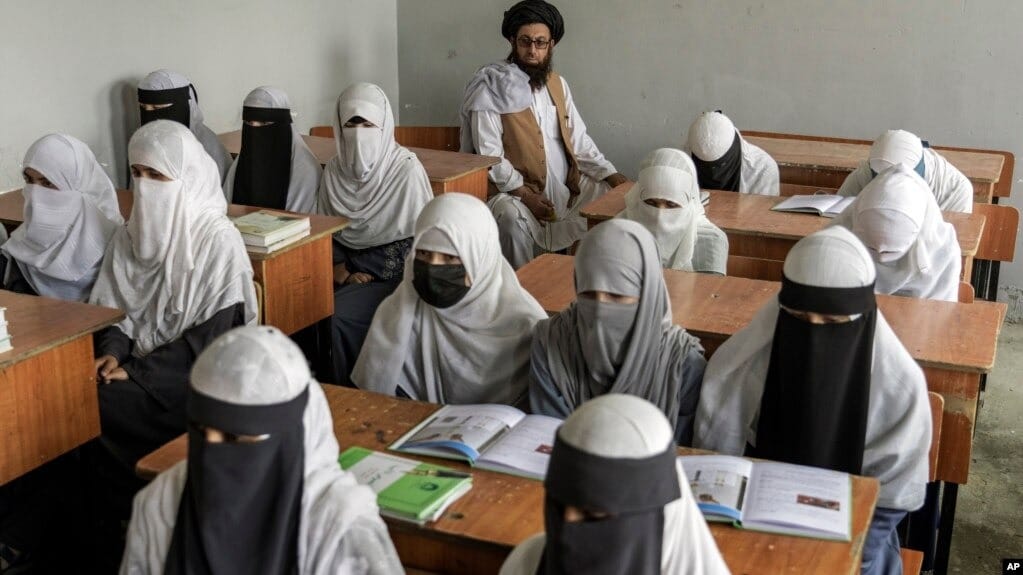
The situation inside Afghanistan shows growing difficulties. Economic problems, international isolation, restrictions on women and education, and governance issues have created dissatisfaction among different sections of society.
When people feel excluded and their concerns are ignored, political and social challenges continue to increase.
Today, there are signs of opposition and dissatisfaction in different parts of Afghanistan. Various groups and communities have raised concerns, and the Taliban are facing challenges in maintaining complete control and influence.
The protests and public expressions of frustration, including those involving women, show that dissatisfaction exists beyond political groups.
No government can ignore public sentiment indefinitely.
The Taliban must understand that power cannot be maintained forever through force alone. The stability of any government ultimately depends on the relationship between rulers and the people.
Pakistan has maintained that Afghans themselves should decide what kind of government they want. Pakistan does not want to interfere in Afghanistan’s internal matters.
However, Pakistan also cannot ignore developments that directly affect its own security.
Pakistan’s Patience and the Future Afghan Question
Pakistan has shown patience because it wants peace. It does not want instability, conflict, or further suffering for the people of Afghanistan.
Pakistan’s position has always been that Afghanistan’s future should be decided by Afghans themselves.
However, five years after the Taliban takeover, the situation has reached a point where serious questions are emerging.
The current circumstances inside Afghanistan, the dissatisfaction among different segments of society, and the continued security concerns for Pakistan indicate that the situation cannot remain unchanged forever.
The Taliban should understand that every government has to respond to the expectations of its people and its responsibilities toward neighboring countries.
The coming period will therefore be important.
If Pakistan decides to review its approach in light of these developments, that decision will carry significance not only for Pakistan but also for the wider region and Afghanistan itself.
Pakistan has shown restraint because it wants stability, but national security remains the priority.
The future of Afghanistan will ultimately depend on the choices made by those who control the country and the response of the Afghan people.
The reality is that no political arrangement can continue indefinitely without addressing public concerns, governance challenges, and regional security issues.
Pakistan has always preferred peace and cooperation. But peace requires responsibility from all sides.
The decisions taken in the coming days will have consequences far beyond immediate politics. They will shape the future security environment of Pakistan, Afghanistan, and the entire region.